ICLEI South Asia Conducts Training on Climate Resilience and Disaster Risk Reduction for Urban Local Governments in Dhaka, Bangladesh
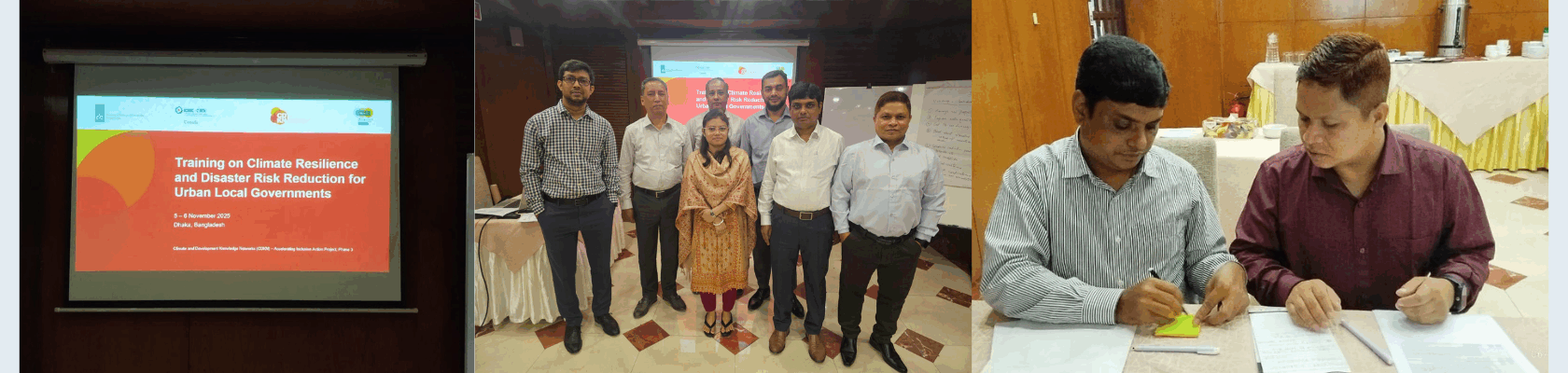
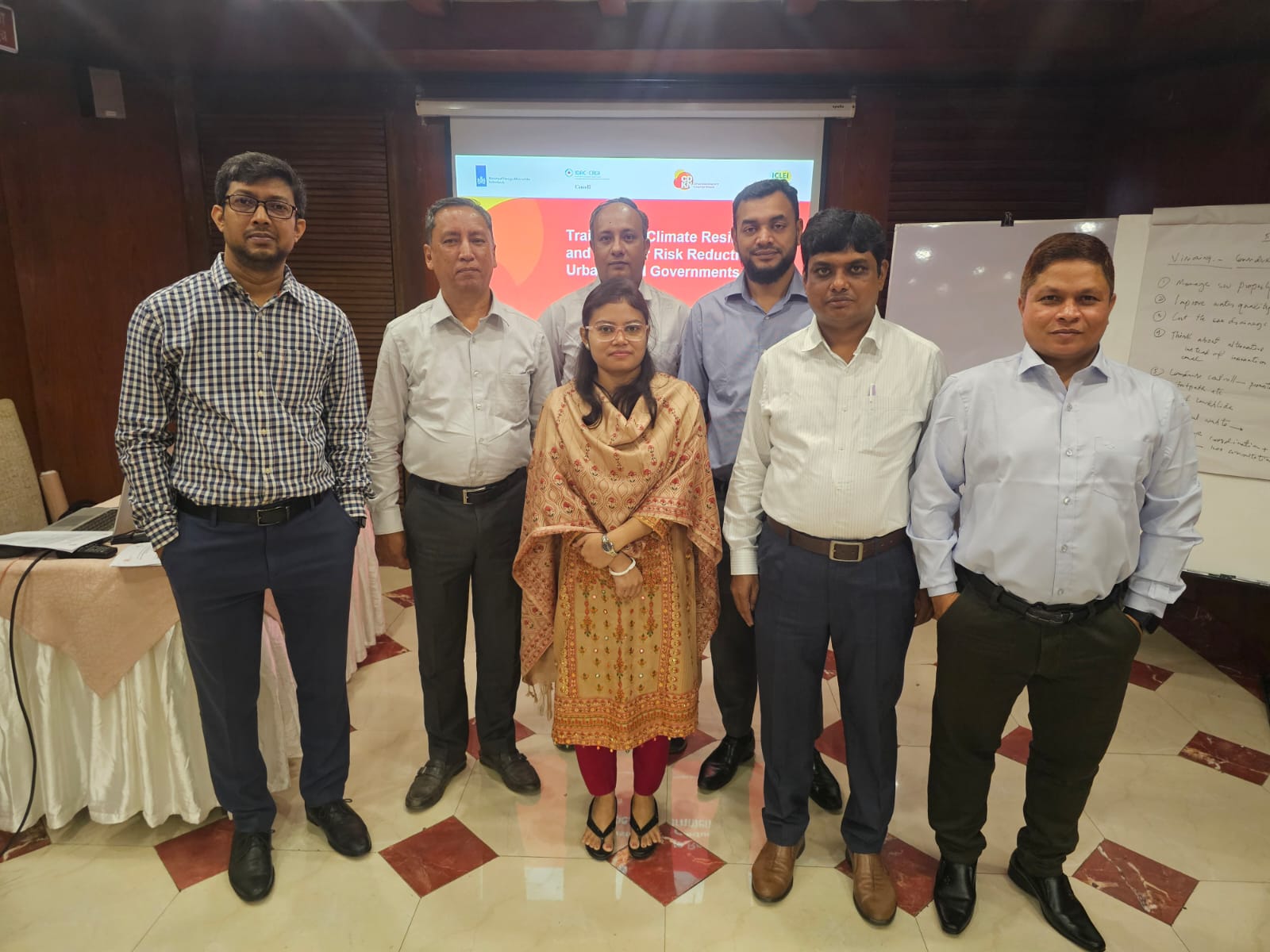
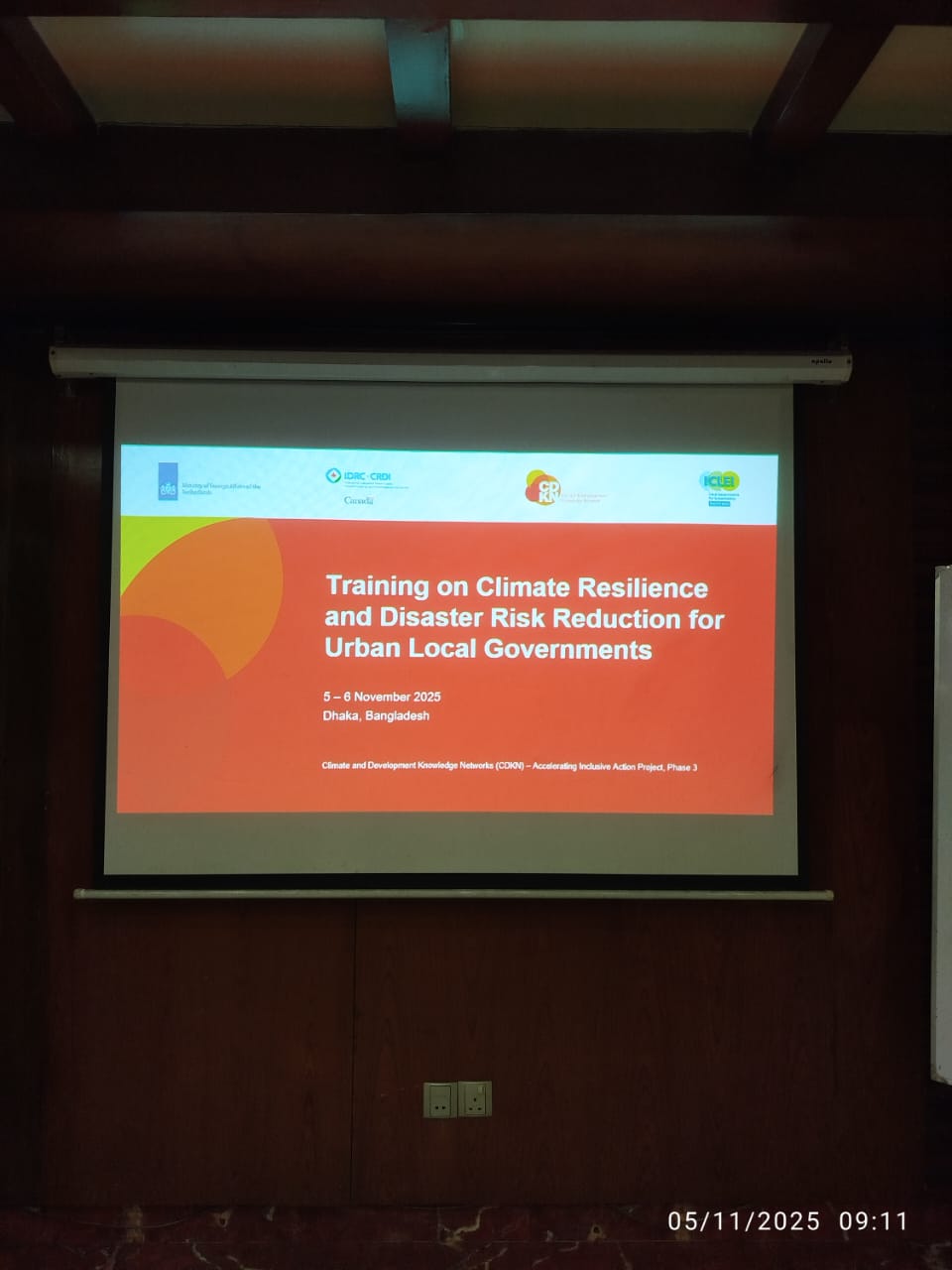
ICLEI South Asia organised a two-day training on Climate Resilience and Disaster Risk Reduction (DRR) for Urban Local Governments on 5–6 November 2025 at Nascent Gardenia, Dhaka, Bangladesh. The training was designed to equip municipalities in vulnerable regions with tools, practical knowledge, and planning approaches needed for developing and implementing climate-resilient municipal strategies.
The training, conducted under the Climate and Development Knowledge Network (CDKN) Phase 3 Project, is part of a year-long training programme for local governments from India, Nepal, Bangladesh, and Sri Lanka. It aimed to strengthen the capacities of local government officials in resilience planning, disaster risk reduction, and sustainable solid waste management. Four participants from Chandpur, Sreepur, and Haragach Municipalities,including Executive Engineers and Town Planners, who have been selected through their application to an expression of interest, took part in the event.
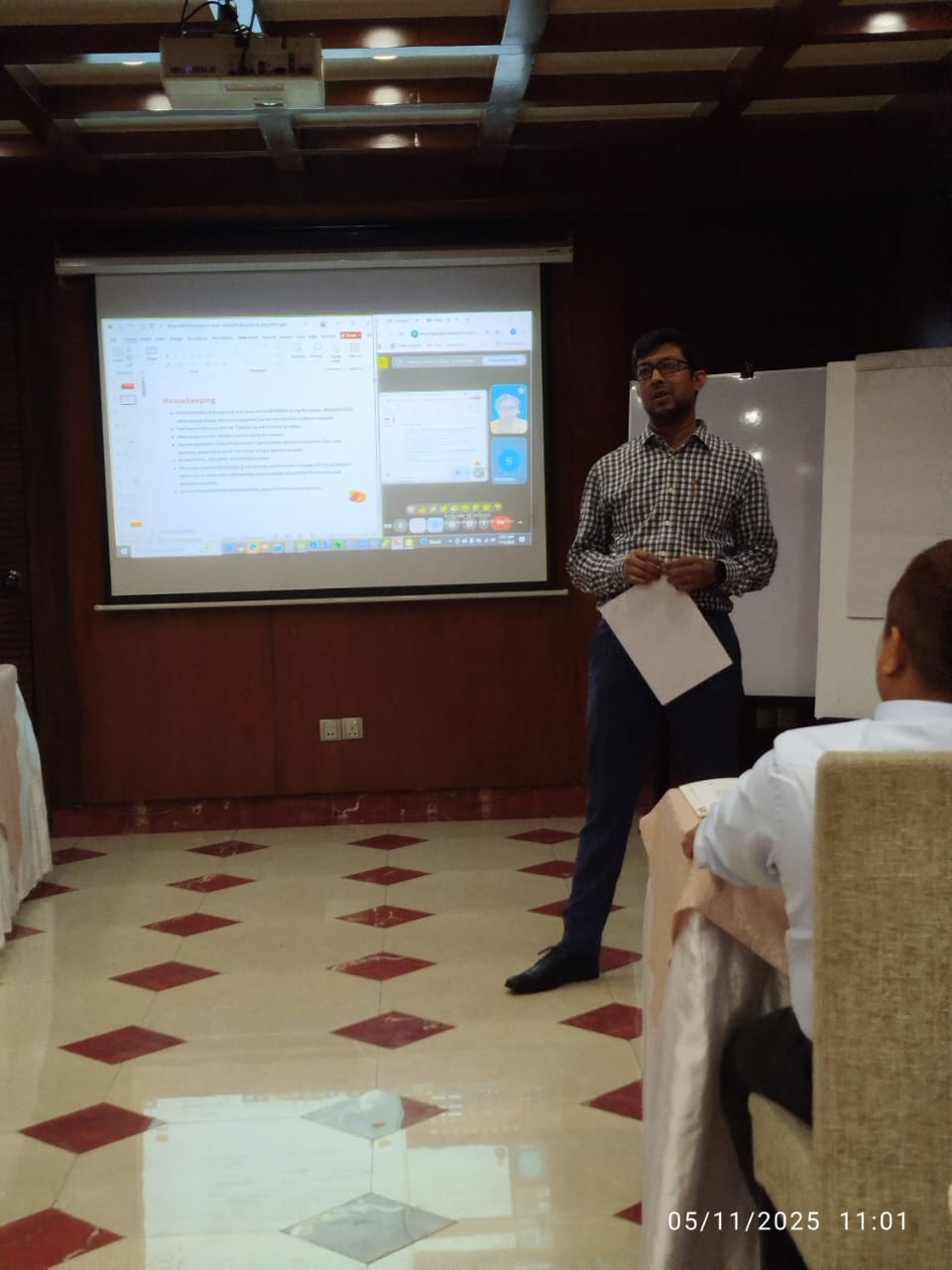
Bedoshruti Sadhukhan, Associate Director, ICLEI South Asia, welcomed participants and emphasised the importance of applying the knowledge of the concepts and tools discussed during the training in their municipal roles. Md. Jubaer Rashid, Country Representative, provided an overview of the CDKN programme, outlining its goals, structure, duration, participant selection, and training topics covered by the initiative.
The technical sessions began with a module on resilience planning conducted by Sadeque Mahmud, Manager, who offered practical guidance on integrating mitigation and adaptation measures into municipal strategies. This was followed by a session on disaster risk reduction facilitated by Chaity Dev, Project Officer, ICLEI South Asia. She highlighted the importance of proactive, pre-disaster planning over post-disaster relief measures and introduced participants to key components of DRR and the Making Cities Resilient (MCR 2030) framework.
Dipak Bhowmick, Technical Lead, led the session on sustainable solid waste management , highlighting circular economy principles, the role of community engagement, and strategies for improving operational efficiency and public health.
An exclusive session on the role of municipalities in integrating Gender Equality and Social Inclusion (GESI) in climate resilience and disaster risk reduction planning was delivered by Dr. Huraera Jabeen, Consultant, World Bank. She discussed practical, inclusive approaches municipalities can adopt, including strengthening women’s technical and leadership capacity, ensuring their safe and equal access to services and resources, and mainstreaming gender-responsive policies across urban governance to build more resilient and equitable cities.
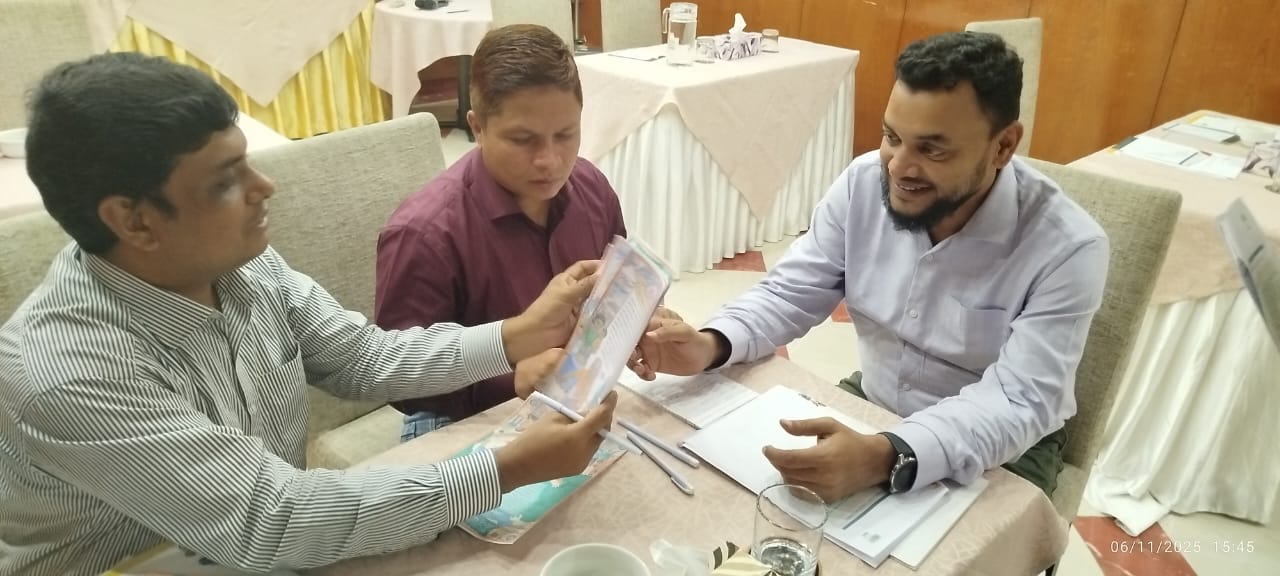
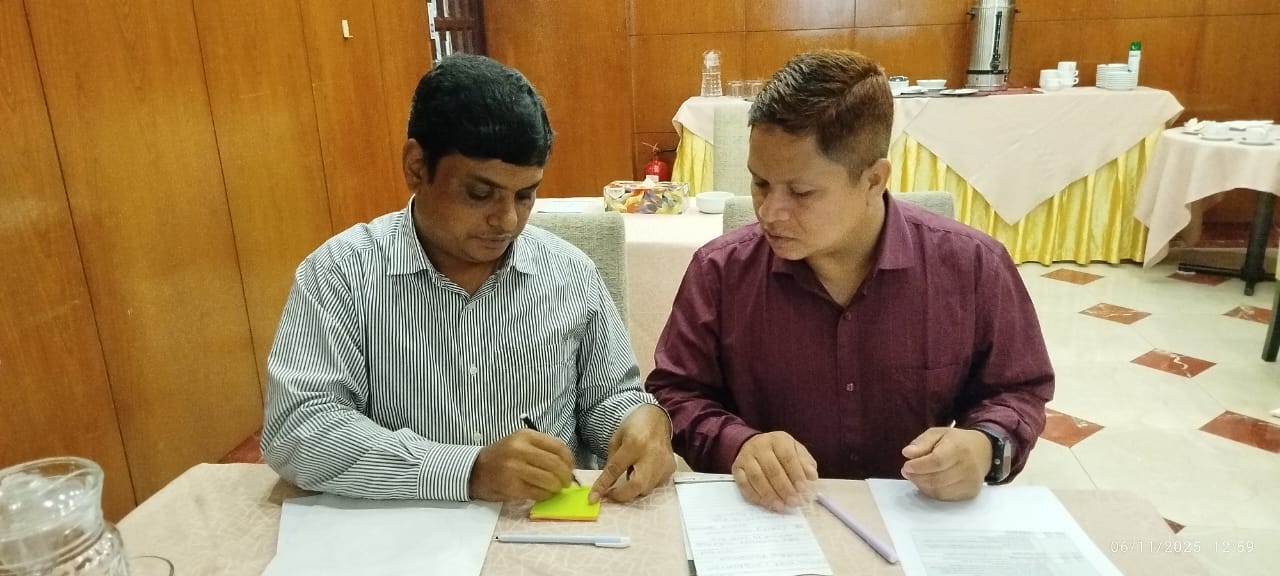
Interactive activities such as card games and role-play exercises at the end of each session helped participants explore the intersection of climate hazards, urban livelihoods, and gender perspectives. These exercises allowed them to apply concepts through practical, scenario-based learning that reflected real-life urban challenges.
Feedback from participants indicated strong appreciation for the content, the interactive learning methods, and the focus on inclusivity. They expressed interest in follow-up webinars and technical guidance on the implementation of Disaster Risk Reduction action plans within their respective municipalities.