Advancing Climate-Resilient Urban Investment and State Climate Finance Strategy in Madhya Pradesh
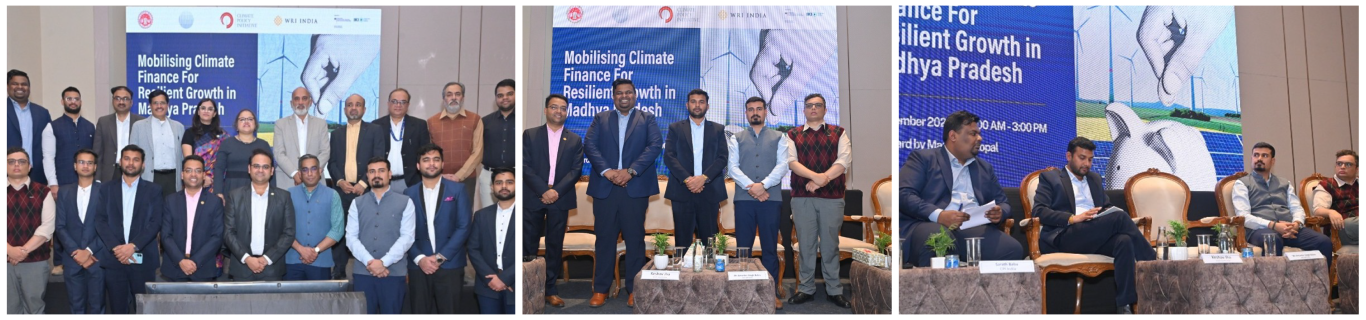
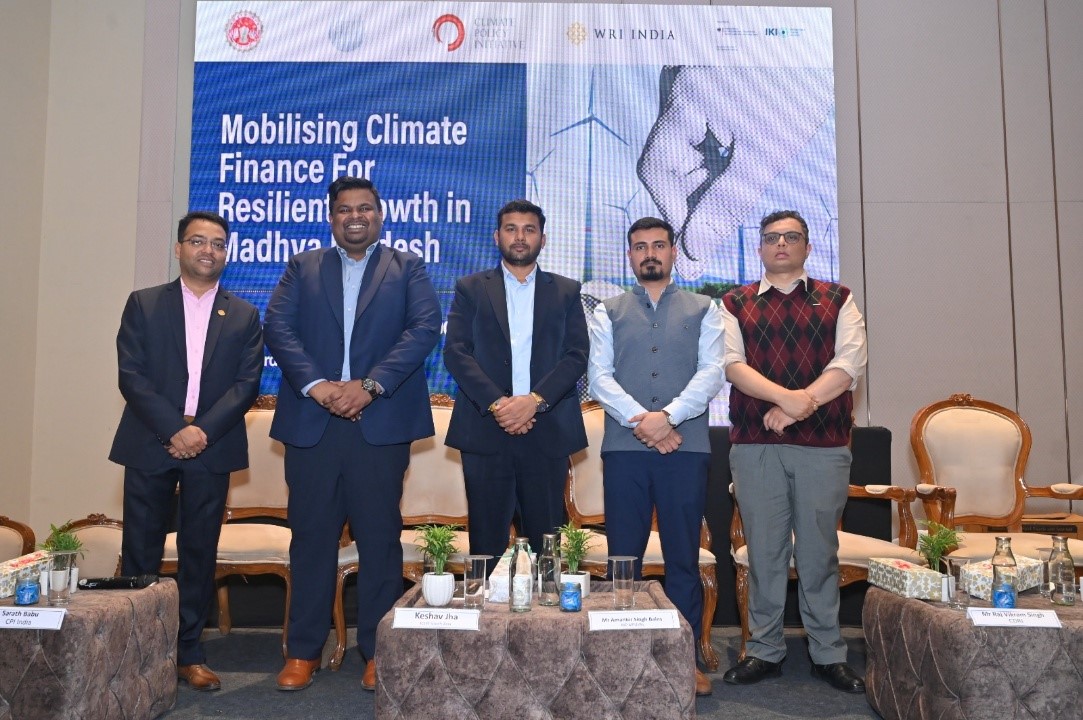
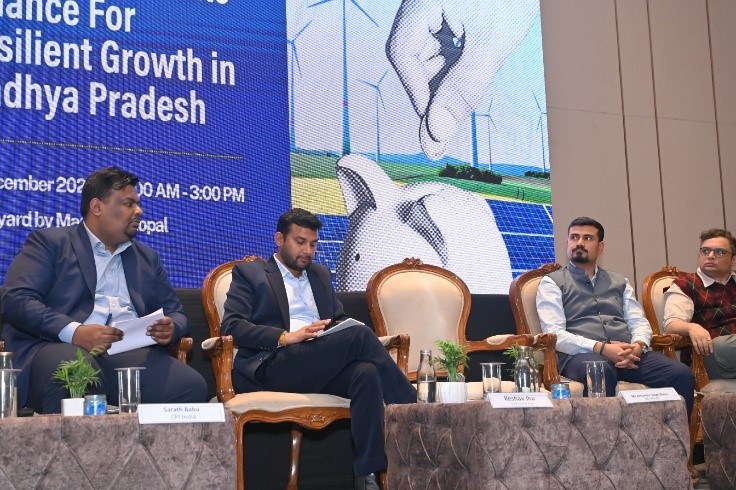
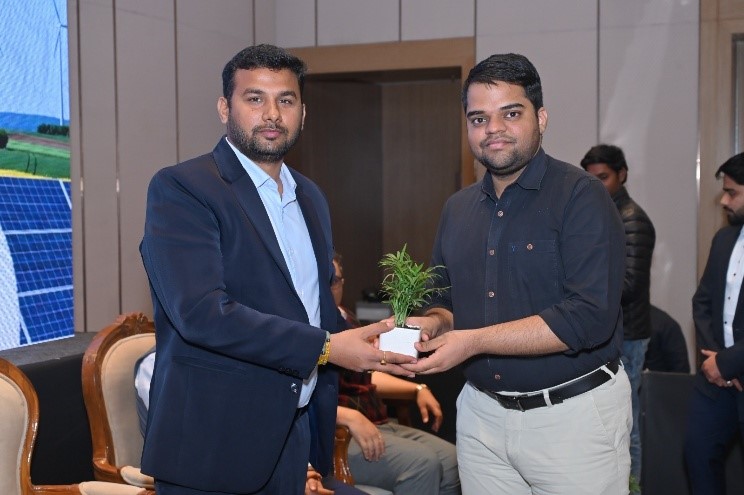
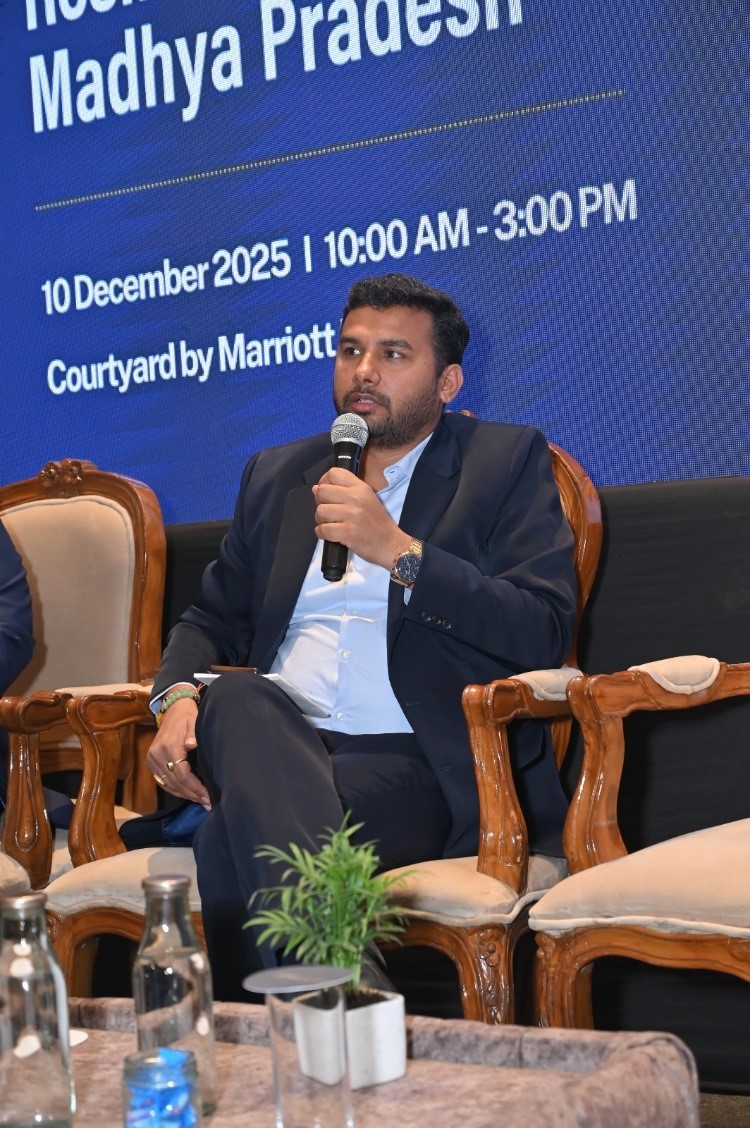
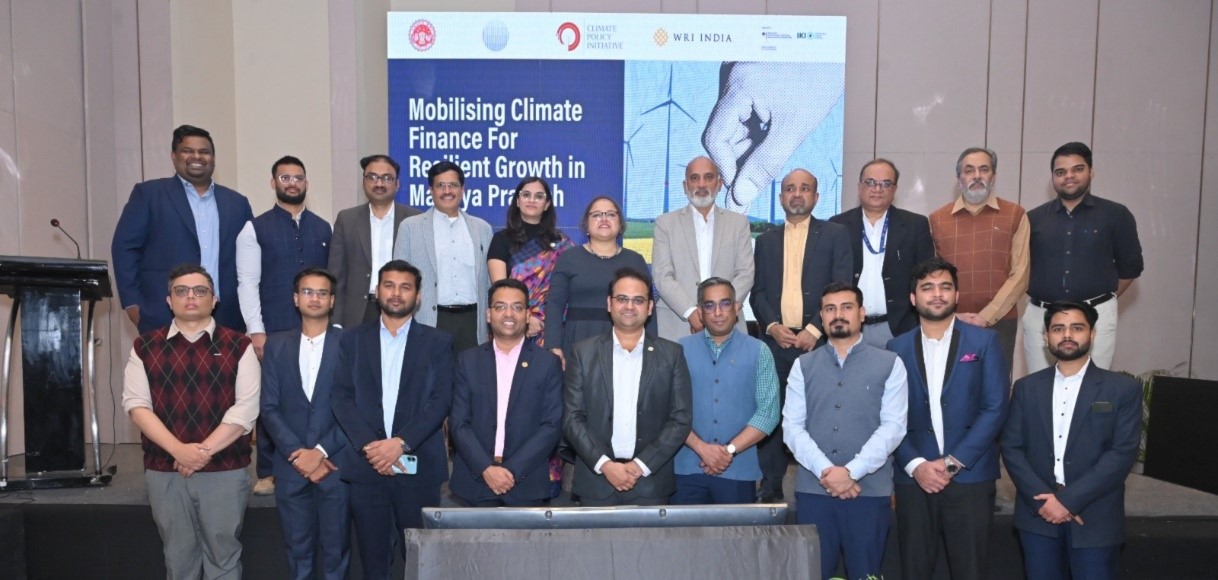
ICLEI South Asia participated in a workshop on “Mobilising Climate Finance for Resilient Growth in Madhya Pradesh” in Bhopal on December 10, 2025, supported by the International Climate Initiative (IKI) and co-convened by the Government of Madhya Pradesh’s think tank, Environmental Planning & Coordination Organisation (EPCO), WRI India, and Climate Policy Initiative (CPI).
The workshop brought together government departments, financial institutions, development partners and addressed the critical challenge of mobilising climate finance to build resilience across Madhya Pradesh.
Speaking at the panel titled “Mobilising Climate Finance for Connected Urban-Industrial Ecosystems,” Keshav Jha, Senior Manager at ICLEI South Asia, shared insights on urban climate finance.
Drawing on learnings from the World Bank-supported Madhya Pradesh Urban Development Program (MPUDP) II and ICLEI’s experience with Capital Investment Planning and Urban Investment Scoping Assessments, Mr Jha highlighted key urban climate finance challenges and practical solutions. He emphasised the need for cities to identify bankable, climate-resilient infrastructure projects and access diverse financing sources, including blended finance, municipal bonds, and green instruments.
To achieve commercially viable ticket sizes, Mr Jha suggested bundling Climate Action Plan (CAP) investments into programmatic projects, such as citywide rooftop solar, energy efficiency in water and health services, and non-revenue water reduction initiatives.
He noted that blended finance structures combining grants, concessional loans, and commercial capital can help de-risk pioneering projects. He also highlighted the use of Public Private Partnership (PPP) and Energy Service Company (ESCO) models for energy efficiency, streetlighting, and solar deployment, which shift upfront capital expenditure to private partners. Strategic deployment of national and state schemes, multilateral windows, and climate funds is critical to achieving financing outcomes, he added.
Highlighting opportunities for government agencies in financing and procurement planning, Mr Jha noted that ICLEI South Asia supports urban local bodies in India to develop PPP-based, bankable, climate-resilient infrastructure projects at no cost. This support is enabled through its role as a technical partner to the Climate Project Preparation Facility (CPPF) established by NIUA. Through ICLEI’s Transformative Action Program (TAP), the organisation screens city projects, provides tailored technical feedback, and connects promising proposals with financial institutions and investors.
Mr Ashok Barnwal, IAS, Additional Chief Secretary, Government of Madhya Pradesh, Department of Environment, emphasised the urgency of converting climate ideas into implementable projects with measurable impact. He underscored the need for using the Hindi language for communication purposes to ensure public engagement. He highlighted that there needs to be state-level carbon credit strategies, and practical, community-scaled actions over abstract budget figures. Critically, he noted that the challenge lies in effective and timely utilisation of available funds.
Panelists suggested standardising project templates to reduce transaction costs and accelerate replication.
Through cross-sectoral dialogue, participants identified scalable financing solutions and supported the development of a State Climate Finance Strategy to enhance access to domestic and international funding.
As Madhya Pradesh works toward “Samridhh MP” (a prosperous MP), this strategic convening demonstrated how cross-sectoral dialogue, blended finance, and high-quality project design can align climate resilience with economic growth. The workshop concluded with a clear call to cascade these conversations to district levels to build local technical capacities and embed climate finance mobilisation across governance structures.