From Waste to Resilience: Cities Exchange Ideas for Climate and Waste Action Under CDKN’s Peer Learning Programme
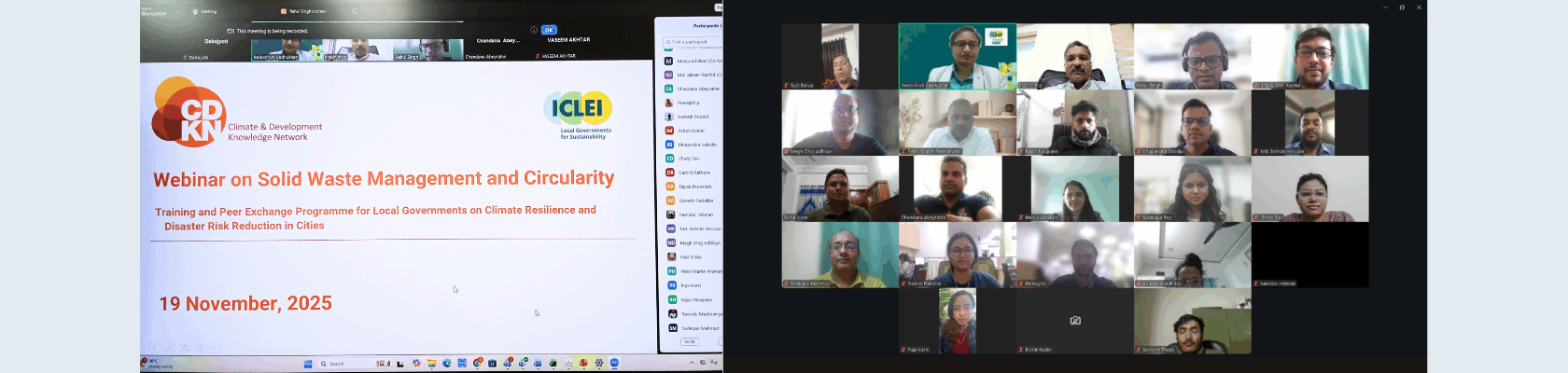
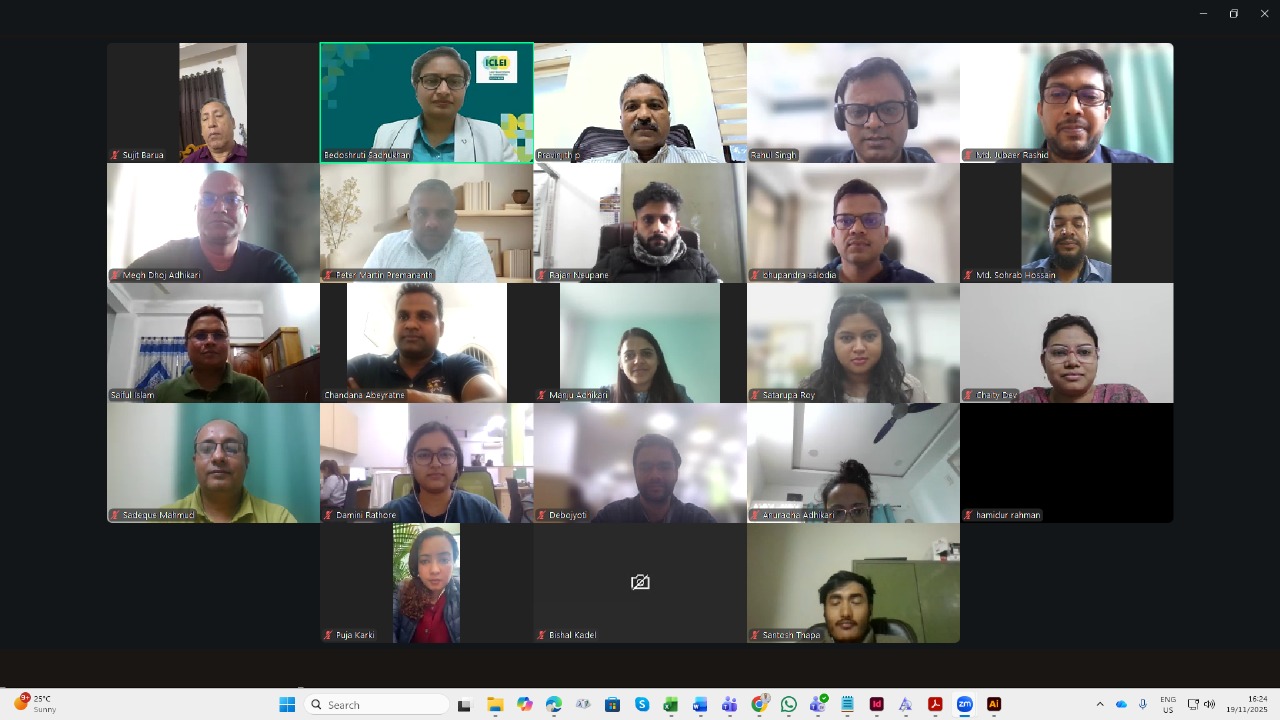
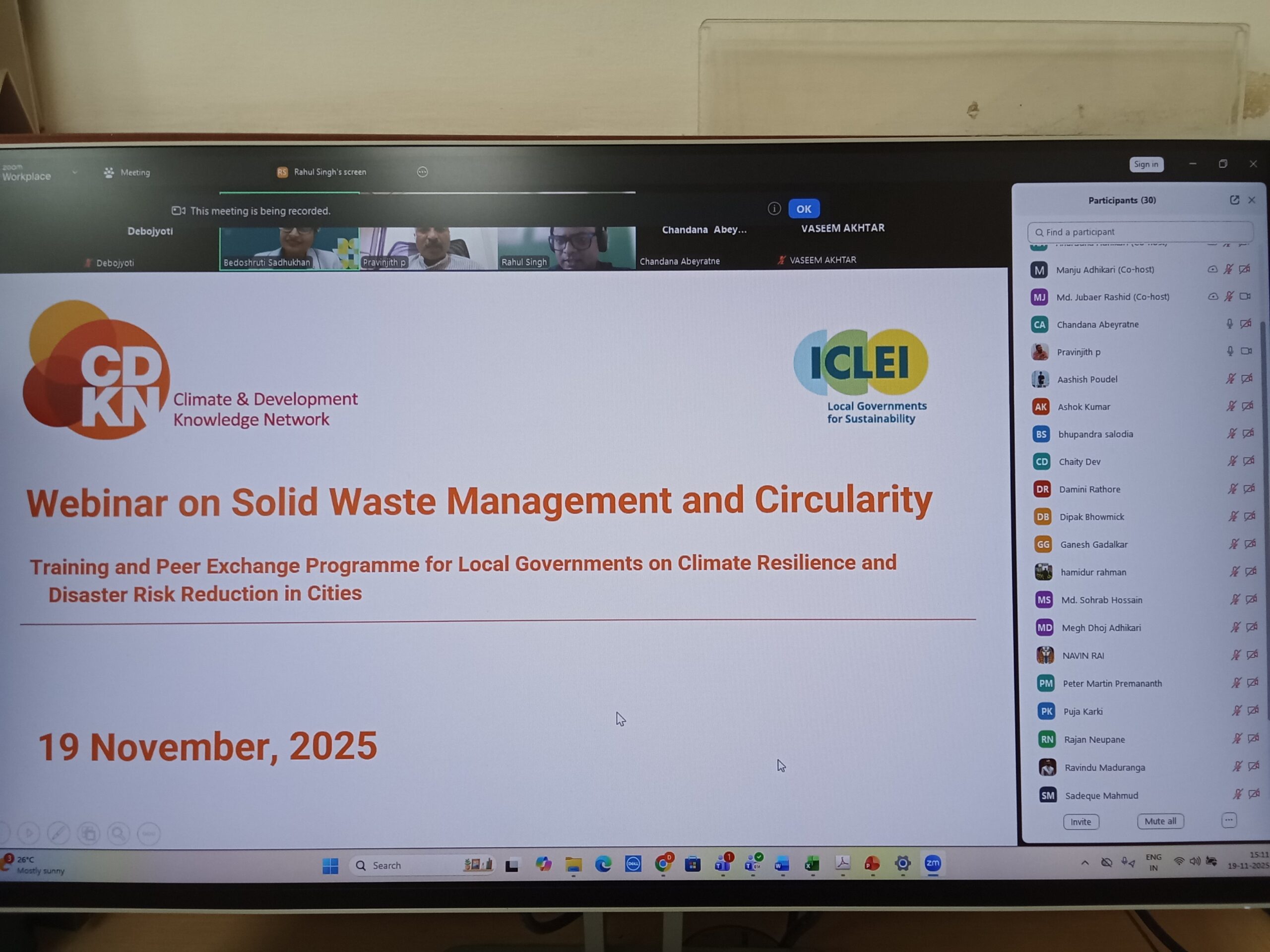
ICLEI South Asia conducted a webinar on Solid Waste Management and Circularity on 19 November 2025 for city officials from Bangladesh, India, Nepal, and Sri Lanka. This marked the beginning of a series of webinars under CDKN Asia’s year-long training and peer exchange programme for local governments on climate resilience and disaster risk reduction, and sustainable solid waste management in cities. The programme is being implemented under the third phase of the ‘Climate and Development Knowledge Network (CDKN) – Accelerating Inclusive Action’ project, supported and funded by the Ministry of Foreign Affairs of the Netherlands and IDRC through the Step Change Initiative.
The session brought together 18 participants from 11 municipalities across Bangladesh, India, Nepal, and Sri Lanka.
The webinar was anchored by Bedoshruti Sadhukhan, Associate Director, ICLEI South Asia; Rahul Singh, Senior Manager, ICLEI South Asia; Pravinjith KP, Managing Director, EcoParadigm; and Vikas Sanghwan from Karnal Municipal Corporation, who guided participants through technical sessions, case studies, and collaborative exercises.
Solid waste management is a growing challenge in most cities, particularly those located in hill regions where access and logistics are more complex. The primary objective of this webinar was to build an understanding of circularity and its significance in solid waste management, and to provide a platform for deliberation and knowledge exchange through good practices, challenges, and on-ground experiences.
Session Highlights
Session 1: Introducing the Circular City Actions Framework
Ms. Sadhukhan introduced the concept of circular development economy and established its importance in guiding urban systems toward sustainability. She explained that cities today are central actors in a global linear economy, which functions on a basic yet unsustainable cycle of extraction, manufacturing, and disposal— ‘take – make – waste’. Cities consume nearly three-fourths of the world’s natural resources and generate half of global waste and contribute to almost 70 percent of GHG emissions.
She introduced ICLEI’s ‘Circular City Actions Framework’, a tool for planning the circular economy in cities by addressing the impacts along the conventional value chain system. She explained how the framework encourages cities to rethink their foundational systems and support activities that facilitate a transition to circularity; regenerate ecosystems and production systems so that both human and natural systems can thrive; reduce material and energy consumption by designing better infrastructure, processes and products; extend the life and value of existing resources through reuse of materials and spaces; and recover the resources embedded in discarded products so they can re-enter production cycles.
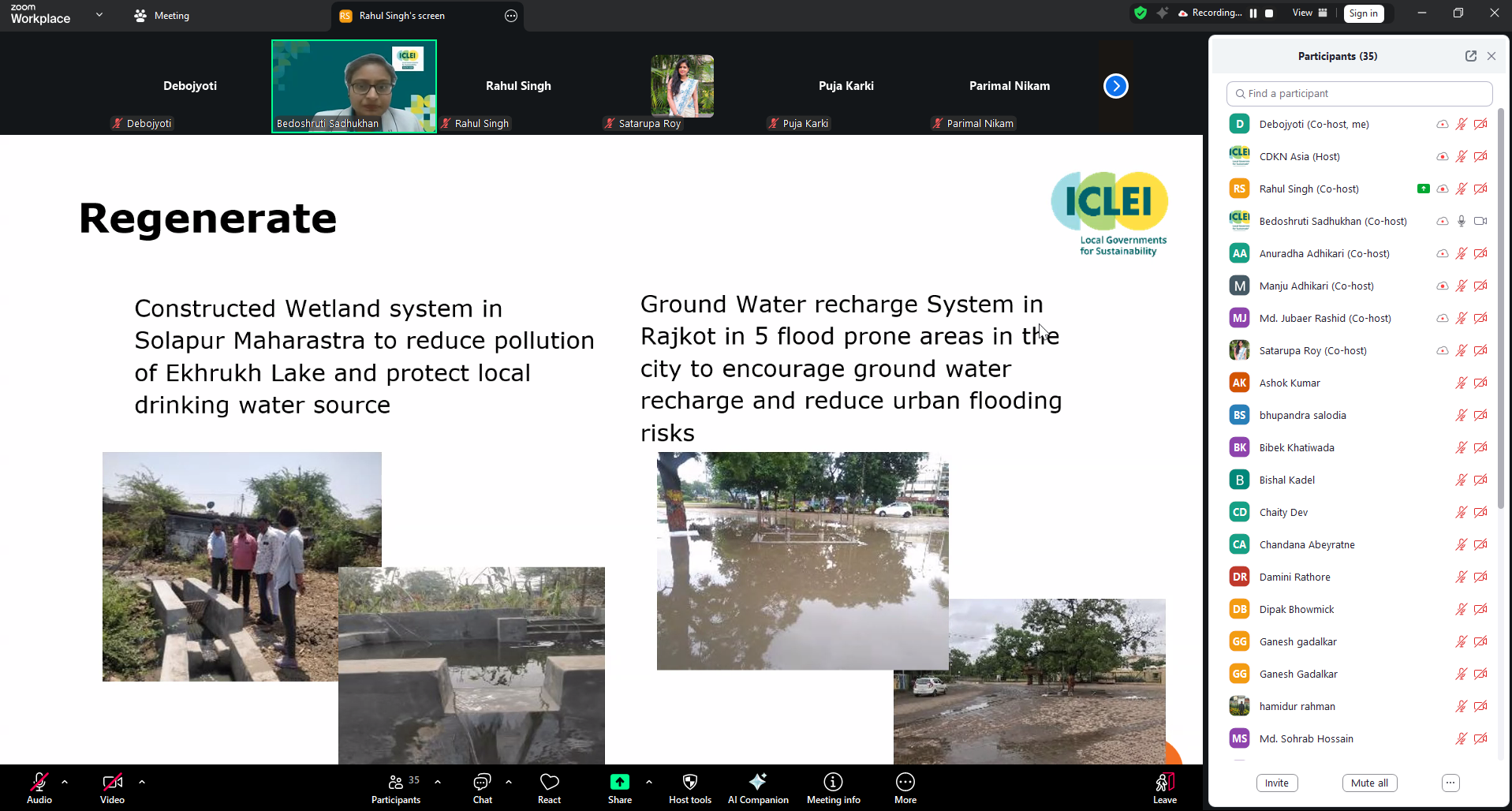
She illustrated these concepts through examples of the work undertaken by ICLEI South Asia in India, including the wetland system in Maharashtra, installation of a 1.5-ton biomethanation plant in Tamil Nadu, and use of starch-based (tapioca) bags as an eco-friendly alternative to plastic bags in Andhra Pradesh.
Session 2: Karnal’s Integrated Solid Waste Management Experience
In the second session, Mr. Vikas Sanghwan presented a detailed case study on Karnal’s integrated solid waste management model. He traced the journey from planning to implementation, emphasising how the approach began with preparing a comprehensive waste management plan, followed by the selection of an experienced agency to carry out operations, establishing a door-to-door waste collection system, and setting up procedures for waste processing, treatment, and effective monitoring of waste. Mr. Sanghwan also described the operational details of sweeping activities, waste segregation, composting, and packaging.
Best practices and awareness initiatives, such as public awareness handbook on household solid waste segregation, creation of ‘zero waste market zones’, were presented. He informed that the city now plans to establish a 15 MW waste-to-energy plant, incorporating technologies suited to local conditions.
Session 3: Transforming Waste into Resources Through the Circular Economy
The third session, led by Mr. Pravinjith KP, outlined the need for circular economy and reiterated the difference between linear and circular economy. He explained the principles of pollution abatement through advanced and clean technologies, circulation of materials through repair, redesign, reuse and re-manufacturing, and regeneration of nature through plantation, plastic removal from ocean, among others.
Through case studies from India, he illustrated how biodegradable waste can be converted into compost for agriculture, how black soldier fly larvae can transform organic waste into fish food, and how plastics can be processed into pellets that feed back into the manufacturing of new products. These examples showed participants how innovative approaches are already in practice and how circular principles can generate environmental, economic, and social value.
Group Exercise: Sharing Challenges and Solutions
A group exercise was carried out by dividing the participants into four country-wise groups to discuss prevailing SWM practices, their alignment with circular principles, areas where the cities are losing valuable resources, and the top three solutions to address the shortcomings.
The discussions revealed that while door-to-door collection systems are in place in most cities, universal coverage remains a challenge. Segregation at source is limited or absent, and much of the recovery of recyclables, such as PET bottles, metals, and cardboard, relies heavily on informal sector workers.
Cities shared context-specific insights: municipalities like Dhulikhel and Neelkantha in Nepal practise circularity only partially, hill towns such as Mandi in India face geographic obstacles in waste collection, while cities such as Kandy and Nuwara Eliya in Sri Lanka struggle with dry waste leakages due to tourism pressure and open dumping. Across locations, participants recognised that the absence of efficient recovery facilities and weak markets for compost hinder progress. They suggested practical solutions, including partnerships with private entities to improve material recovery, strengthening collection systems for better coverage, promoting bio-composting, and ensuring consistent quality of compost and other end products to build market confidence.
The webinar concluded with a feedback session, during which participants appreciated the clarity and structure of the sessions and noted that their understanding of circularity had deepened. The event established a collaborative foundation for continued learning, exchange, and technical support through the CDKN programme.
Next year, ICLEI South Asia will organise a series of follow-up webinars focusing on solid waste management planning processes, waste treatment technologies and hierarchies, and financing mechanisms. These sessions will enable participating cities to strengthen their waste systems, improve circularity, and contribute to climate resilience and sustainable urban development across the region.