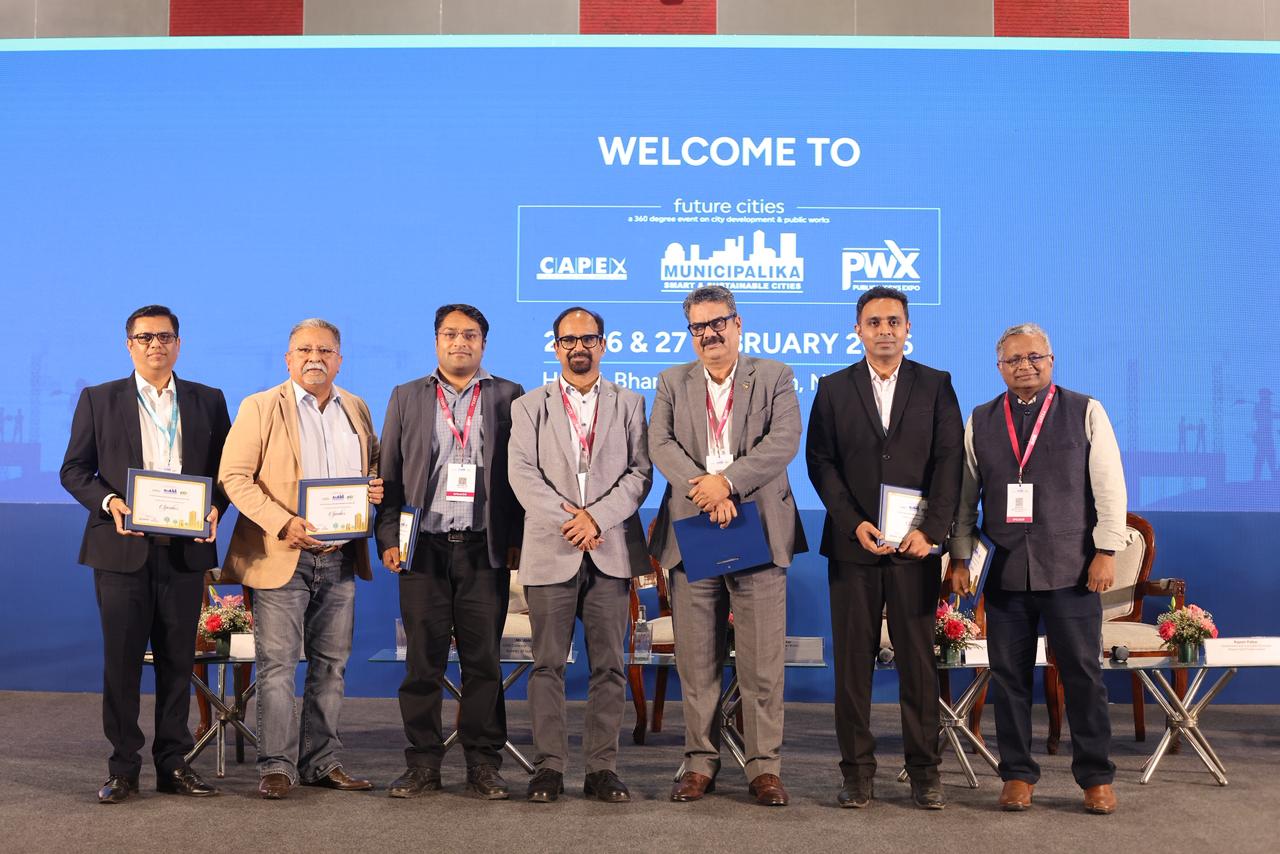
ICLEI South Asia participated in Municipalika 2026, one of India’s leading platforms on safe, smart and sustainable cities, from 25-27 February 2026 in New Delhi.
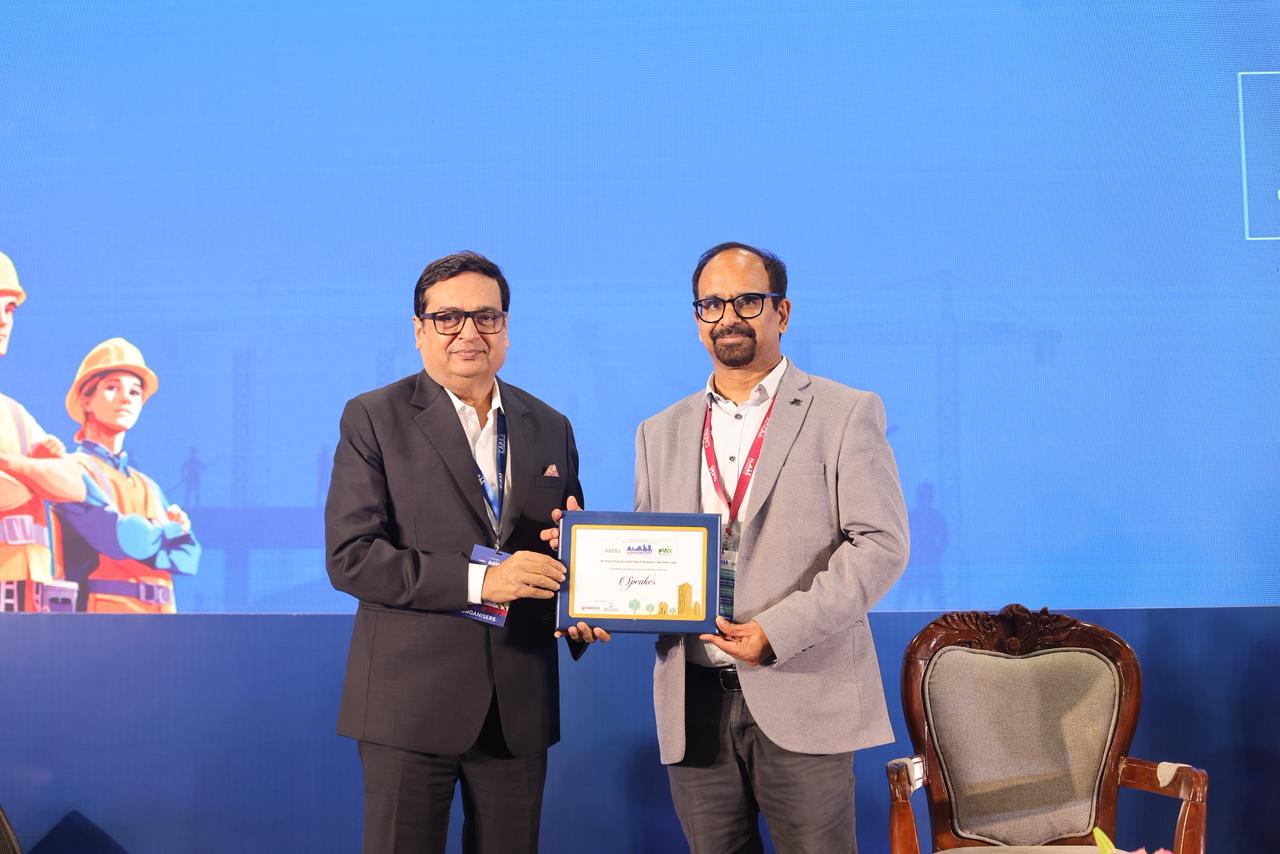
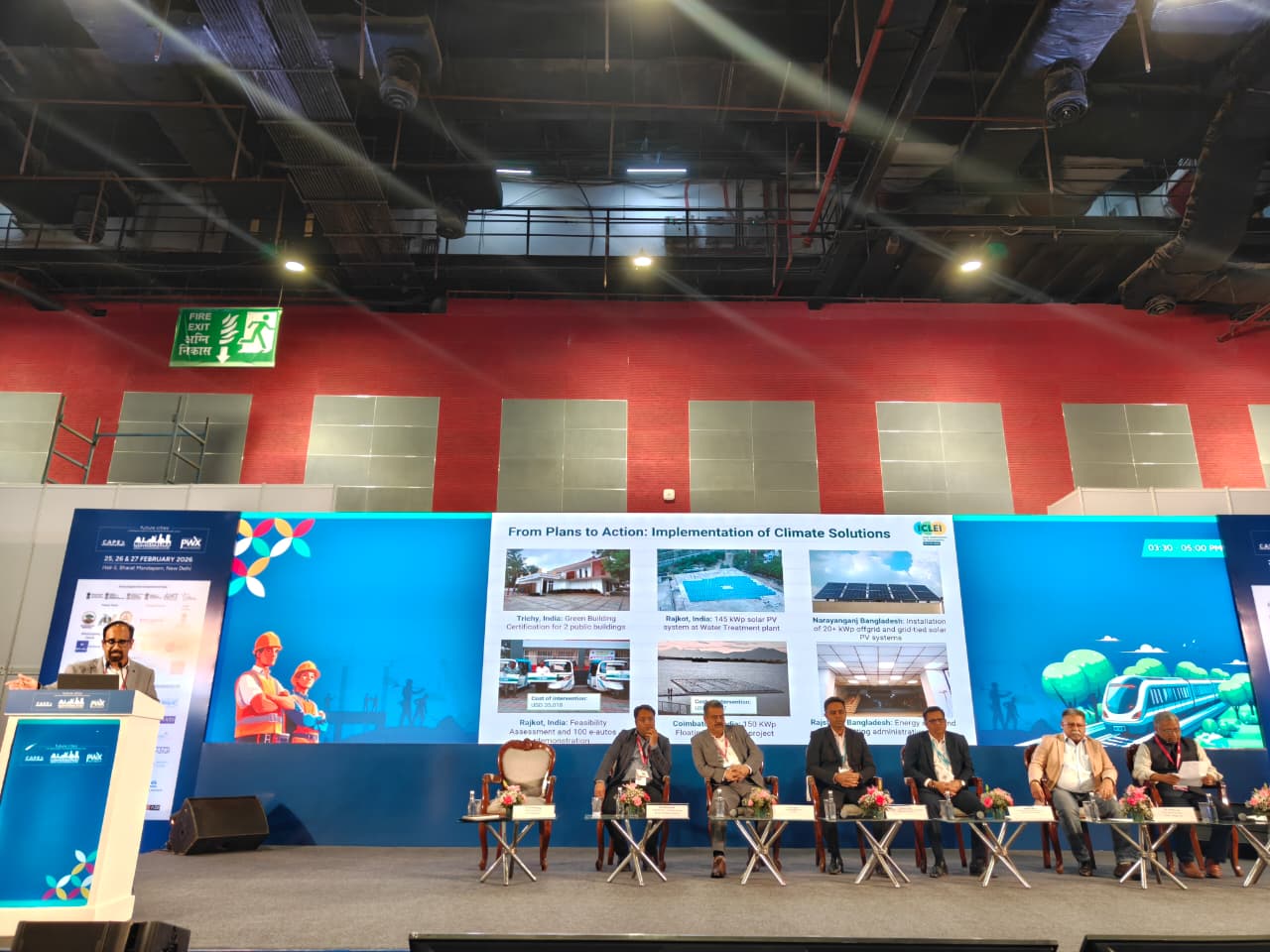
Emani Kumar, Executive Director, ICLEI South Asia moderated the panel titled “Safe and Secure Cities, Disaster Response and Resilience, City Surveillance,” and presented ICLEI’s integrated approach to urban climate action and resilience. The session brought together experts from government bodies, disaster management authorities, technology providers, and infrastructure specialists, including Abhishek Pal, Joint Director – Civil Engineering, Bureau of Indian Standards; M.A. Johar, President – Project Business, CP PLUS; Prashant Hegde, Vertical Head – PPOGM, Heavy Industries & Transportation, Prama India Private Limited; Rajesh Palkar, Government and Consultant Business, Prama India Private Limited; Harsha Joshi, Chief Executive Officer, Prolite Autoglo Ltd; Hari Kumar, Regional Co-ordinator, South Asia, Geo Hazard India; and Col. Kirti Pratap Singh, Advisor (Operations & Communications), National Disaster Management Authority, Ministry of Home Affairs, Government of India.
In his remarks, Mr. Kumar outlined ICLEI South Asia’s work across five strategic pathways that guide cities in designing integrated and implementable climate solutions. He emphasised the importance of strong city leadership in climate action planning, and highlighted ICLEI’s subnational support through its technical expertise such as Climate Resilient Cities Action Planning framework, the Net-Zero Climate Resilient Cities Methodology, and the City Resilient Toolkit. He highlighted city-level adaptation of practical tools and approaches, including Heat Risk Assessments, layered, city-level action planning, Early Warning Systems, Loss and Damage assessments, and Local Adaptation Plans of Action (LAPA) across the South Asia region.
Reflecting on ICLEI South Asia’s work, Mr. Kumar emphasised a shift from conceptual planning to tangible, measurable outcomes. He highlighted efforts including institutionalising city-level net-zero cells in Tamil Nadu, urban greening initiatives and biodiversity enhancement through the City Biodiversity Index (CBI) across 20 Indian cities, improving green cover and promoting biodiversity-sensitive urban planning, promoting child-friendly cities, and supporting governance structures that enable climate action through active finance mechanism.
He highlighted ICLEI’s support to cities under the MCR (Making Cities Resilient) Campaign and emphasised that cities require robust technical tools and institutional support systems to effectively manage escalating climate risks.
The larger panel reviewed India’s National Building Code updates addressing structural design, wind speeds, seismic zoning, and snow loads to strengthen climate-responsive construction. The discussion highlighted integrating technology, surveillance, and command systems in urban governance also emphasised that resilient infrastructure, disaster preparedness, and strong health systems underpin true urban resilience.
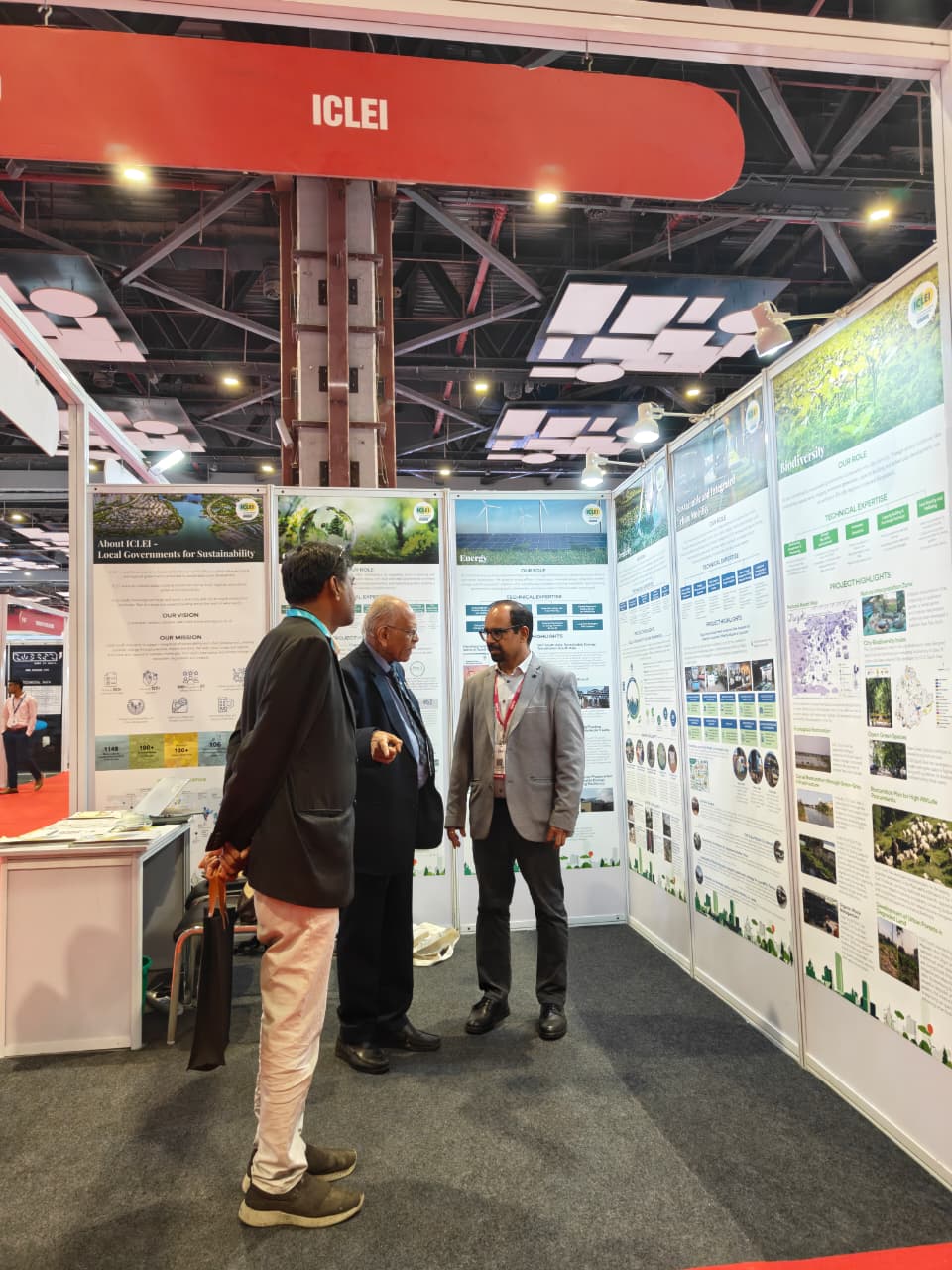
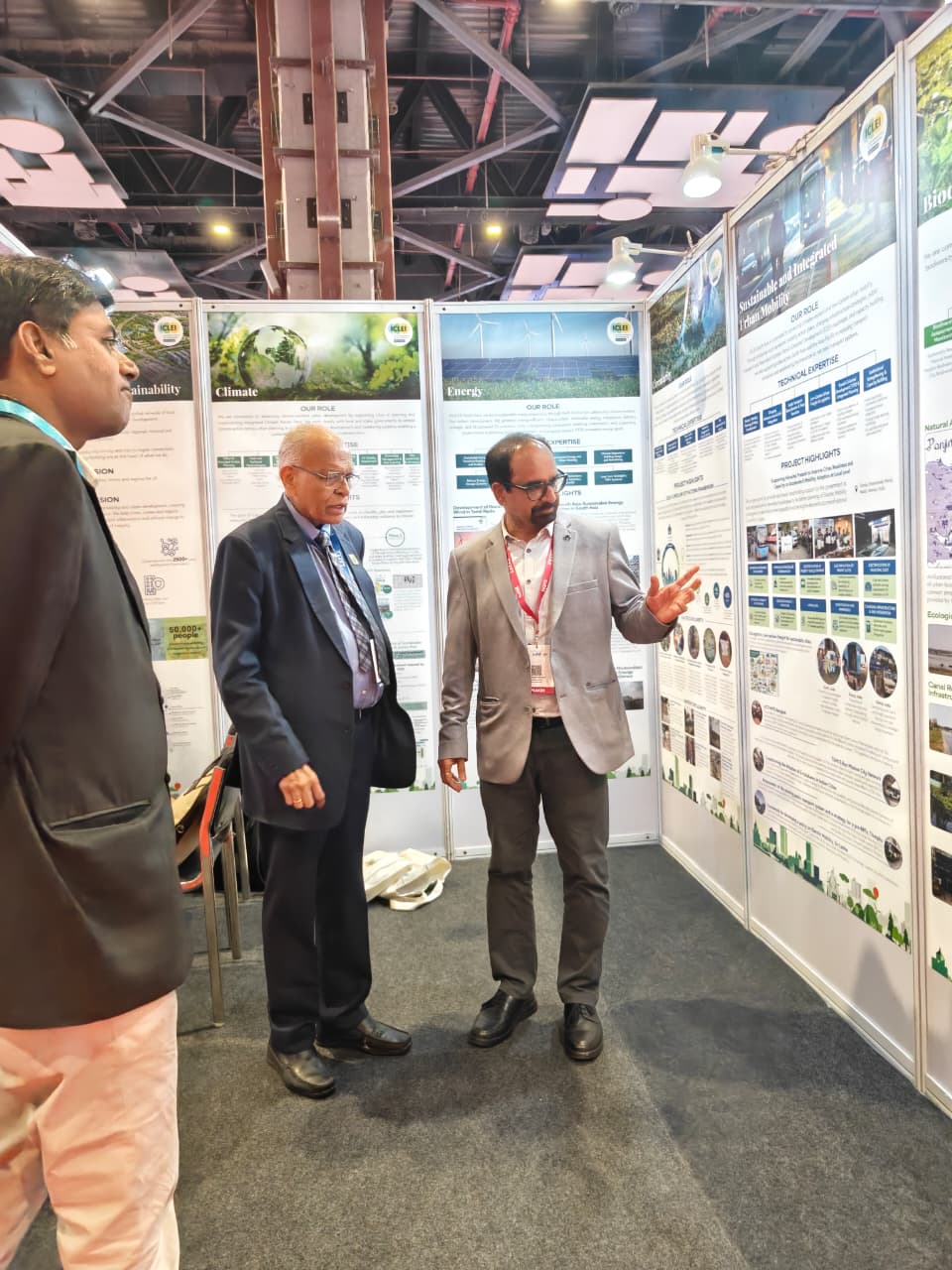
At its exhibition stall, ICLEI South Asia presented its methodologies, technical tools, and city-level case studies. The stall served as a collaborative space for policymakers and private sector stakeholders to explore practical pathways for climate-responsive urban development.
ICLEI South Asia supported Municipalika 2026 as an Industry Partner, demonstrating its continued commitment to supporting cities in their transition toward low-emission, climate-resilient, and sustainable urban development pathways.