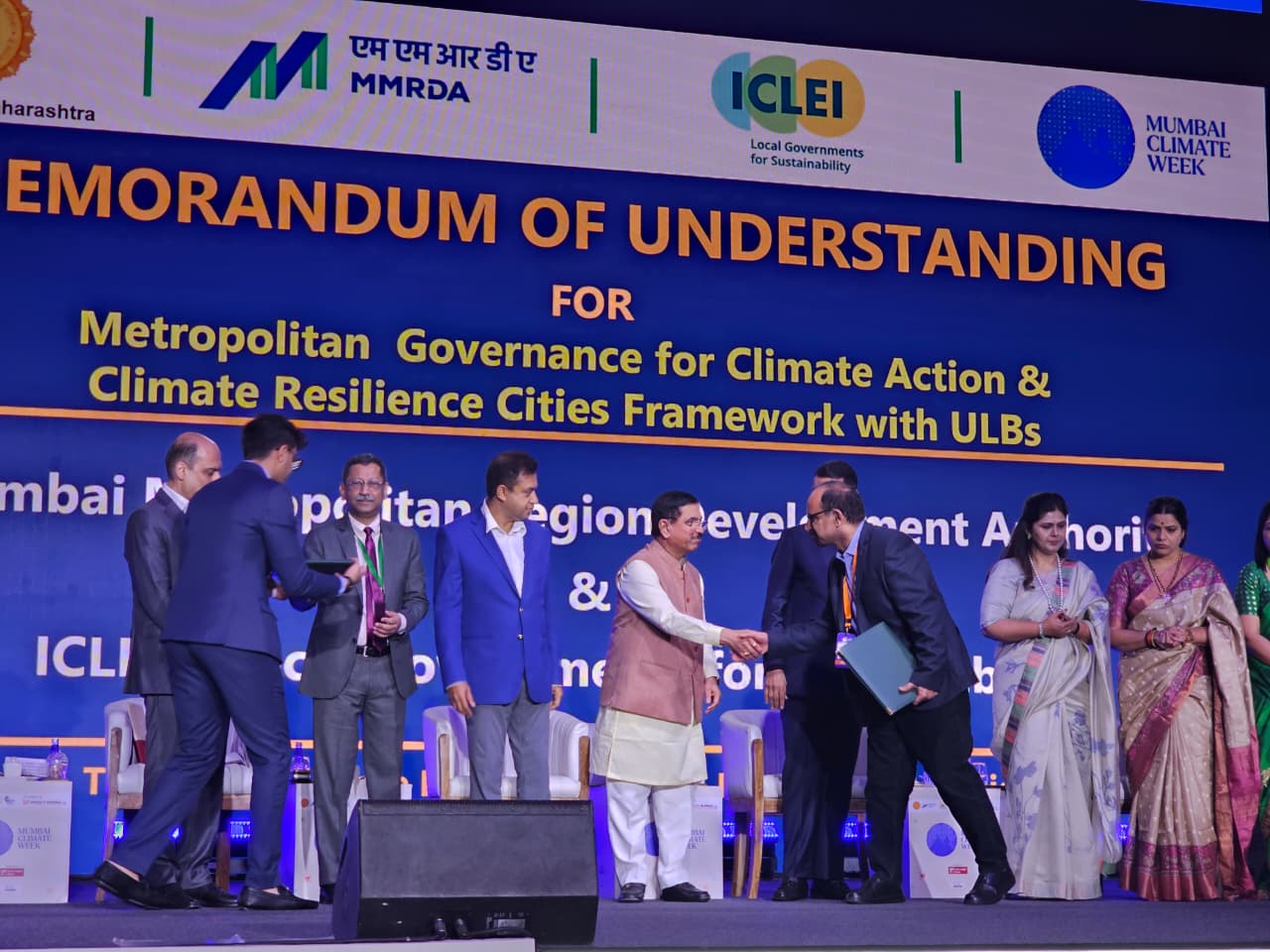
At Mumbai Climate Week 2026, ICLEI South Asia was at the forefront of the dialogue, partnerships, and action. From signing a landmark Memorandum of Understanding (MoU) with the Mumbai Metropolitan Region Development Authority (MMRDA) to participating in high-level panels, finance roundtables, and strategic convenings, ICLEI South Asia reinforced the central role of cities and local governments in driving climate ambition into implementation.
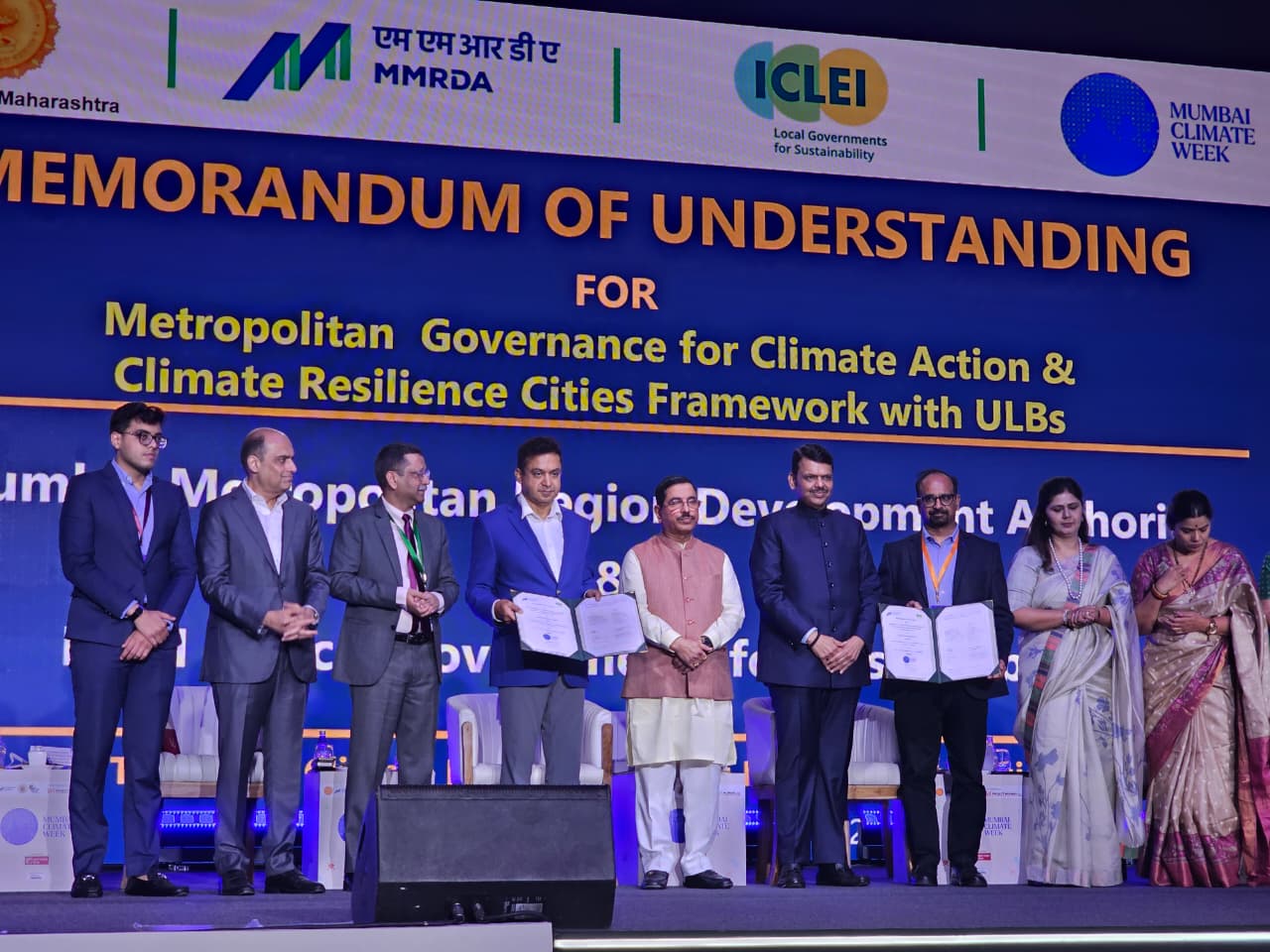
A Landmark MoU for Metropolitan Climate Governance ICLEI represented by Emani Kumar, Deputy Secretary General, ICLEI and Executive Director, ICLEI South Asia, signed a Memorandum of Understanding (MoU) with the Mumbai Metropolitan Region Development Authority (MMRDA) on 17 February 2026 in the presence of Hon’ble Devendra Fadnavis, Chief Minister of Maharashtra, at the Mumbai Climate Week, to engage in a strategic partnership for urban governance, climate action and sustainable urban transformation in the Mumbai Metropolitan Region (MMR).
Hon’ble Pralhad Joshi, Union Minister of New and Renewable Energy, Government of India; Hon’ble Pankaja Gopinath Munde, Minister of Environment & Climate Change, Animal Husbandry, Government of Maharashtra; Ritu Tawde, Hon’ble Mayor of Mumbai; Dr. Dr. Sanjay Mukherjee IAS, Metropolitan Commissioner, MMRDA; and Shishir Joshi, Chief Executive Officer and Co-founder, Project Mumbai, graced the event.
In his address, the Hon’ble Chief Minister underscored that “climate ambition must be achieved, but climate transitions must be inclusive.” He emphasised that the scale of climate transition required, both globally and in developing economies, demands catalytic capital, blended finance, and access to innovation. Scalable and replicable models must be developed across emerging economies, with climate capital flowing at scale and climate justice placed at the centre of the global climate dialogue. He further highlighted that with the right partnerships, development and climate resilience can go hand in hand. Aligned with this vision, the partnership between ICLEI South Asia and MMRDA seeks to build a strong strategic collaboration to advance integrated metropolitan governance and sustainability in the Mumbai Metropolitan Region.
Culture as Climate Infrastructure: Rewriting the Climate Story
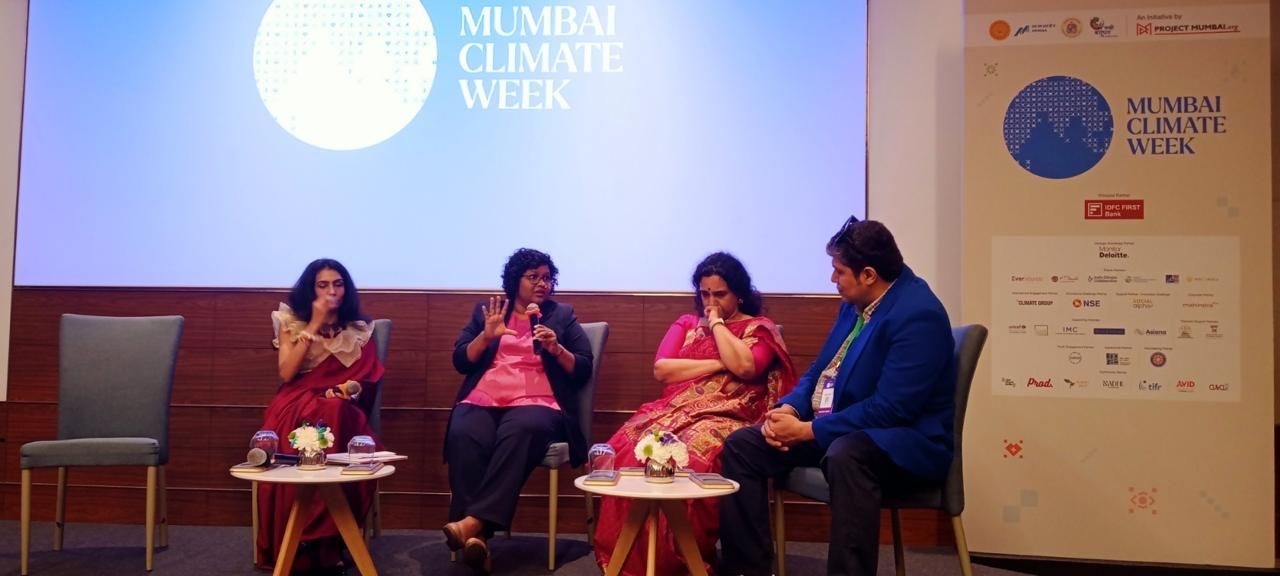
On 17 February, Sayli Mankikar, Associate Director, ICLEI South Asia, participated in the panel discussion titled “Rewriting the Climate Story: The Artist as a Change-Maker.” Her intervention made a compelling case for narratives, storytelling, art, and culture as part of mainstream policy contribution — not as an afterthought.
She emphasised that if climate action is to become a public mandate rather than merely a policy agenda, culture must be treated not as decoration — but as infrastructure.
She reflected: Policy sets direction. Science shows urgency. Technology offers tools. But culture decides whether societies move. By drawing attention to the power of storytelling in shaping public mandate, she underscored the importance of integrating communication, lived experience, and creative expression into climate governance frameworks. Climate action, she emphasised, must resonate emotionally and socially if it is to be durable and equitable.
Scaling Subnational Climate Finance: From Design to Delivery
On 18 February, Soumya Chaturvedula, Director, ICLEI South Asia, participated in the India State Climate Investment Forum organised by cKinetics. Speaking at the session on “Intensifying bankable low-carbon infra portfolios at a city/regional level, leveraging blended finance mechanisms” under the roundtable “PPP innovations for scaling up subnational climate finance,” Soumya highlighted the urgent need for blended finance mechanisms to support large-scale climate-resilient infrastructure in cities. She also highlighted the importance of design in developing climate-resilient projects.
Integrating resilience considerations at the conceptual and planning stages, she noted, is critical to ensuring that infrastructure investments are durable, future-ready, and financially viable. A key point of discussion was the pivotal power of municipal climate budgets in mainstreaming resilience. By embedding climate priorities directly into city budgeting processes, local governments can move beyond pilot initiatives and systematically integrate resilience across sectors.
The session reinforced the importance of financial innovation, institutional strengthening, and collaborative structuring in accelerating India’s urban climate transition.
From Policy to Practice: Strengthening Multilevel Governance
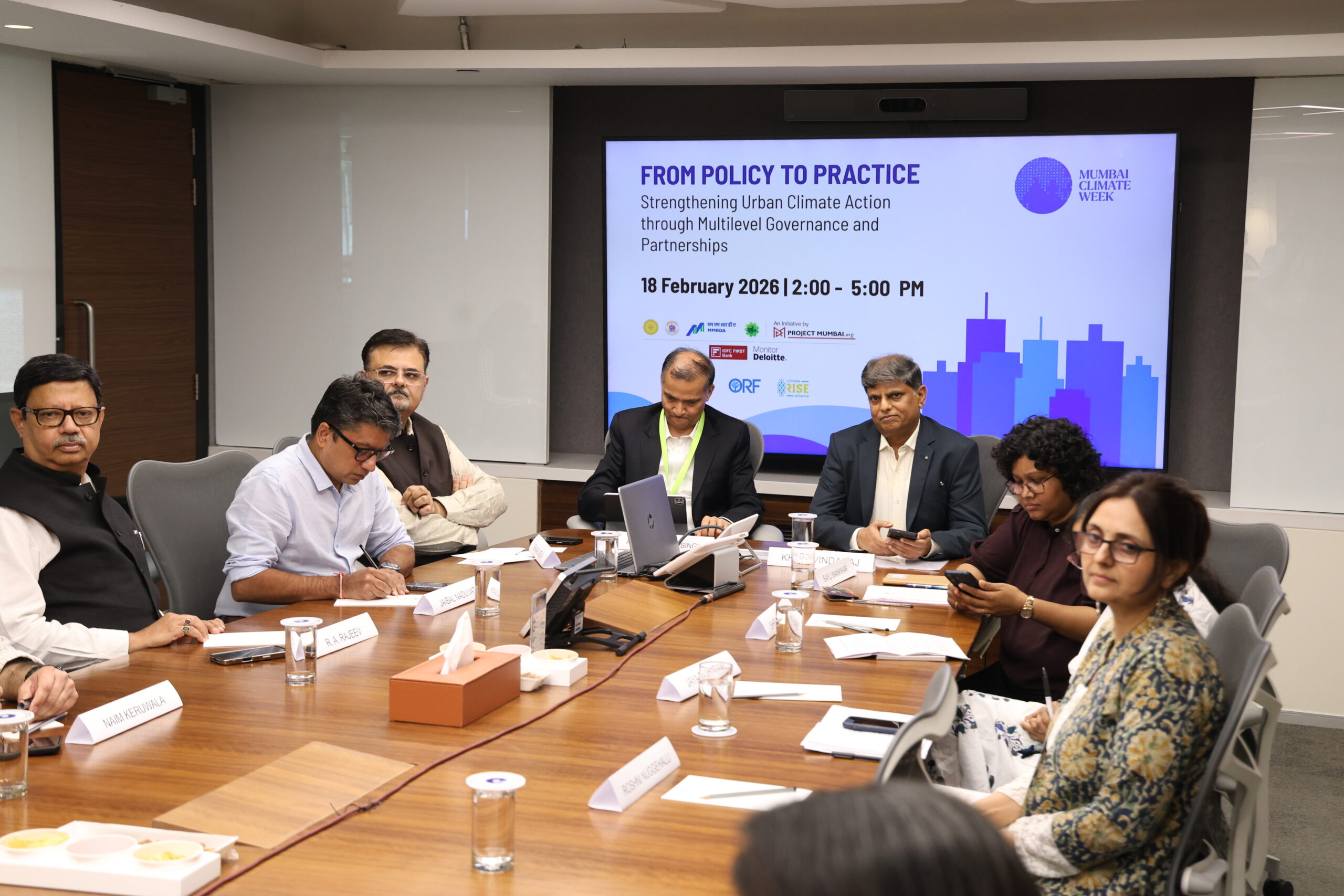
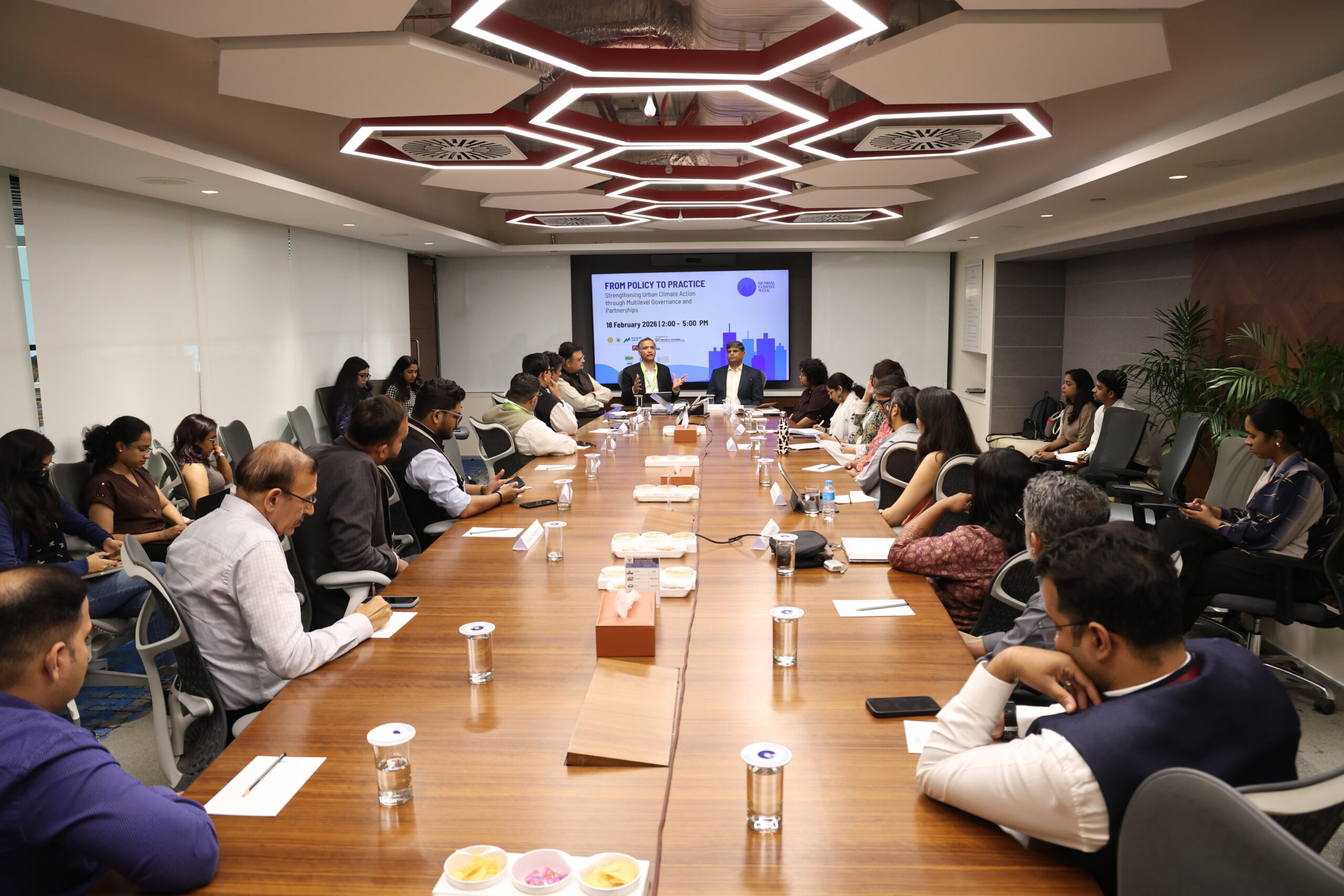
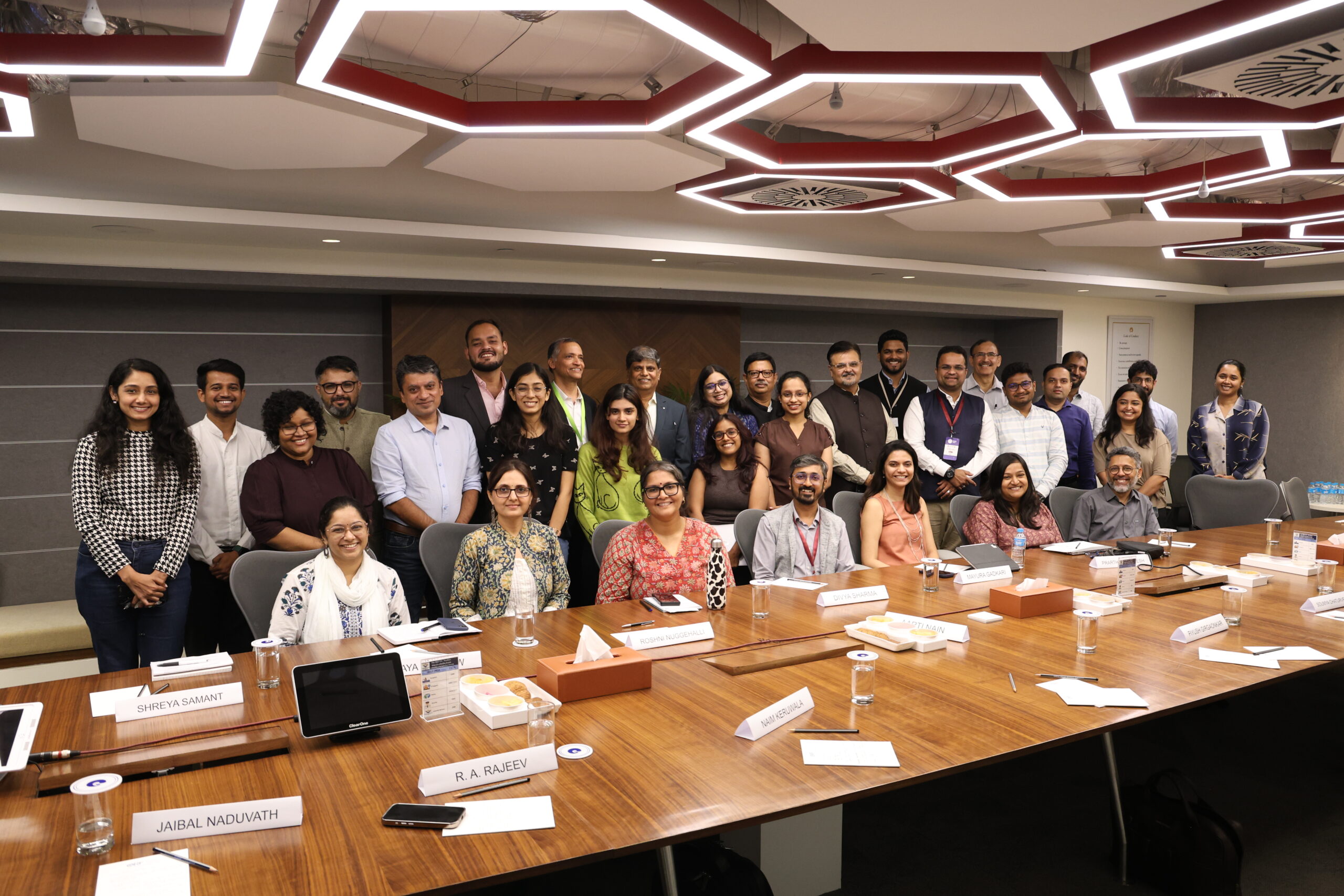
As part of Mumbai Climate Week, ICLEI South Asia, along with Dasra and Observer Research Foundation, convened a focused and action-oriented roundtable titled “From Policy to Practice: Strengthening Urban Climate Action through Multilevel Governance and Partnerships.”
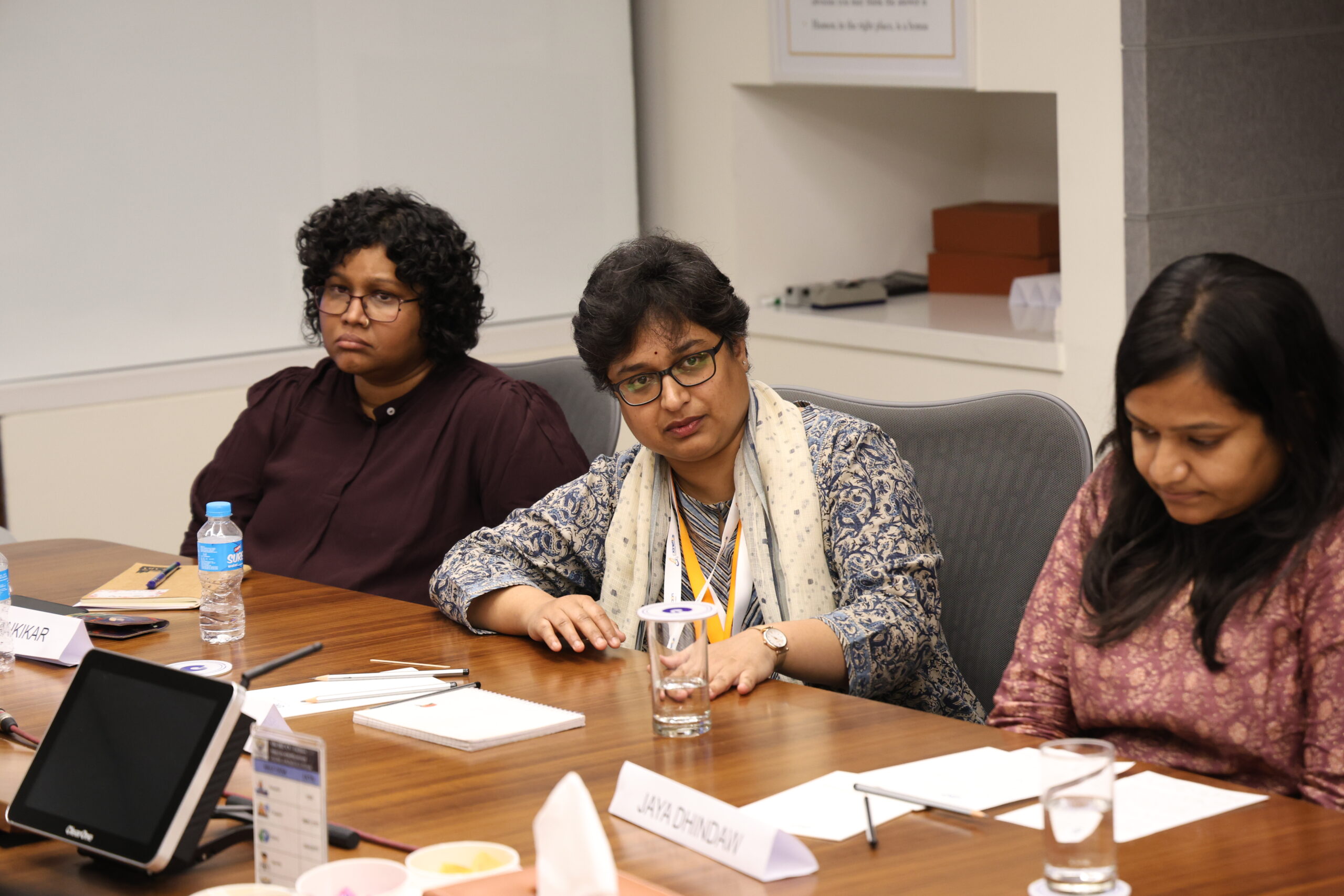
Soumya Chaturvedula and Sayli Mankikar represented ICLEI South Asia in the dialogue, which explored how coordinated governance, shared responsibilities, and strategic partnerships can enable cities to deliver climate solutions that are both impactful and inclusive. The roundtable examined how high-level climate plans can be translated into effective on-ground implementation across levels of government.
Key takeaways included:
While climate intent and policy ambition are largely in place, governance, enforcement, and building up ULB capacity need a boost for policy to translate into on-ground outcomes. Meaningful climate action requires deeper fiscal and functional devolution to ULBs.
Cities require predictable fund flows, stronger own-source revenue systems, and targeted capacity support for ULBs to operationalise climate mandates at scale. Integrating climate priorities into cooling strategies, mobility planning, waste management, and urban development can unlock high-impact outcomes.
Embedding climate considerations into procurement processes, building regulations, and land-use planning frameworks, rather than treating them as parallel initiatives will be critical for institutionalising long-term resilience.
Addressing fiscal pressures, strengthening urban data ecosystems, and navigating political economy dynamics will be key to accelerating scale. Enhancing financial headroom, investing in reliable and accessible data systems, and building stronger citizen engagement around planning reforms can drive broader adoption.
Engaging the Climate Ecosystem
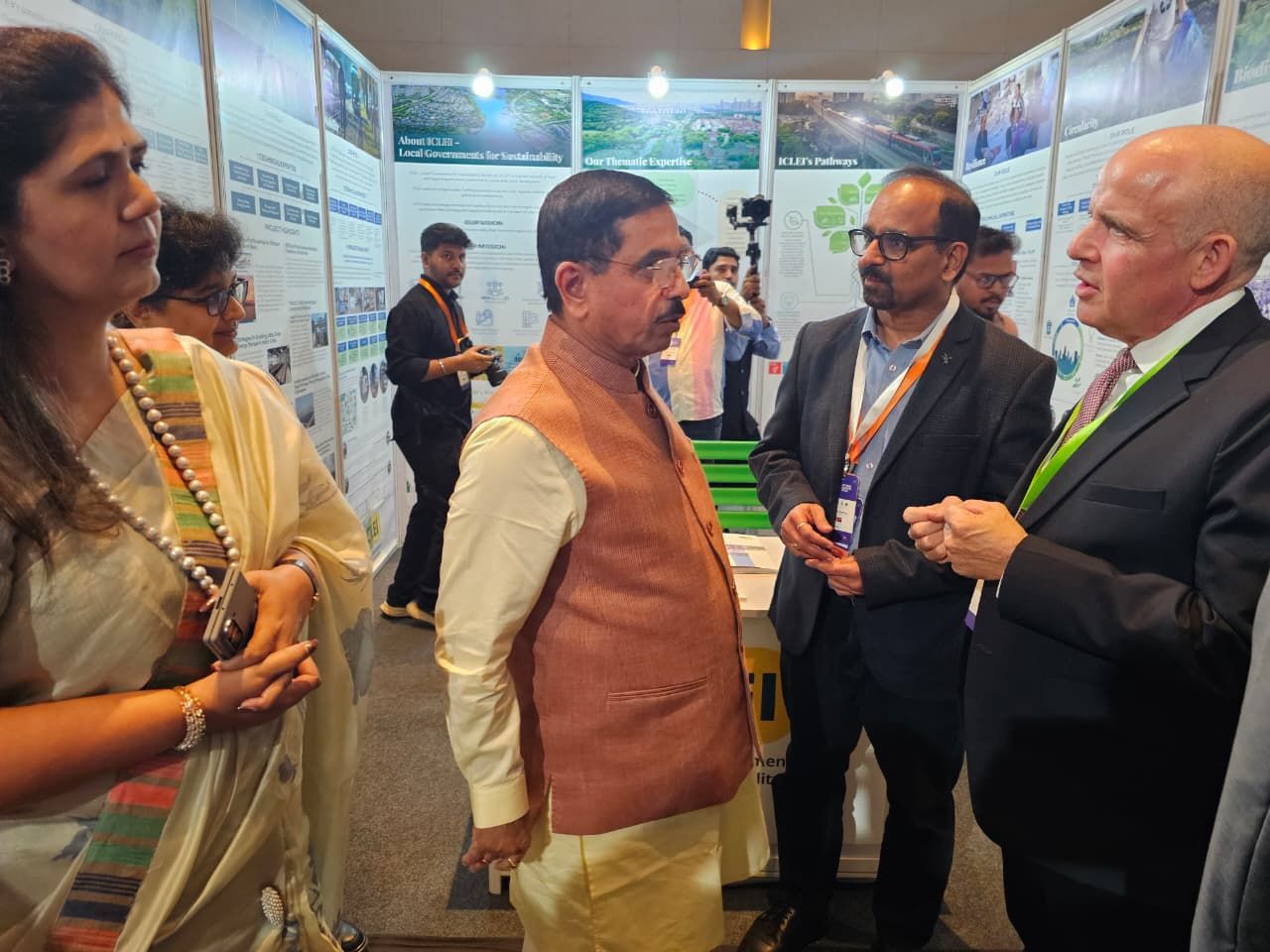
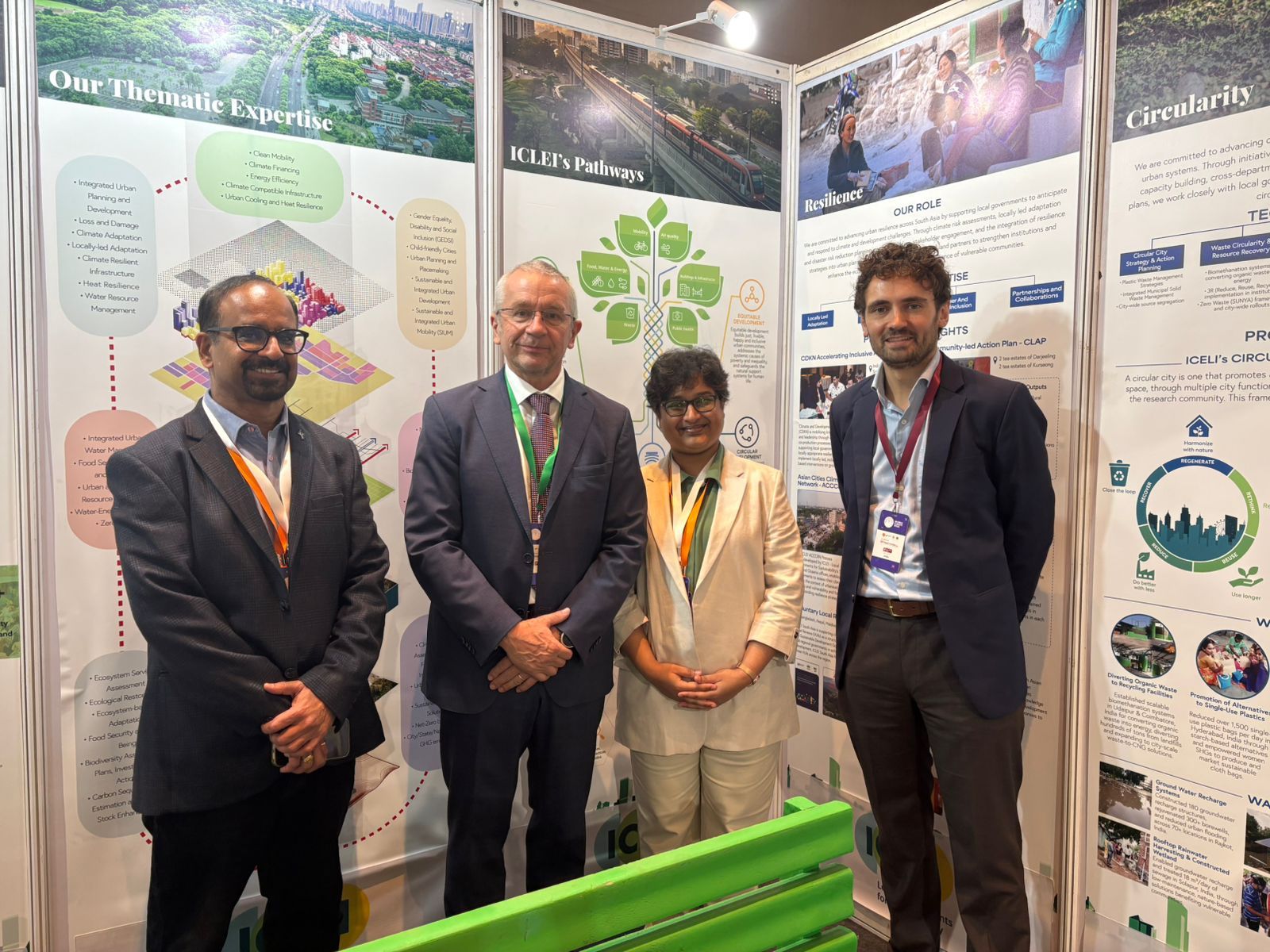
At its exhibition stall, ICLEI South Asia showcased its work across energy systems, climate planning, circular economy, sustainable mobility, and biodiversity conservation. The space served as a dynamic platform for engagement with city officials, state representatives, financial institutions, civil society organisations, and private sector partners. The exhibition strengthened ICLEI South Asia’s visibility within the climate ecosystem and reinforced its position as a trusted technical partner for local climate action. Mumbai Climate Week 2026 demonstrated that climate ambition must be matched with institutional capacity, innovative finance, and societal ownership. From shaping narratives to structuring investments, and from strengthening governance to formalising metropolitan partnerships, ICLEI South Asia’s engagements reflected a comprehensive approach to urban climate transformation.