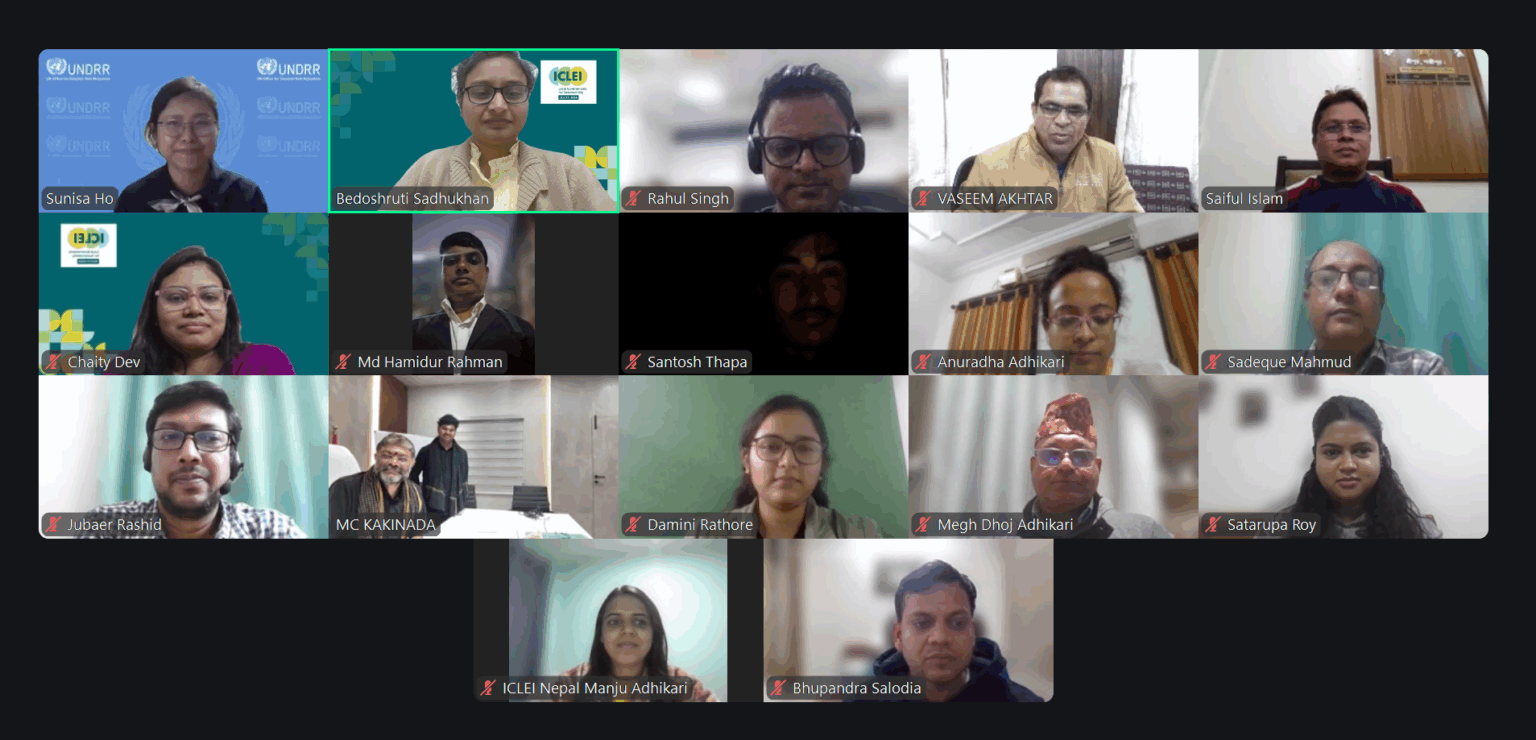
To support local governments in strengthening their disaster preparedness, ICLEI South Asia conducted a webinar on Disaster Risk Reduction (DRR) on 3 December 2025. The session was organised under the third phase of the Climate and Development Knowledge Network (CDKN) – Accelerating Inclusive Action project, supported by the Ministry of Foreign Affairs of the Netherlands and IDRC through the Step Change Initiative. The webinar was part of a year-long training and peer-learning programme on climate resilience, disaster risk management, and sustainable urban systems. It brought together 14 participants from 12 municipalities in Bangladesh, India, Nepal, and Sri Lanka, along with two expert speakers.
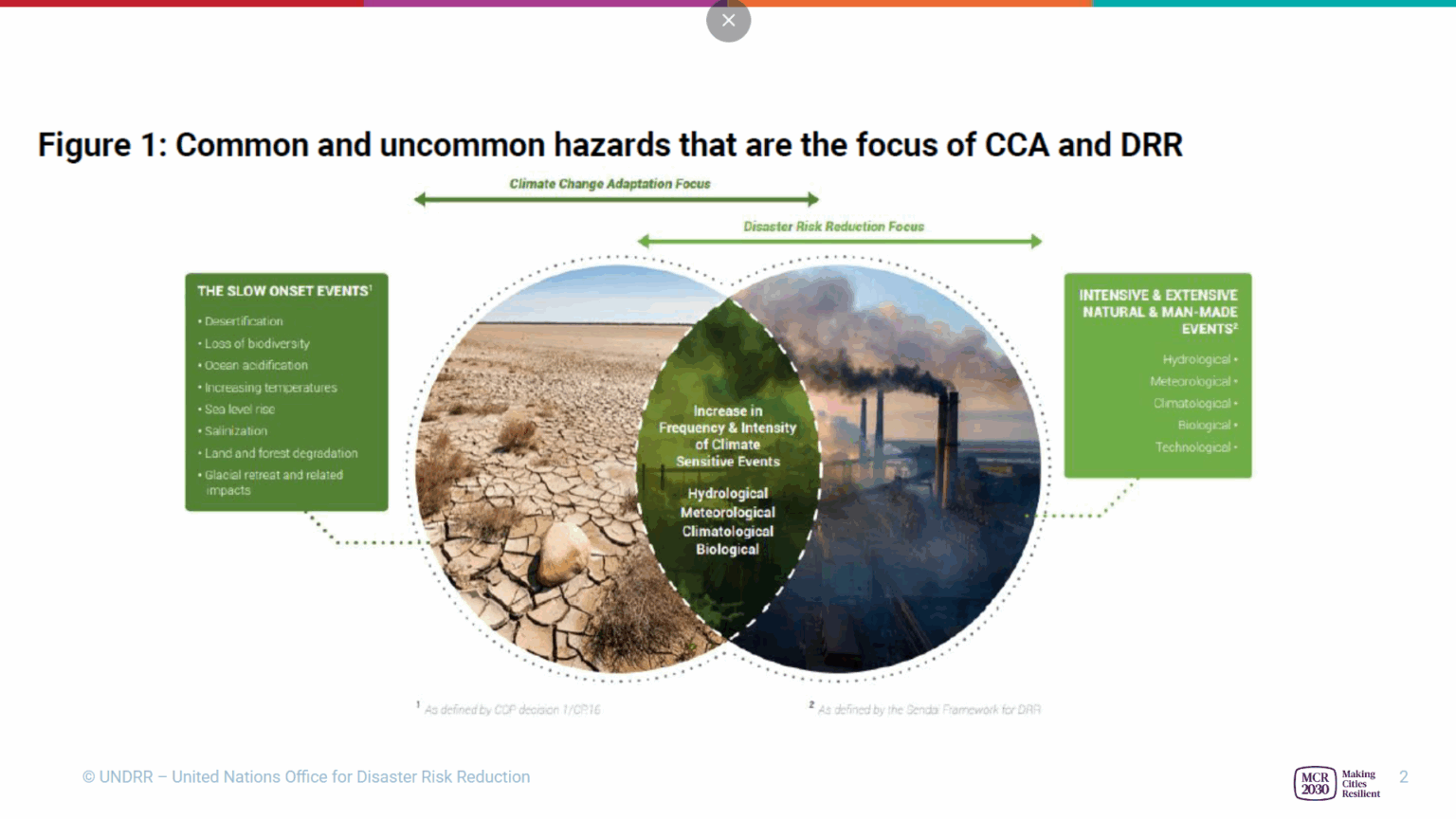
This was the second technical webinar of the training series under CDKN and aimed to strengthen city officials’ understanding of disaster risk, exposure, and vulnerability, introduce structured tools for assessing and improving local resilience, build familiarity with practical, city-led preparedness measures, and promote peer learning through real-world examples. Speakers highlighted that cities can significantly reduce disaster impacts by addressing underlying vulnerabilities through better planning, coordination, and sustainable development choices.
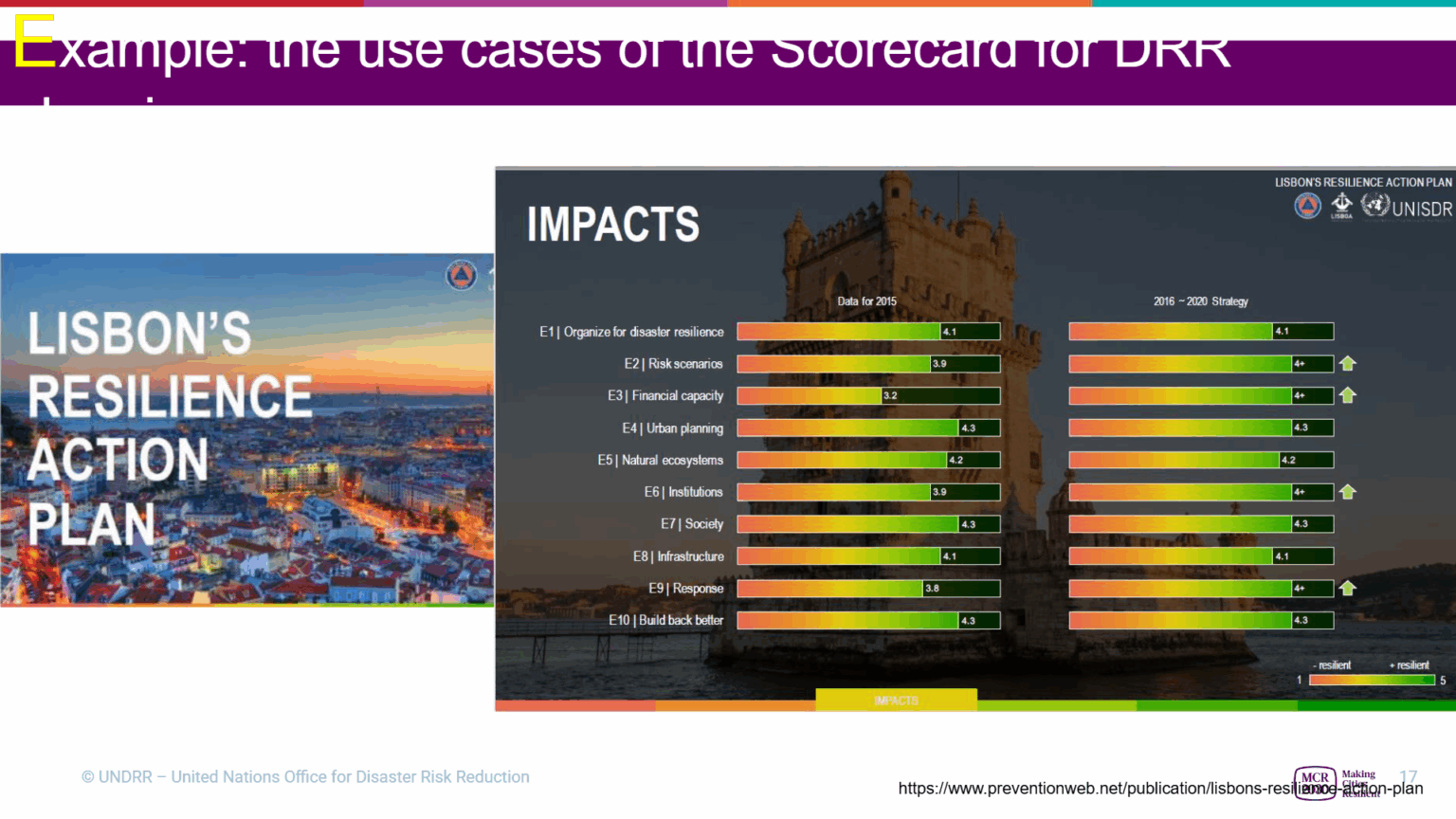
A key focus of the webinar was the Disaster Resilience Scorecard for Cities, introduced by the United Nations Office for Disaster Risk Reduction (UNDRR). The Scorecard provides a structured approach to assessing a city’s resilience in alignment with the Sendai Framework’s 10 Essentials— critical and independent steps that need to be undertaken to build and maintain resilience. By helping cities assess baseline conditions and identify systemic gaps and priority actions, the tool supports coordinated multi-stakeholder resilience planning in municipalities.
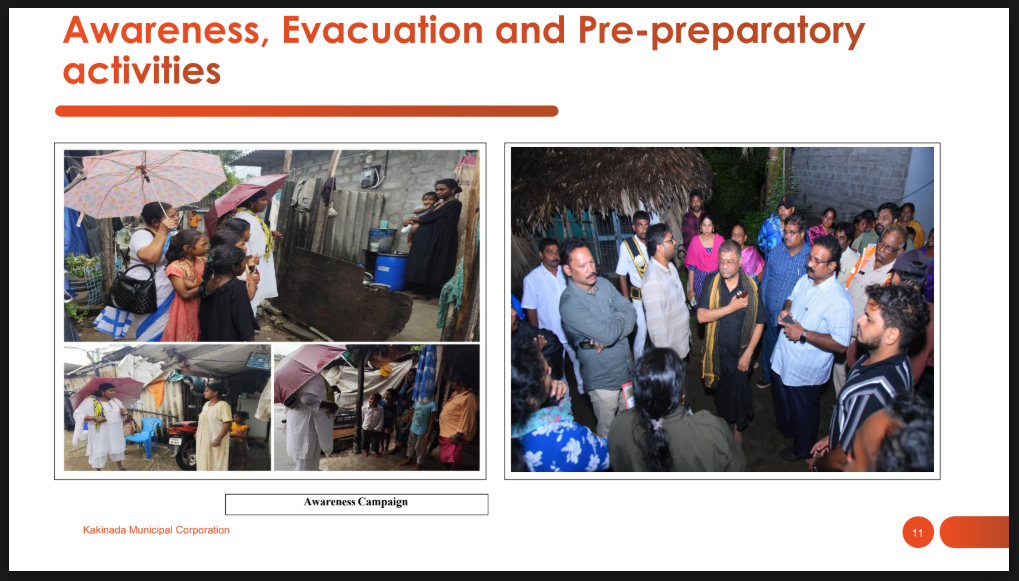
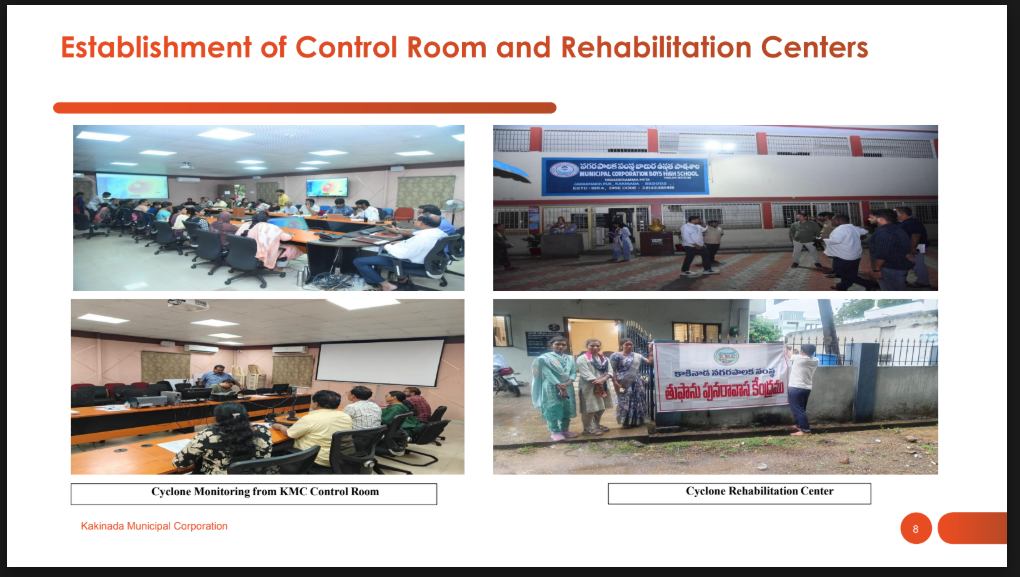
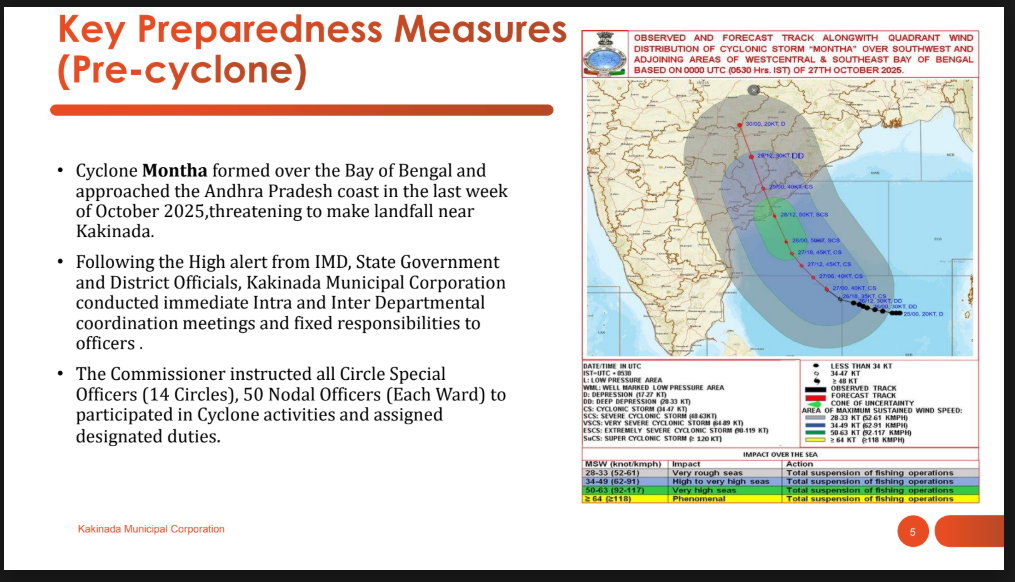
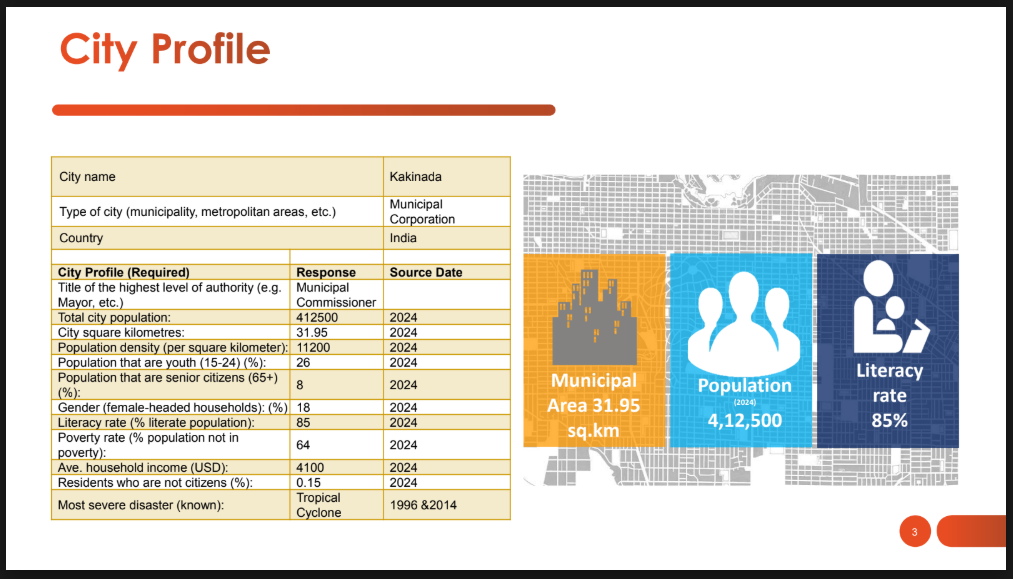
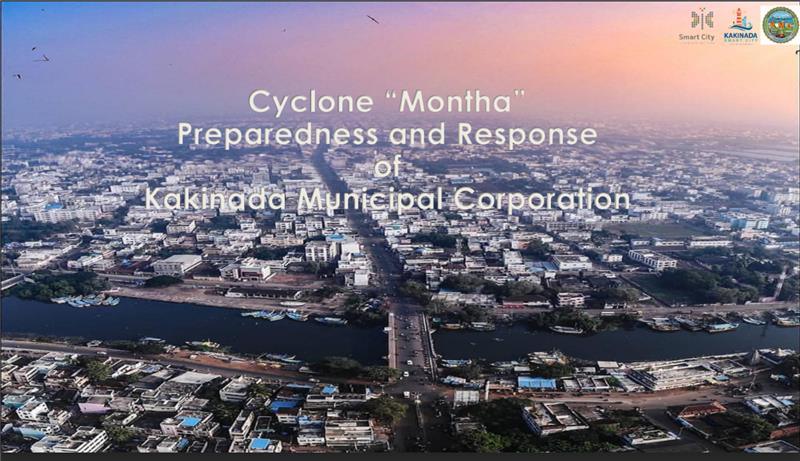
The webinar also featured a real-world example of disaster preparedness from Kakinada, presented by Municipal Commissioner V. V. Satyan. The city’s coordinated response to Cyclone Montha in October 2025 showcased the value of early warning systems, preparedness measures, including advisories issued to fishermen, identification and evacuation of population from vulnerable areas, establishment of a 24×7 municipal control room, proactive relief and rehabilitation measures, and rapid restoration of infrastructure.
The participants expressed interest in improving methods for identifying vulnerable populations, assessing the adequacy of shelters, and strengthening the integration of hazard data into development planning. The importance of continuous inter-departmental coordination emerged as a common thread. Officials agreed that more robust communication channels, regular vulnerability assessments, and better use of digital tools such as GIS could substantially enhance municipal readiness.
The webinar concluded on a positive note, wherein participants appreciated the balance of conceptual grounding, practical tools, and on-the-ground lessons. Many noted that the event helped bridge a critical gap between DRR frameworks and day-to-day municipal planning, leaving them better equipped to strengthen resilience within their own local contexts.