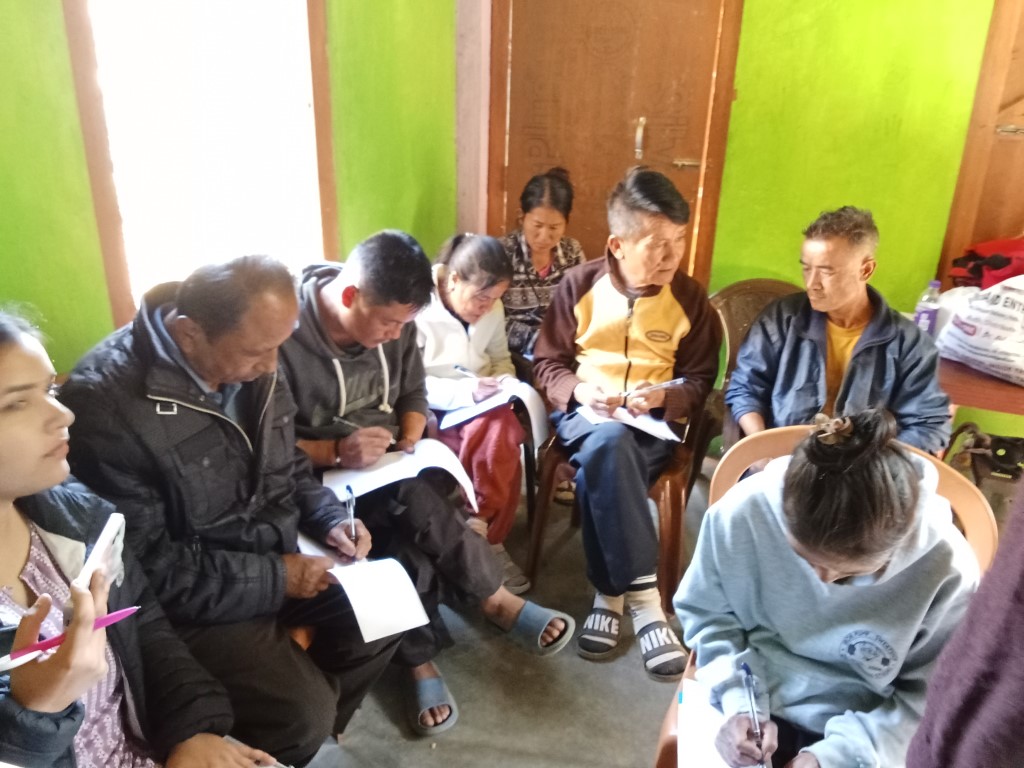
In a capacity-building effort for the local community, ICLEI South Asia conducted hands-on trainings on water security from 13 – 16 January 2026 across four project sites in Darjeeling district, India. The trainings were conducted under the ongoing project “Community-Led Action Plan for Climate Resilient Water Security in Darjeeling Himalayas”, supported and funded by the Swiss Philanthropy Foundation, in collaboration with the Gorkhaland Territorial Administration.
The trainings aimed at identifying and building a cohort of community members who could be trained as barefoot hydrogeologists — individuals equipped with the basic understanding of water resources for locally-led water security planning and management. This cohort will enable the local communities to engage and better inform their respective Gram Panchayats for necessary actions related to water management. Nearly 75 participants attended the sessions, including 44 women and 31 men.
The trainings were organised across four hamlets of Dara Gaon (Nagri Farm Tea Garden), Bahidardhura (Dhajea Tea Garden), Kothidara (Rohini Tea Garden) and Godamdhura (Gidda Pahar Tea Garden). These are among the water-stressed areas of Darjeeling region, facing water-related challenges of availability, access, reliability and storage.
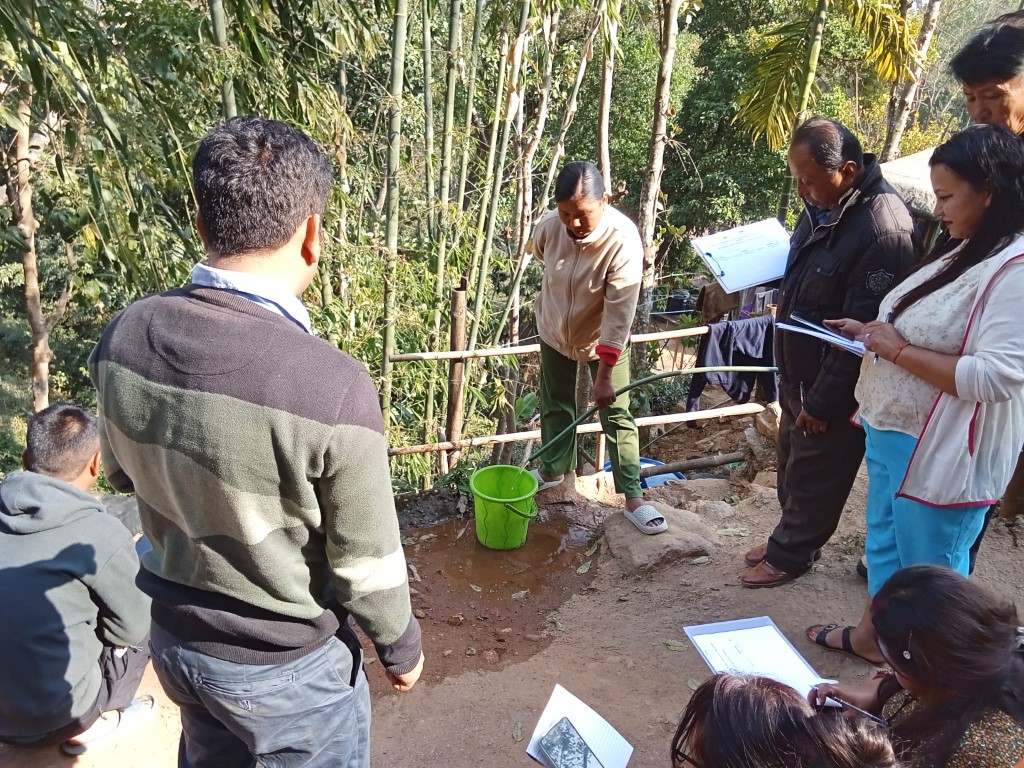
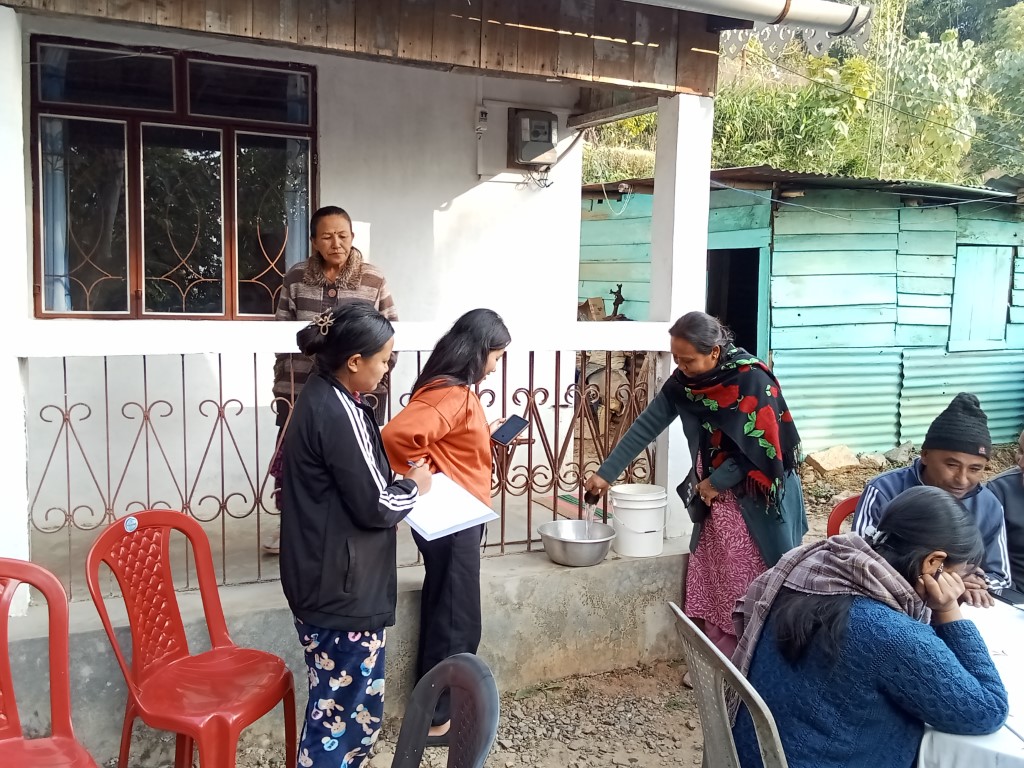
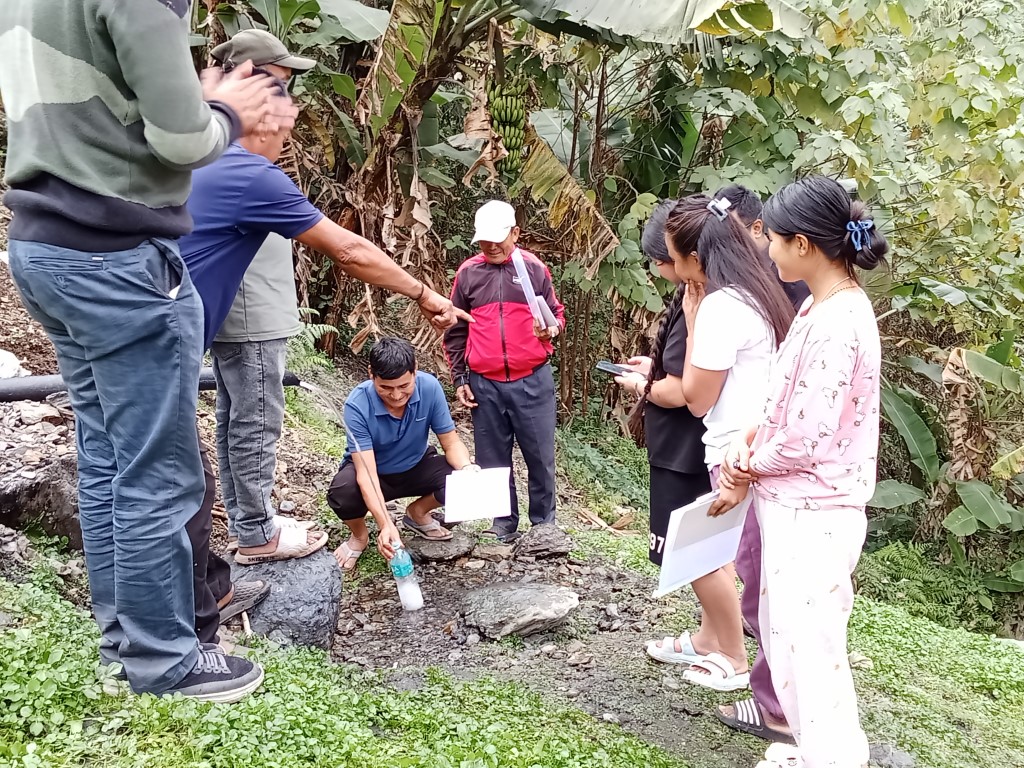
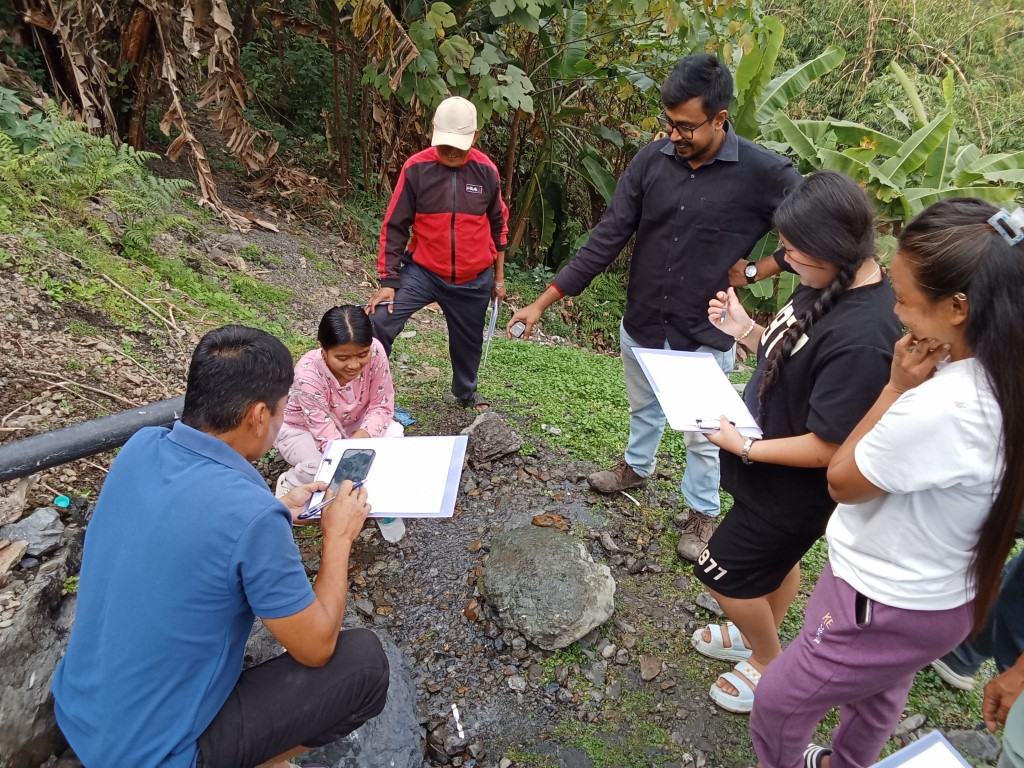
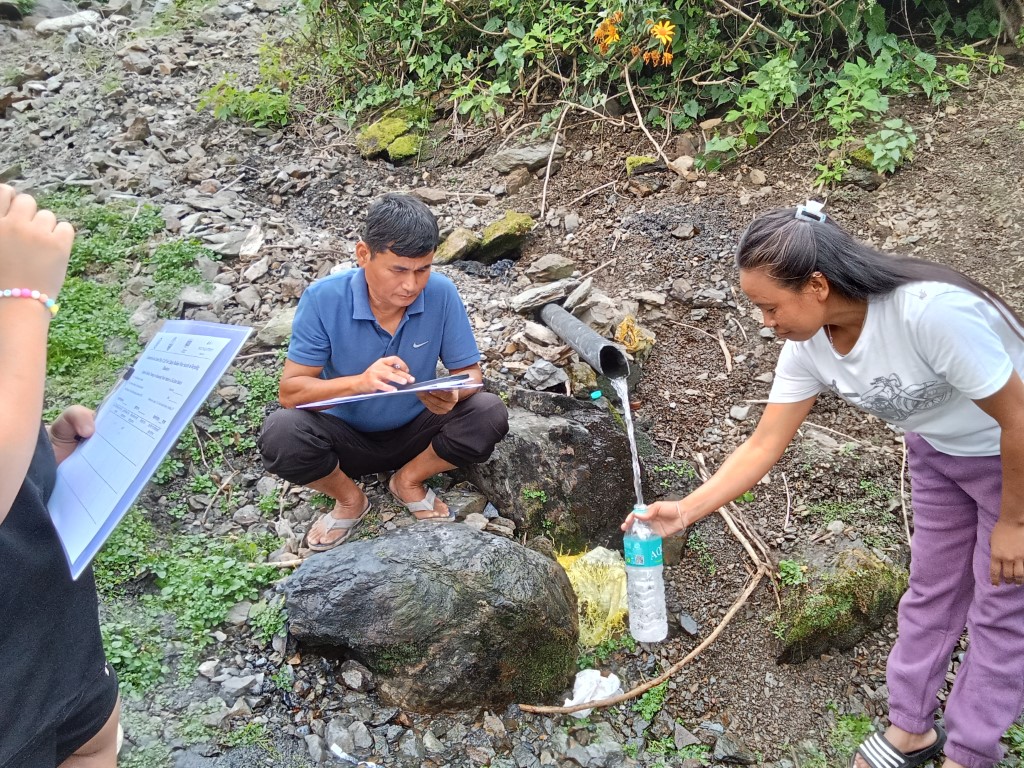
This was the second phase of community trainings, developed on the basis of the first phase, where theoretical knowledge on the fundamentals of water resources and its management was imparted. In the second phase, the community members were introduced to methods of assessing water demand and supply (spring discharge). They were trained on simple methods of discharge measurement from spring sources, which include the bucket method, water-level drop method in natural springs, and water-level drop method in springs with a storage tank.
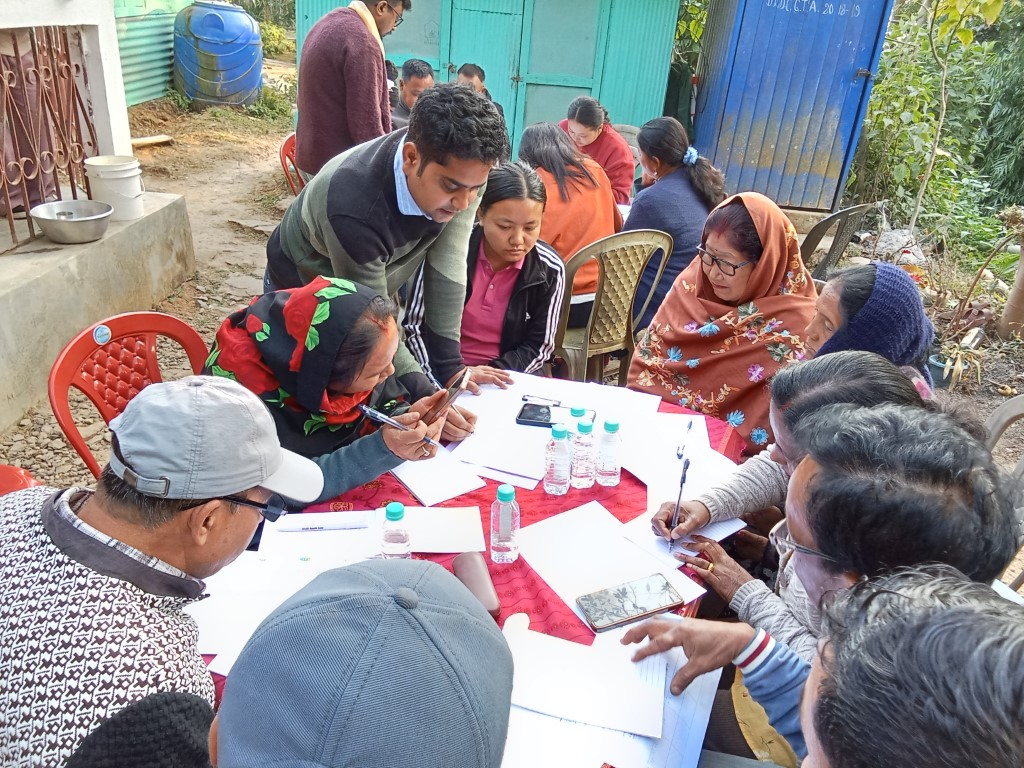
The trainings included water demand calculation for all the hamlets, based on total number of households, average household size, and per capita water requirement (based on Jal Jeevan Mission guideline). Participants were informed about water budgeting— the method of calculating the difference between demand and supply— to clearly quantify and understand the water deficit in their respective hamlets.
The trainings combined classroom learning with field-based practices, generating strong interest among participants. Many committed to regularly measuring and recording the spring discharge for their respective hamlets, creating a foundation for informed, community-led water management. Further training workshops are planned in the coming months which will focus on methods of water resource (spring) management and monitoring of pilot activities, that will aid to strengthen climate-resilient water security in the Darjeeling Himalayas.