ICLEI – Local Governments for Sustainability, South Asia (ICLEI South Asia) supported NITI Aayog, Government of India, in developing long-term sectoral pathways for achieving net-zero emissions in the waste sector by 2070. ICLEI South Asia, along with a working group comprising officials from the Ministry of Environment, Forest and Climate Change (MoEFCC) and the National Environmental Engineering Research Institute (NEERI), contributed to the finalisation of the methodology for waste sector emission estimates and scenario development.
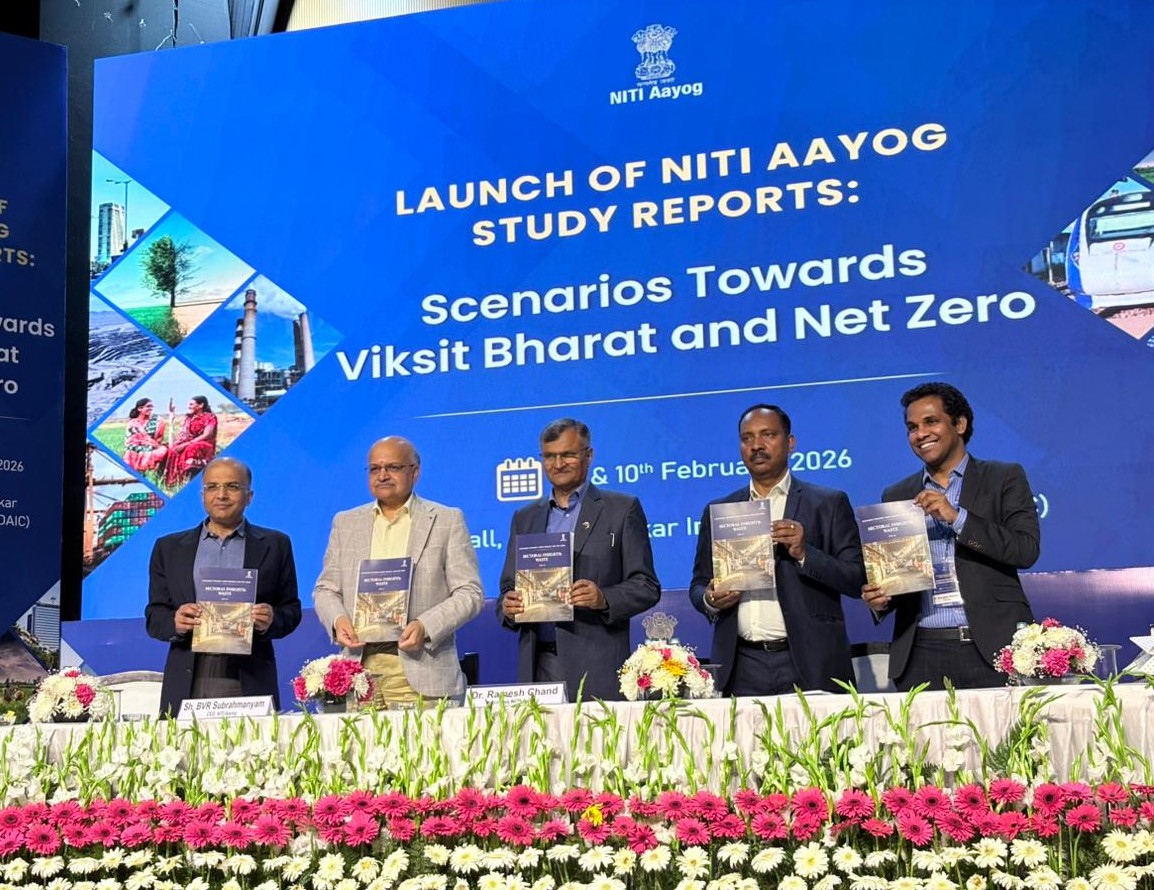
The report, titled ‘Scenarios Towards Viksit Bharat and Net Zero – Sectoral Insights: Waste’, highlights the sector’s potential to contribute to India’s climate commitments. It presents a detailed emissions trajectory for the waste sector, covering Solid Waste Management, Domestic Wastewater, and Industrial Wastewater, under two distinct scenarios: the Current Policy Scenario (CPS) and the Net Zero Scenario (NZS). The report offers insights into the scale and pace of transformative shifts required to meet the long-term goal of net-zero emissions by 2070.
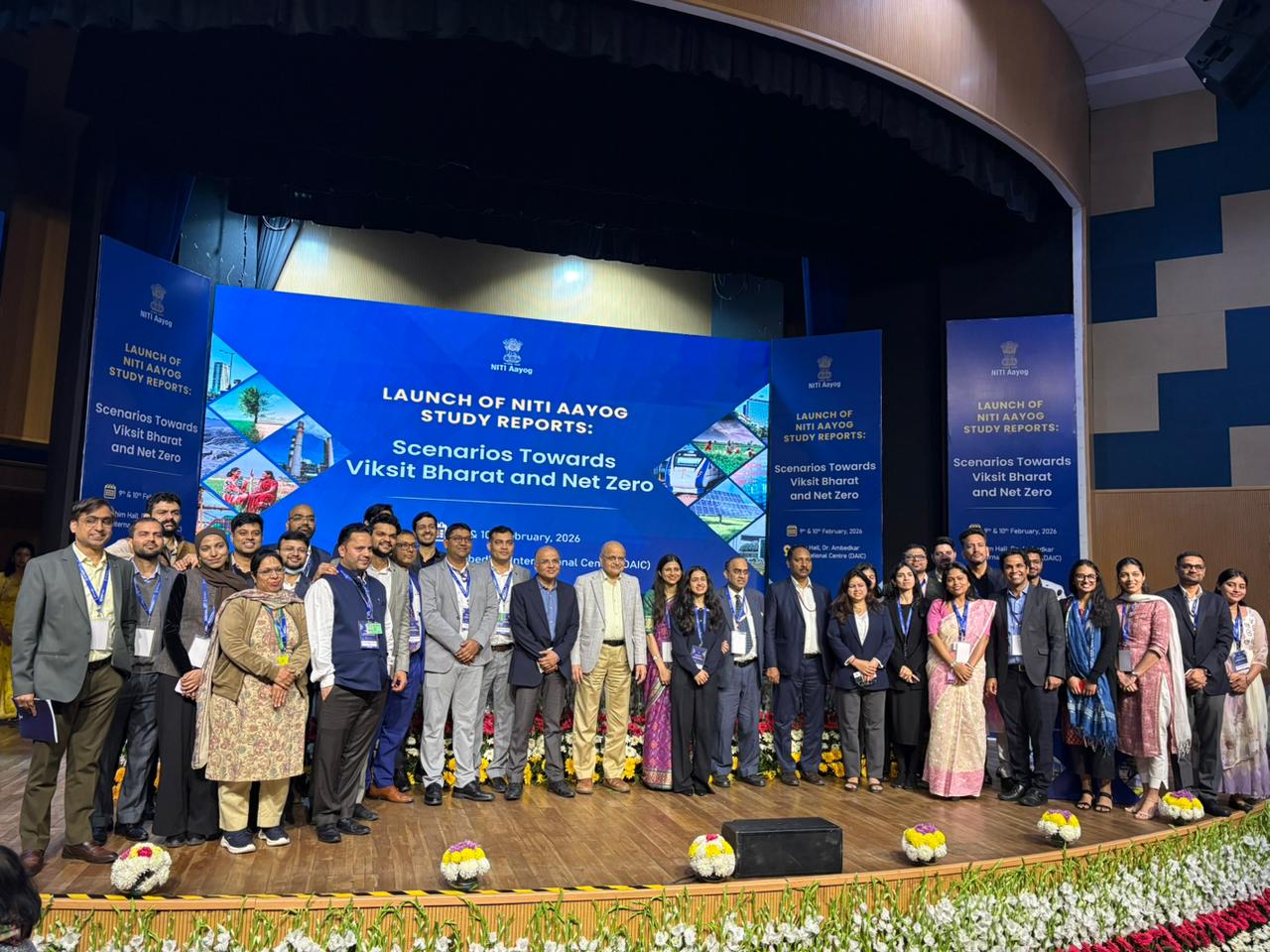
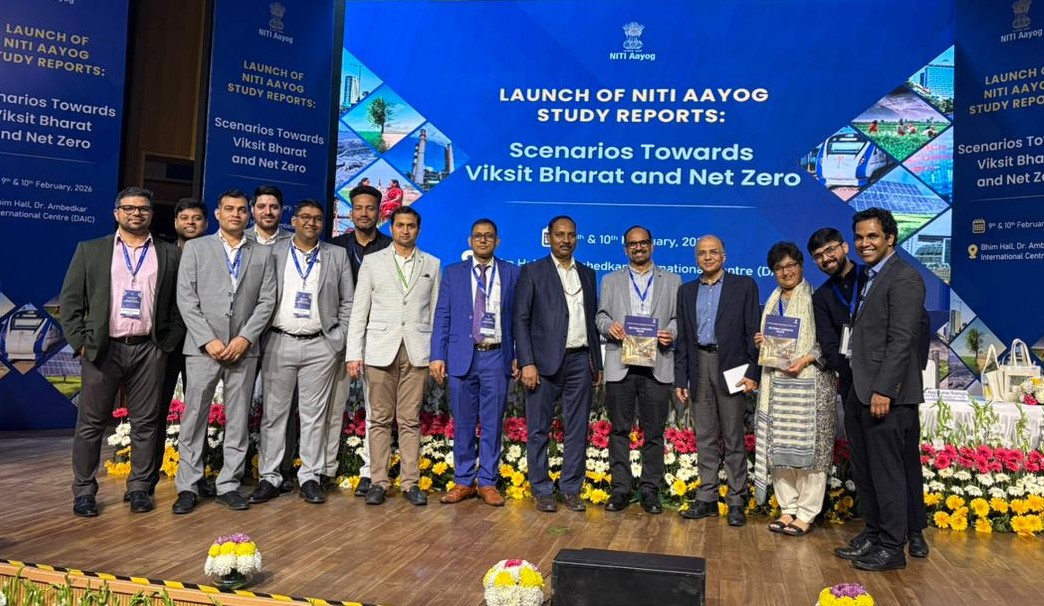
On 10 February 2026, the report was launched at Dr. Ambedkar International Centre in New Delhi in the presence of Shri B.V.R. Subrahmanyam, CEO, NITI Aayog; Dr. Mangi Lal Jat, Secretary, Department of Agricultural Research and Education and Director General, Indian Council of Agricultural Research; Dr. Ramesh Chand, Member, NITI Aayog; Dr. Anshu Bharadwaj, Principal Adviser, NITI Aayog; and Shri Venugopal Mohor, NITI Aayog.
Mr. Emani Kumar, Ms. Soumya Chaturvedula, Ms. Sayali Mankikar, and Mr. Shubh Dhdiwal represented ICLEI South Asia at the launch.
Current Policy Scenario (CPS)
Under the Current Policy Scenario, waste sector emissions are projected to increase from 75.64 MtCO₂e in 2020 to 266.10 MtCO₂e by 2070 — a 3.5-fold rise. By 2070, Industrial Wastewater (47%) is expected to dominate sectoral emissions, followed by Domestic Wastewater (36%) and Solid Waste (17%).
Solid Waste Management
Solid waste generation is projected to rise from 158.9 Mt in 2030 to 476.2 Mt by 2070 (CAGR: 2.8%).
Waste processing is targeted to reach 85% by 2070, with the highest shares from Composting (40%), MRF/Recycling (23%), Waste Incineration/RDF (15%), and Biomethanation (5%).
Emissions from solid waste management are projected to increase from 30 MtCO₂e in 2030 to 44.6 MtCO₂e by 2070.
Domestic Wastewater
Domestic wastewater generation is projected to increase from 240,684 MLD in 2030 to 265,791 MLD in 2070.
Sewer connectivity is expected to increase by 65% by 2070, with a 36:64 ratio of anaerobic to aerobic treatment technologies.
Emissions are projected to rise from 67 MtCO₂e in 2030 to 95.4 MtCO₂e by 2070.
Industrial Wastewater
Industrial wastewater generation is projected to reach 68,685 MLD by 2070 — more than 3.7 times the 2020 level.
Emissions are projected to increase from 50.5 MtCO₂e in 2030 to 126.1 MtCO₂e by 2070.
Net Zero Scenario (NZS)
Under the Net Zero Scenario, the report outlines three resilience goals, nine targets, and eleven strategies across three sub-sectors to enable the transition to net-zero emissions. Implementation of the NZS strategies is expected to reduce sectoral GHG emissions by 95.9% compared to CPS levels by 2070.
Solid Waste Management
Per capita solid waste generation is capped at 0.622 kg per capita per day post-2040.
Waste processing remains targeted at 85% by 2070, with greater emphasis on cleaner and energy-efficient pathways. The highest shares are projected from MRF/Recycling (23%), Composting (20%), Waste Incineration/RDF (15%), and Biomethanation (15%).
Emissions are expected to decline by 78.8% compared to CPS levels in 2070.
Domestic Wastewater
Sewer connectivity is expected to increase by 85% by 2070, with a 26:74 ratio of anaerobic to aerobic treatment technologies.
Emissions are projected to decline by 98.5% compared to CPS levels in 2070.
Industrial Wastewater
100% methane recovery from industrial wastewater treatment is targeted by 2040.
Emissions are expected to decline by 100% compared to CPS levels by 2070.
Key Strategies for Achieving Net Zero in the Waste Sector
- Waste reduction and source segregation
- Strengthening primary and secondary collection and transportation
- Processing, resource recovery, scientific disposal, and bioremediation
- Universal access to scientific and cost-effective sanitation facilities, with safe collection and transfer to treatment systems
- Maximising wastewater and faecal sludge treatment with methane recovery
- Enhancing circularity through reuse and recycling
- Implementing well-managed aerobic wastewater treatment systems
- Enhancing methane recovery from industrial wastewater
- Strengthening technical expertise and capacity building
- Advancing climate-based participatory budgeting and sustainable technology procurement
- Enabling private sector participation
- Strengthening public awareness and engagement
- Establishing a robust monitoring and evaluation framework
Achieving net-zero emissions in the waste sector will significantly contribute to climate-compatible urban development across India. These efforts align with national programmes such as the Swachh Bharat Mission (SBM) and the Atal Mission for Rejuvenation and Urban Transformation (AMRUT), as well as global commitments under the Sustainable Development Goals (SDGs), particularly SDGs 6 (Clean Water and Sanitation), 7 (Affordable and Clean Energy), 11 (Sustainable Cities and Communities), 12 (Responsible Consumption and Production), and 13 (Climate Action).
The report provides evidence-based emission projections and transition pathways to guide effective implementation of the upcoming Solid Waste Management Rules 2026. It supports policymakers and Urban Local Bodies in aligning waste management regulations and investments with India’s Viksit Bharat vision and long-term net-zero commitments.
READ THE REPORT HERE