ICLEI South Asia Showcases Nature-Positive Urban Solutions at BioConserve Summit 2026

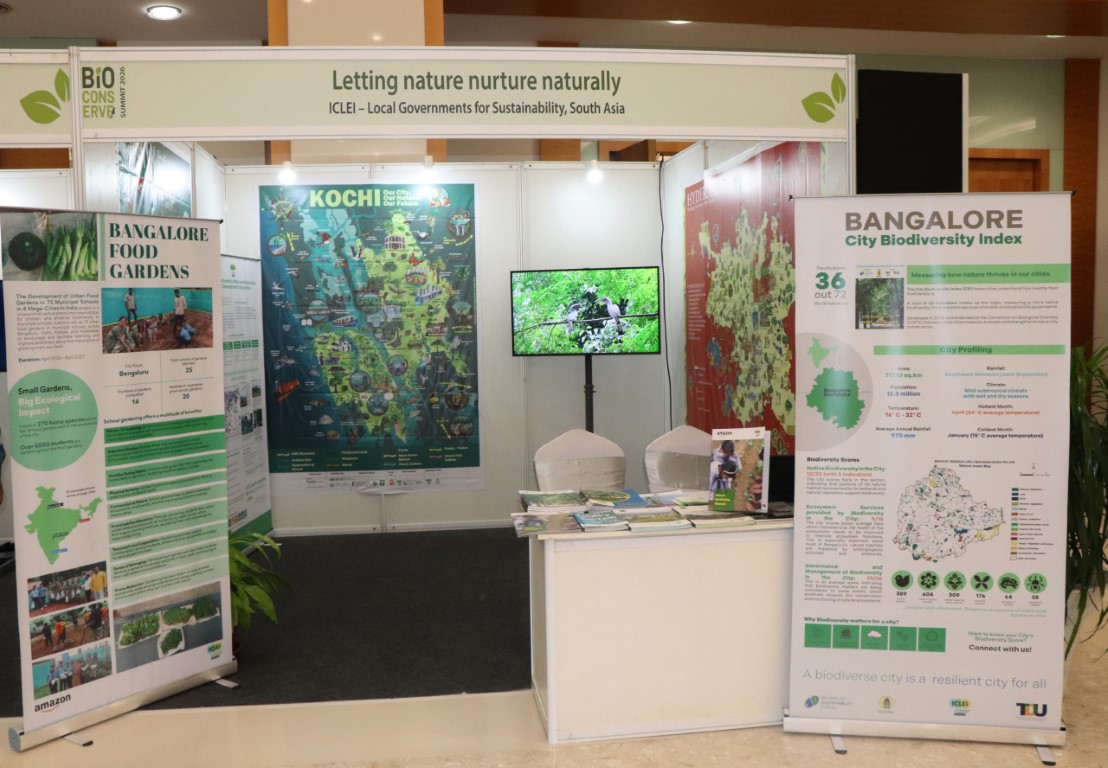
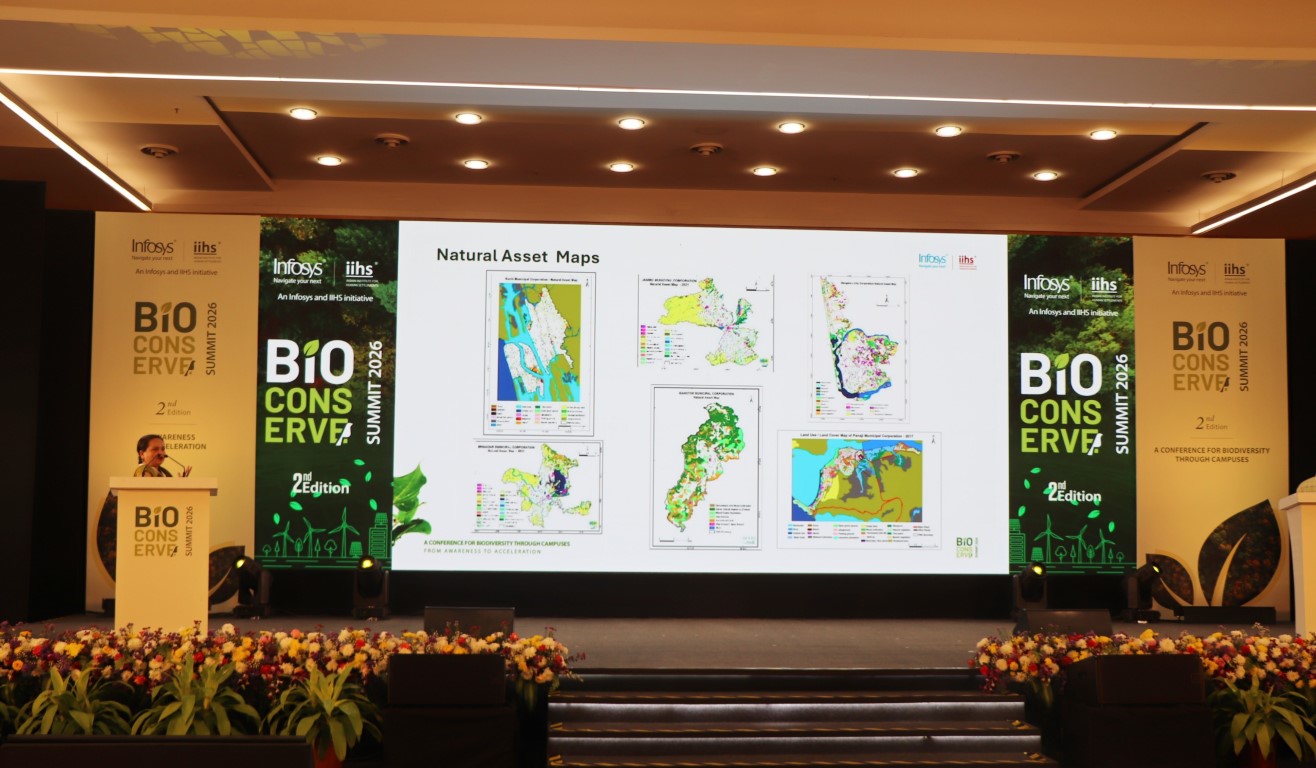
ICLEI South Asia participated in the BioConserve Summit 2026, held on 30 January 2026 in Bengaluru. Hosted by Infosys, in collaboration with the Indian Institute for Human Settlements, the Summit convened leaders across urban development, academia, design, technology, and government to showcase practical and scalable approaches for integrating biodiversity into India’s rapidly urbanising cities. Speaking at the event, Dr. Monalisa Sen, Associate Director, ICLEI South Asia, delivered an address titled “Turning urban land into living ecosystems.” She underscored the growing role of cities in reversing biodiversity loss and demonstrated how urban spaces can actively support ecological restoration, food security, and human well-being. Dr. Sen highlighted ICLEI South Asia’s role in translating global biodiversity frameworks such as the Convention on Biological Diversity, the Sustainable Development Goals, and India’s National Biodiversity Targets, into locally grounded action. Through biodiversity assessments, mapping, capacity building, and pilot implementation, ICLEI South Asia supports over 30 city regions across India and Bangladesh in mainstreaming biodiversity into urban planning and governance. ICLEI South Asia showcased its Amazon-funded “Development of Urban Food Gardens in 75 Municipal Schools in 4 Mega-Cities in India” project. Aimed to be implemented across 75 municipal schools in Bengaluru, Delhi, Kolkata, and Hyderabad, the initiative demonstrates how small-scale interventions can deliver wide-ranging benefits. In Bengaluru alone, 14 school food gardens are already operational, growing around 20 varieties of vegetables and supporting nearly 270 faunal species. Beyond ecological gains, the gardens benefit over 6,000 students, promoting improved nutrition, hands-on learning, physical activity, stress reduction, and a deeper connection with nature. ICLEI South Asia highlighted its work on biodiversity monitoring tools such as the City Biodiversity Index (CBI), which helps cities assess and score their native biodiversity, ecosystem services, and governance mechanisms. As per Bengaluru’s CBI, despite rapid urbanisation, it remains one of India’s most biodiverse cities. This reinforces its ecological value, while advocating for stronger ecosystem restoration and management efforts by the authorities. Several of ICLEI South Asia’s on-ground initiatives at the event demonstrated how biodiversity planning in cities can into action and benefit the citizens. These include the development of Nature Interpretation Zones such as the one at Subhash Bose Park in Kochi; illustrated Natural Asset Maps created for cities including Kochi, Panaji, Gangtok, Nagpur, Jammu, Srinagar, and Hyderabad; ecological restoration projects like constructed wetlands at Ekrukh Lake in Solapur; and urban forests and open green spaces developed using the Miyawaki technique in cities such as Siliguri, Vadodara, Udaipur, and Tirunelveli, that enable cities to better understand, protect, and communicate the value of urban ecosystems. Through its work across the region, ICLEI South Asia continues to partner with cities and stakeholders to co-create, pilot, and scale solutions that place biodiversity at the heart of sustainable urban development, helping transform cities into living ecosystems. Tags: Biodiversity Conservation, Food Gardens, Urban Biodiversity
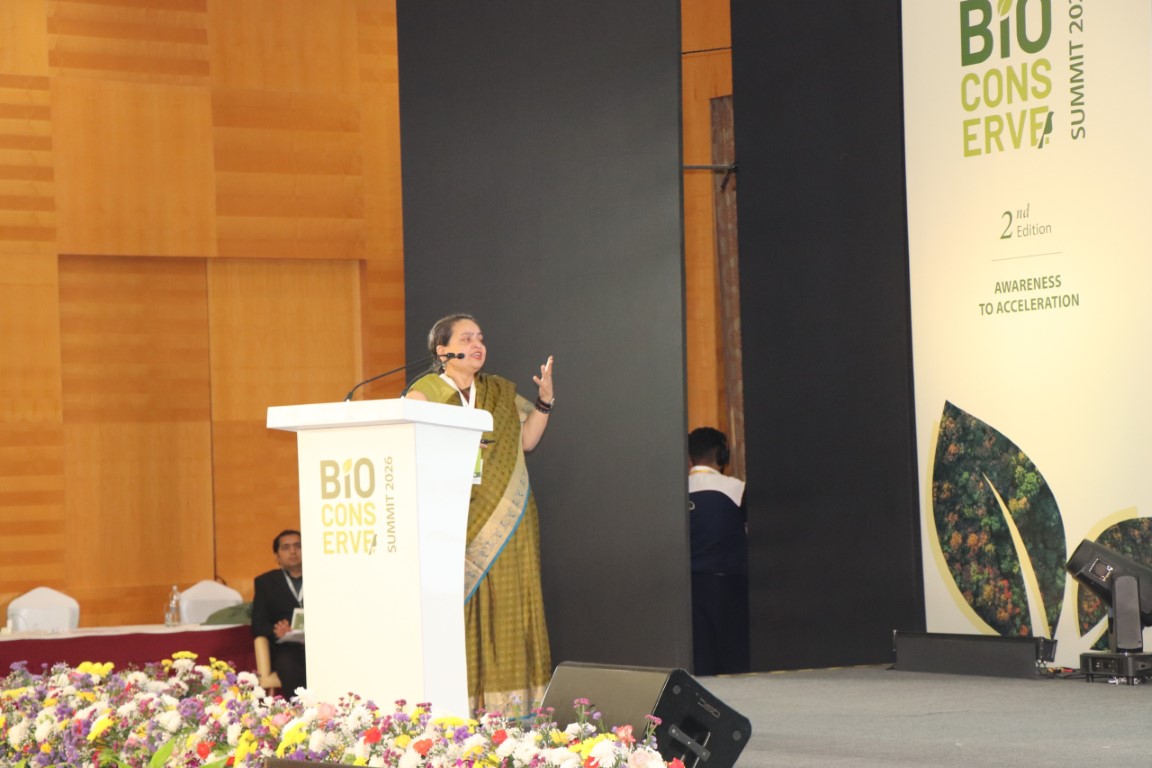
ICLEI South Asia participated in the BioConserve Summit 2026, held on 30 January 2026 in Bengaluru. Hosted by Infosys, in collaboration with the Indian Institute for Human Settlements, the Summit convened leaders across urban development, academia, design, technology, and government to showcase practical and scalable approaches for integrating biodiversity into India’s rapidly urbanising cities.

Speaking at the event, Dr. Monalisa Sen, Associate Director, ICLEI South Asia, delivered an address titled “Turning urban land into living ecosystems.” She underscored the growing role of cities in reversing biodiversity loss and demonstrated how urban spaces can actively support ecological restoration, food security, and human well-being.

Dr. Sen highlighted ICLEI South Asia’s role in translating global biodiversity frameworks such as the Convention on Biological Diversity, the Sustainable Development Goals, and India’s National Biodiversity Targets, into locally grounded action. Through biodiversity assessments, mapping, capacity building, and pilot implementation, ICLEI South Asia supports over 30 city regions across India and Bangladesh in mainstreaming biodiversity into urban planning and governance.

ICLEI South Asia showcased its Amazon-funded “Development of Urban Food Gardens in 75 Municipal Schools in 4 Mega-Cities in India” project. Aimed to be implemented across 75 municipal schools in Bengaluru, Delhi, Kolkata, and Hyderabad, the initiative demonstrates how small-scale interventions can deliver wide-ranging benefits. In Bengaluru alone, 14 school food gardens are already operational, growing around 20 varieties of vegetables and supporting nearly 270 faunal species. Beyond ecological gains, the gardens benefit over 6,000 students, promoting improved nutrition, hands-on learning, physical activity, stress reduction, and a deeper connection with nature.

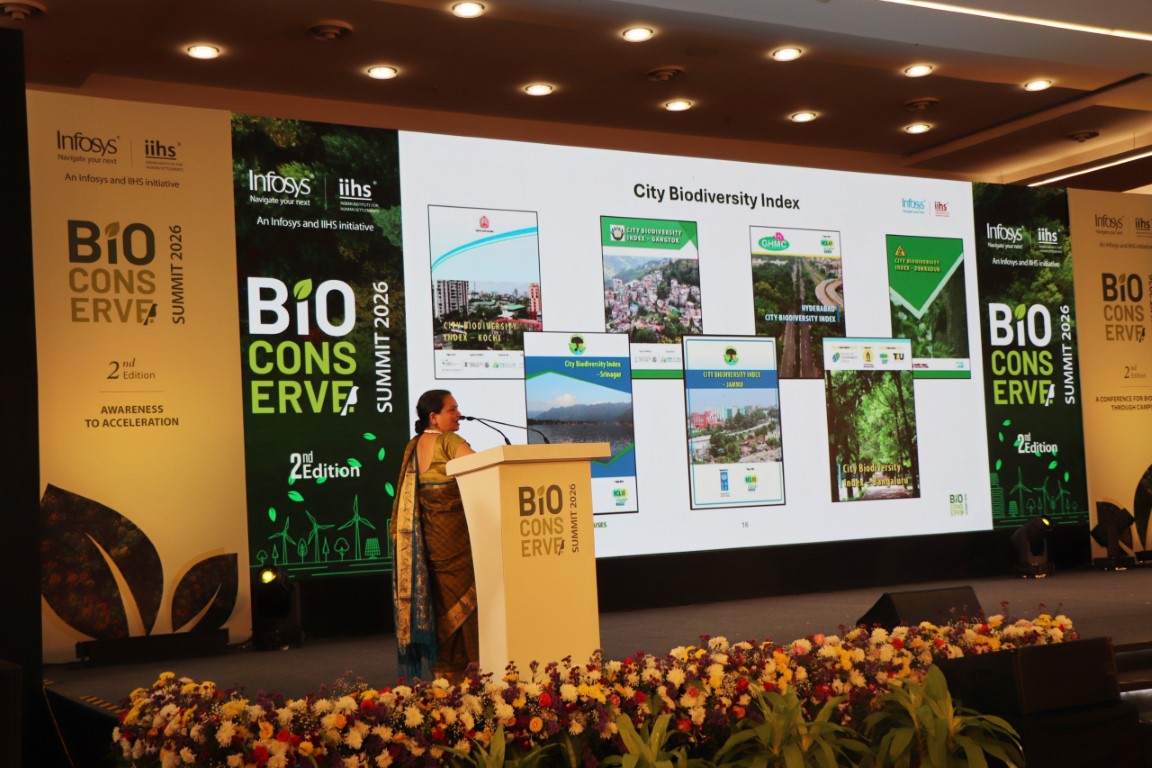
ICLEI South Asia highlighted its work on biodiversity monitoring tools such as the City Biodiversity Index (CBI), which helps cities assess and score their native biodiversity, ecosystem services, and governance mechanisms. As per Bengaluru’s CBI, despite rapid urbanisation, it remains one of India’s most biodiverse cities. This reinforces its ecological value, while advocating for stronger ecosystem restoration and management efforts by the authorities.

Several of ICLEI South Asia’s on-ground initiatives at the event demonstrated how biodiversity planning in cities can into action and benefit the citizens. These include the development of Nature Interpretation Zones such as the one at Subhash Bose Park in Kochi; illustrated Natural Asset Maps created for cities including Kochi, Panaji, Gangtok, Nagpur, Jammu, Srinagar, and Hyderabad; ecological restoration projects like constructed wetlands at Ekrukh Lake in Solapur; and urban forests and open green spaces developed using the Miyawaki technique in cities such as Siliguri, Vadodara, Udaipur, and Tirunelveli, that enable cities to better understand, protect, and communicate the value of urban ecosystems.

Through its work across the region, ICLEI South Asia continues to partner with cities and stakeholders to co-create, pilot, and scale solutions that place biodiversity at the heart of sustainable urban development, helping transform cities into living ecosystems.

Tags: Biodiversity Conservation, Food Gardens, Urban Biodiversity
ICLEI WORLD SECRETARIAT
Kaiser-Friedrich-Str. 7
53113 Bonn
Germany
T: +49-228/97 62 99-00
F.+49-228/97 62 99-01 Email: iclei.org
EUROPE
European Secretariat
Leopoldring 3
79098 Freiburg, Germany
www.iclei-europe.org
Brussels Office
Av. de Tervuren 35
1040 Bruxelles
Belgium
Berlin Office
St. Oberholz ROS Team Room 4.02 Rosenthaler Str. 72a 10119 Berlin, Germany
AFRICA SECRETARIAT
Physical address:
3 Knowledge Park
Century City
Cape Town
8001
South Africa
Postal address:
PO Box 5319
Tygervalley
7536
South Africa
www.iclei.org/africa
NORTH AMERICA
Canada Office
401 Richmond St. W
Studio 204
Toronto, Ontario
M5V 3A8, Canada
www.iclei.org/canada
USA Office
536 Wynkoop St.
Suite 901
Denver, Colorado
USA 80202
www.icleiusa.org
MEXICO, CENTRAL AMERICA AND THE CARIBBEAN
Mexico, Central American and Caribbean Secretariat
Eje Central Lazaro Cardenas 13 Building Miguel Abed, Floor 5 Office 506 and 507, Col. Centro, CP 06050 Del. Cuauhtemoc, Mexico City, Mexico
www.iclei.org.mx
Colombia Office
Área Metropolitana del Valle de Aburrá Carrera 53 N° 40A - 31 Medellín, Antioquia – Colombia
ICLEI Argentina
Boulevard Gálvez, 1150 Planta Alta. Santa Fe, Argentina
SOUTH AMERICA
South America Secretariat Brazil Project Office
Rua Ibiraçu, 226, Vila Madalena
São Paulo / SP - Brazil
CEP 05451-040
www.iclei.org.mx
SOUTH ASIA
South Asia Secretariat
ICLEI South Asia, Road, Block C, Green Park Extension, Green Park, New Delhi, Delhi 110016, India
southasia.iclei.org
EAST ASIA
East Asia Secretariat
14/F, Seoul Global Center Building, 38 Jongno, Jongno-gu, Seoul, South Korea (110-110)
eastasia.iclei.org
SOUTHEAST ASIA
Southeast Asia Secretariat
c/o The Manila Observatory Ateneo de Manila University Campus Loyola Heights, Quezon City 1101 Manila, Philippines
seas.iclei.org
ICLEI Indonesia Project Office
Rasuna Office Park III WO. 06-09 Komplek Rasuna Epicentrum Jl. Taman Rasuna Selatan, Kuningan DKI Jakarta, 12960, Indonesia
OCEANIA
Oceania Secretariat
Level 1, 200 Little Collins Street Melbourne, Victoria 3000, Australia
icleioceania.org
Advocacy
Training
Consultancy
Research
Associate Partnership
ICLEI membership application
Want to be a model?
Want to be a model?
Want to be a model?
Want to be a model?
Want to be a model?
ICLEI membership online application form