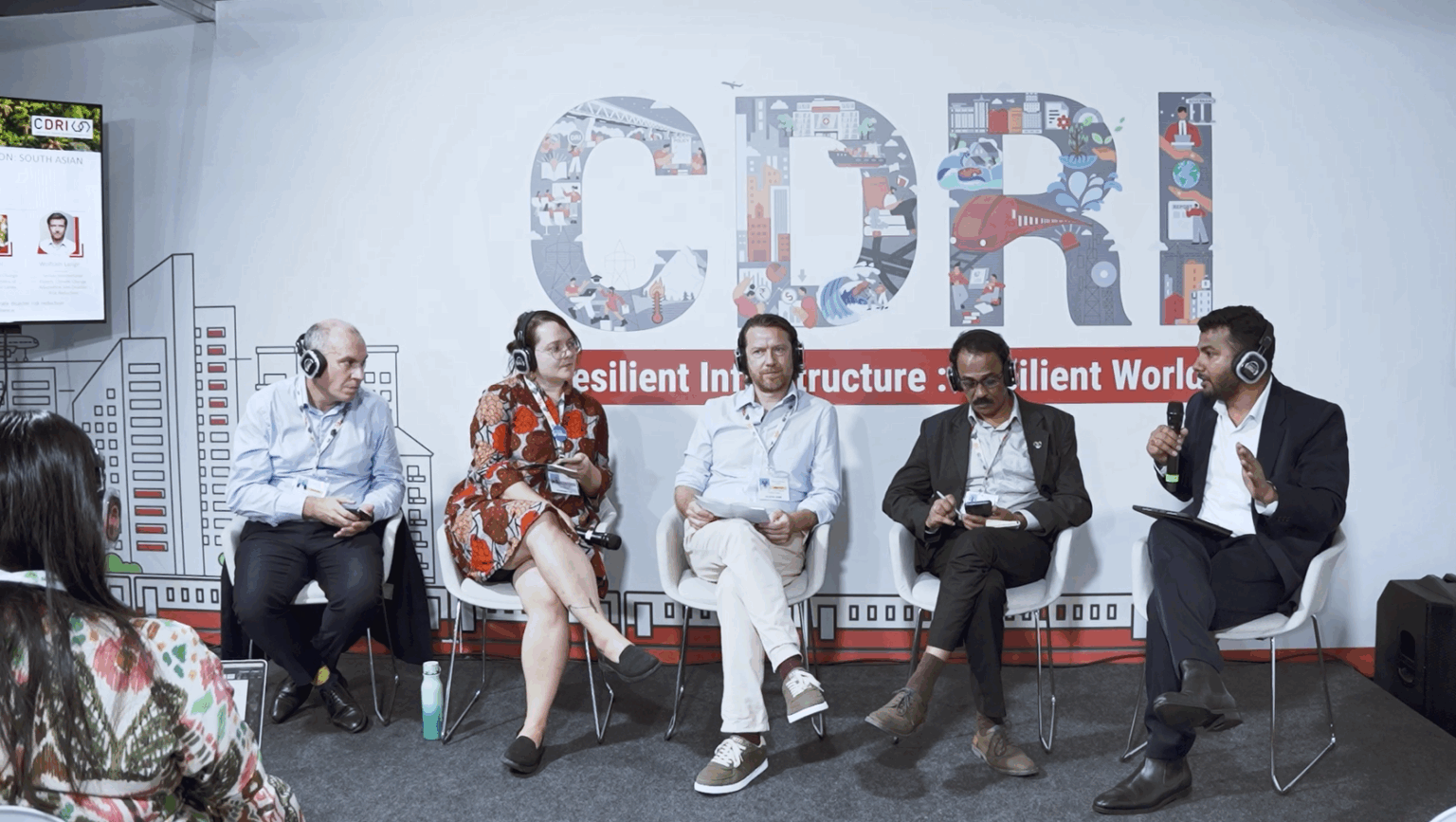
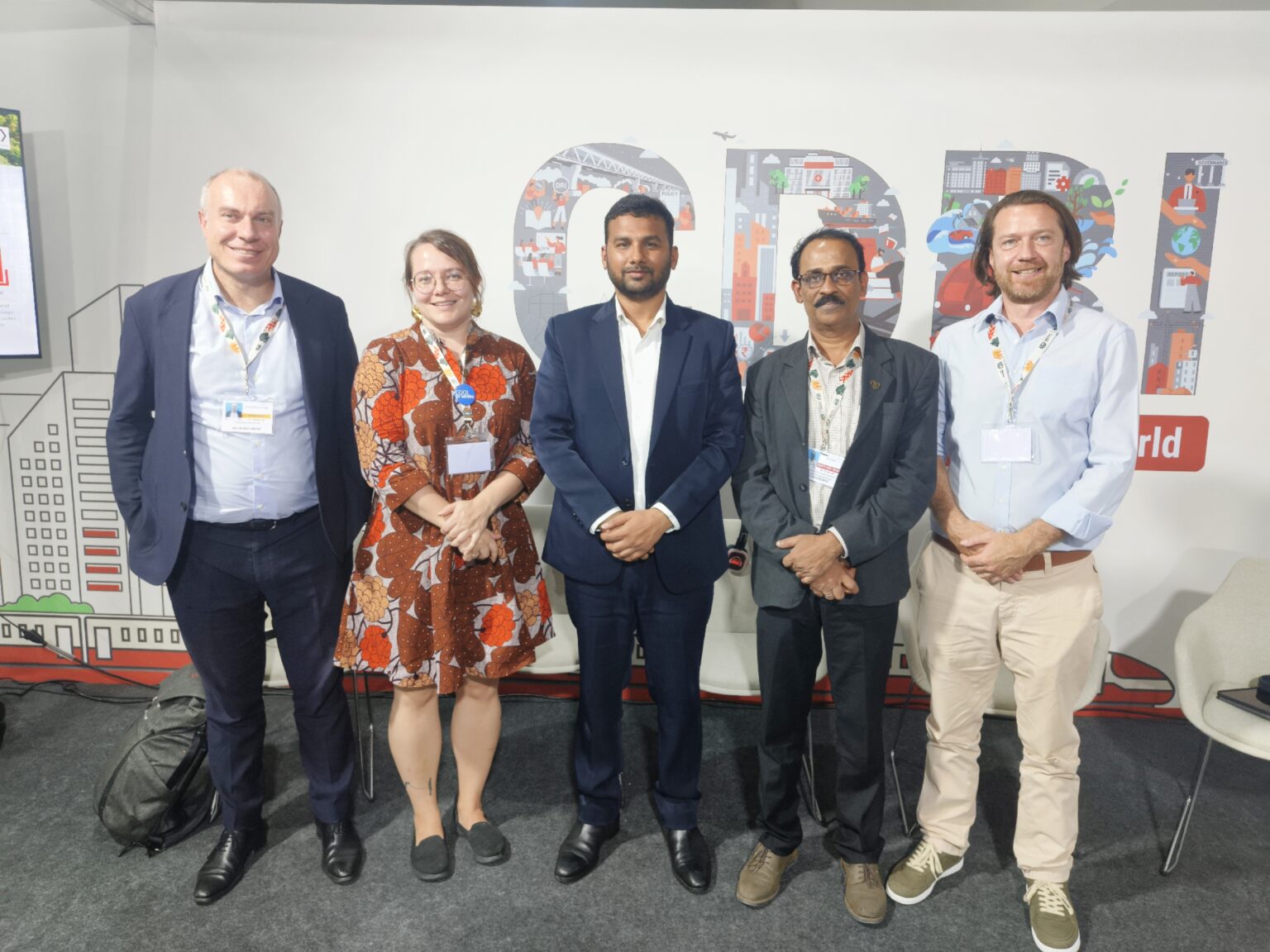
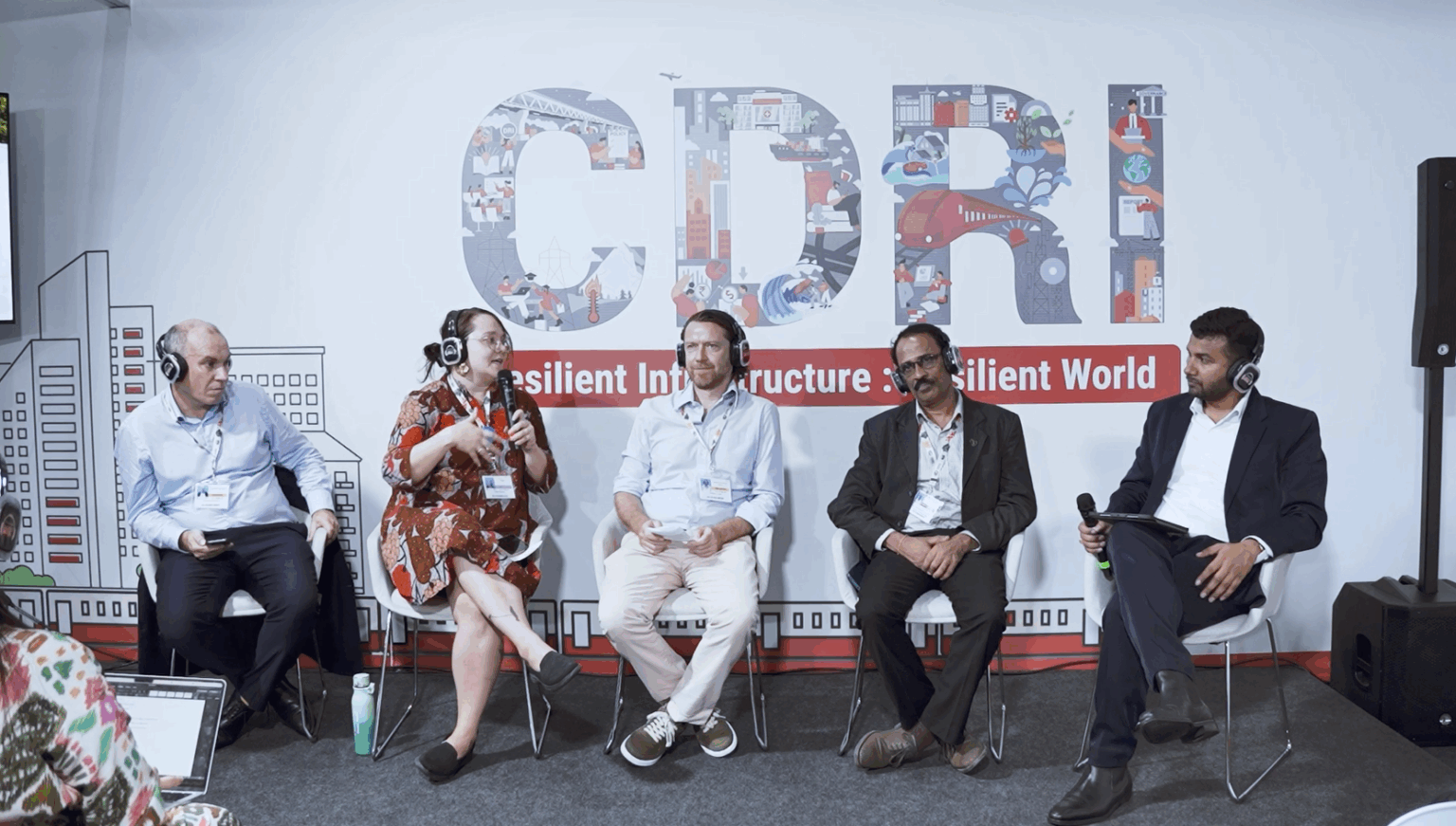
ICLEI- Local Governments for Sustainability, South Asia, convened the session “Integrating Disaster Risk Reduction into Climate Action: City Experiences” on 17 November 2025 at the Disaster Resilient Infrastructure (DRI) Pavilion during the United Nations Climate Change Conference (COP30) in Belém, Brazil. The session, organised in partnership with the Swiss Agency for Development and Cooperation (SDC), Embassy of Switzerland in India and Bhutan, the Climate and Development Knowledge Network (CDKN), and the Global Covenant of Mayors for Climate & Energy (GCoM) South Asia, brought together global experts to discuss and explore scalable approaches for strengthening urban resilience against climate-induced disasters. The discussion was moderated by Mr. Keshav Jha, Senior Manager at ICLEI South Asia.
Opening the session, Mr. Jha highlighted ICLEI South Asia’s extensive technical support to more than 70 cities across the region on climate resilience and disaster management, particularly on heat and flood risk reduction. He shared examples of work undertaken, such as Rajkot’s Urban Cooling Action Plan, Tamil Nadu’s implementation of urban cooling guidelines, and flood early warning systems and nature-based canal restoration efforts in Tirunelveli and Kochi. He highlighted that through programmes such as CapaCITIES, ICLEI South Asia is supporting cities through climate risk assessments, resilience action planning, and capacity-building across fragile urban systems, including water management, stormwater drainage, and disaster response.
The panel brought together distinguished experts including Professor François Gemenne, President of the Sustainable Finance Observatory and Lead Author of the IPCC 6th Assessment Report; Mr. Leel Randeni, Director of the Climate Change Secretariat at Sri Lanka’s Ministry of Environment; Ms. Senni Raunio, Specialist at the Climate Leadership Coalition; and Mr. Wolfram Lange, Senior International Expert in Climate Change Adaptation and Disaster Risk Reduction.
Professor Gemenne emphasised on the often overlooked but crucial local governance dimension of climate-induced migration. He noted that, while national governments share migration policies, it is city officials who are the first responders and manage inflows of climate migrants. He stressed the need for integrating migration considerations into local adaptation and resilience strategies. Migration and adaptation policies can be mutually reinforcing at the local level, despite often being managed by separate departments. A significant challenge arises as migrants frequently settle in urban areas already vulnerable to risks like flooding and extreme heat, highlighting the need for greater synergy.
Mr. Leel Randeni underlined the need to integrate resilience planning and disaster risk reduction, as highlighted in Sri Lanka’s NDC 3.0 submitted to the UNFCCC. He noted the country’s comprehensive sector-wide disaster vulnerability assessments and nine provincial adaptation plans were nearing final validation. They reflect diverse climate risks across its geography such as droughts, erratic rainfall, and landslides. He noted that Sri Lanka’s ambitious Climate Prosperity Plan focused on disaster and climate action with a strong emphasis on equity. He emphasised that the nation’s NDC 3.0 integrates climate considerations into public finance, policy, and investment, highlighting innovation, public-private partnerships, and international cooperation as key enablers.
Ms. Senni Raunio underscored the urgent need for businesses to actively participate in climate resilience efforts, emphasising how climate risks and disasters pose serious threats to the operations and assets of private enterprises. She stressed that privately owned assets are often destroyed during floods, heatwaves, and other climate-related events, making private sector engagement essential for maximizing overall resilience
The consequences extend beyond financial risk, Raunio noted, with climate disasters causing human displacement that can disrupt both company workforces and supply chains. She called for cities and companies to adopt consistent, predictable standards and prioritise preparedness, urging a collaborative approach that includes communities, city departments, citizens, and private stakeholders to build a truly resilient urban environment.
Mr. Wolfram Lange specializes in addressing the intersection of climate vulnerability, informal urban settlements, and ecosystem-based adaptation. His work in Rio de Janeiro focuses on how favelas, the city’s estimated 1,500 informal settlements, housing about 20 percent of the population, face compounded vulnerabilities from social marginalisation and environmental degradation. Lange revealed how Rio’s informal communities concentrated on steep slopes, river margins, and forest remnants face heightened exposure to landslides and flooding, risks amplified by institutional fragmentation within Brazil’s disaster response systems. Critiquing the fragmented disaster response system, he advocated for ecosystem-based disaster risk reduction and preventive, community-centered adaptation approaches that address root causes of vulnerability while building social-ecological resilience.
The session concluded with a shared call to deepen regional cooperation, expand knowledge-sharing platforms, and support cities in implementing integrated climate strategies that align resilience, nature, and development priorities.