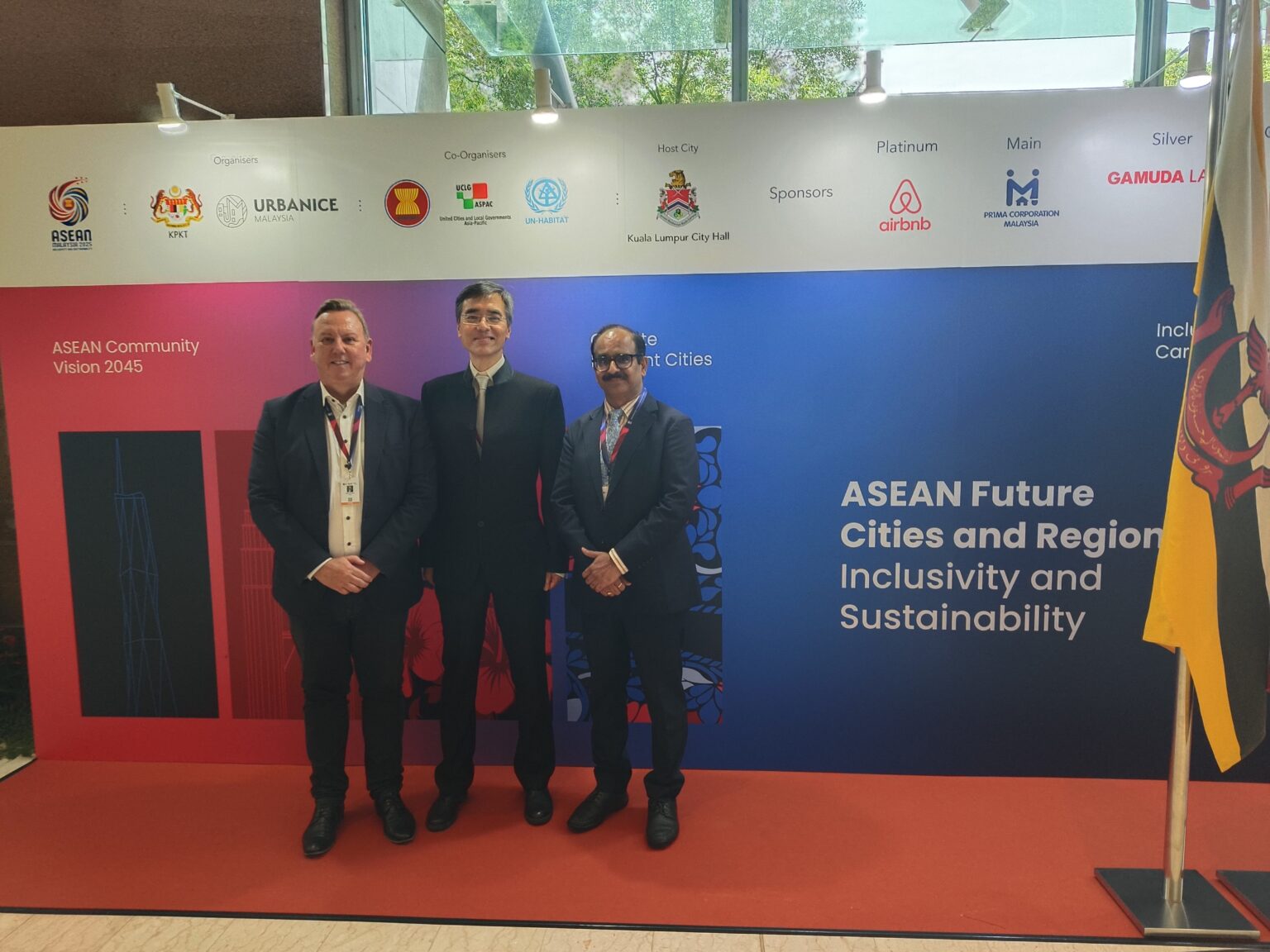
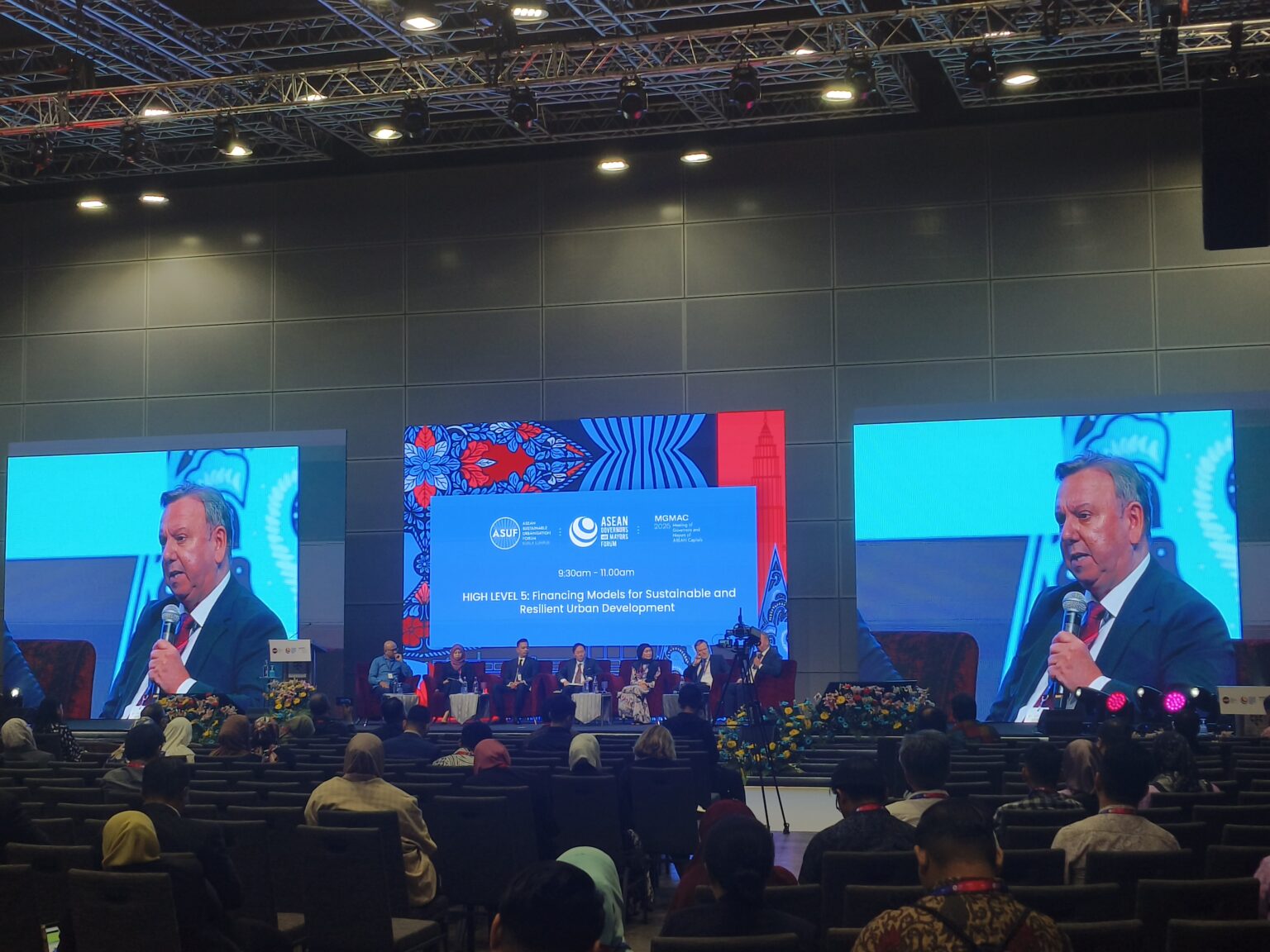
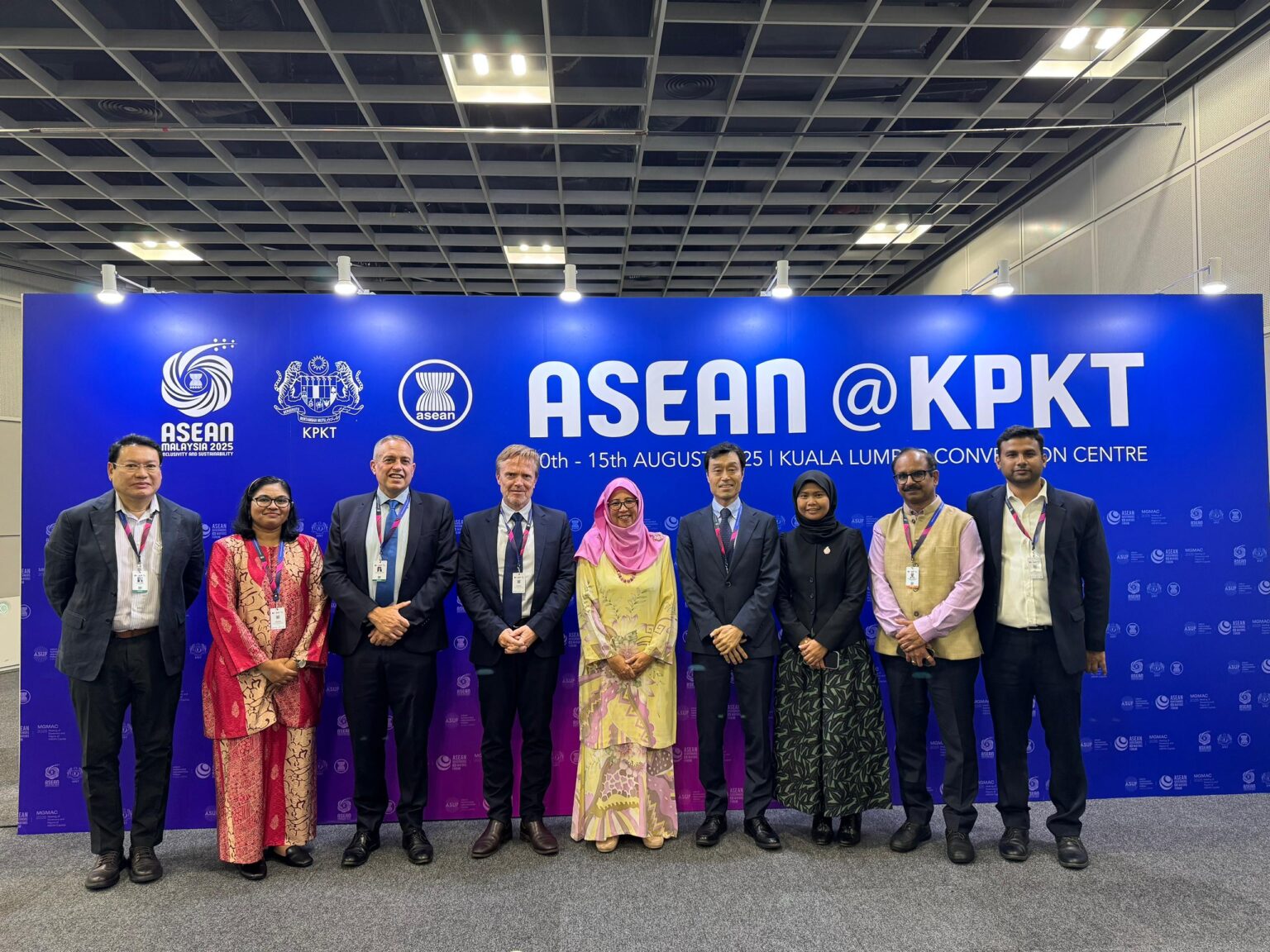
From 10–15 August 2025, ICLEI South Asia, together with the ICLEI World Secretariat, had an engaging and impactful presence at the second ASEAN Sustainable Urbanisation Forum (ASUF) in Kuala Lumpur. The team co-convened high-level dialogues, led practical training sessions, and showcased innovative approaches to green and resilient urban development across the Asia–Pacific region—reinforcing ICLEI’s commitment to advancing sustainable urban agendas through collaboration with regional and global partners.
ASUF is a regional platform that brings together governments, city leaders, planners, industry experts, and communities to address the opportunities and challenges of sustainable urban development. Held alongside the ASEAN Governors and Mayors Forum (AGMF) and the Meeting of Governors and Mayors of ASEAN Capitals (MGMAC), the Forum promotes innovation, strengthens policy frameworks, and enhances regional cooperation to accelerate inclusive, resilient, and environmentally conscious urban futures.
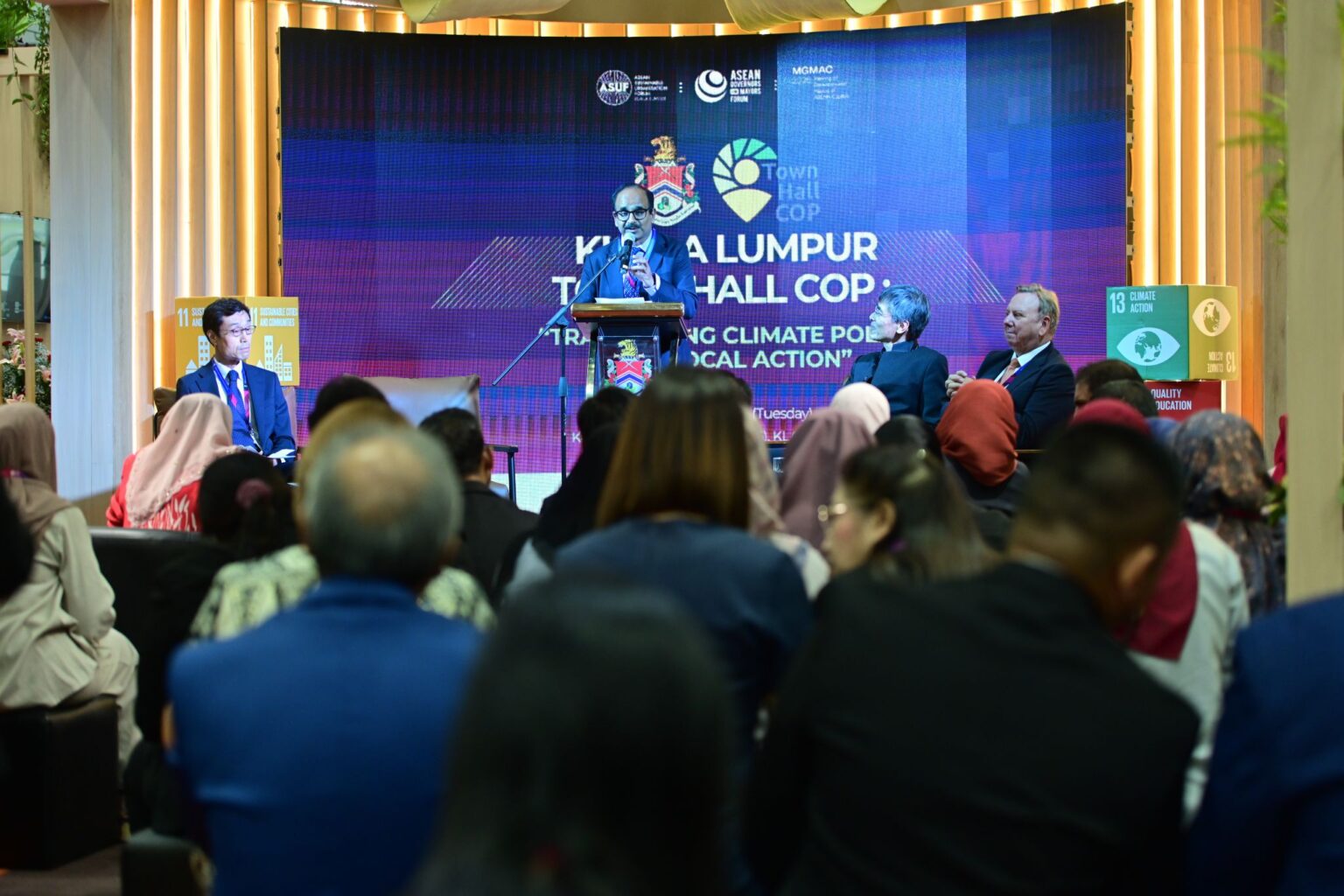
Kuala Lumpur Town Hall COP: Localising Climate Action
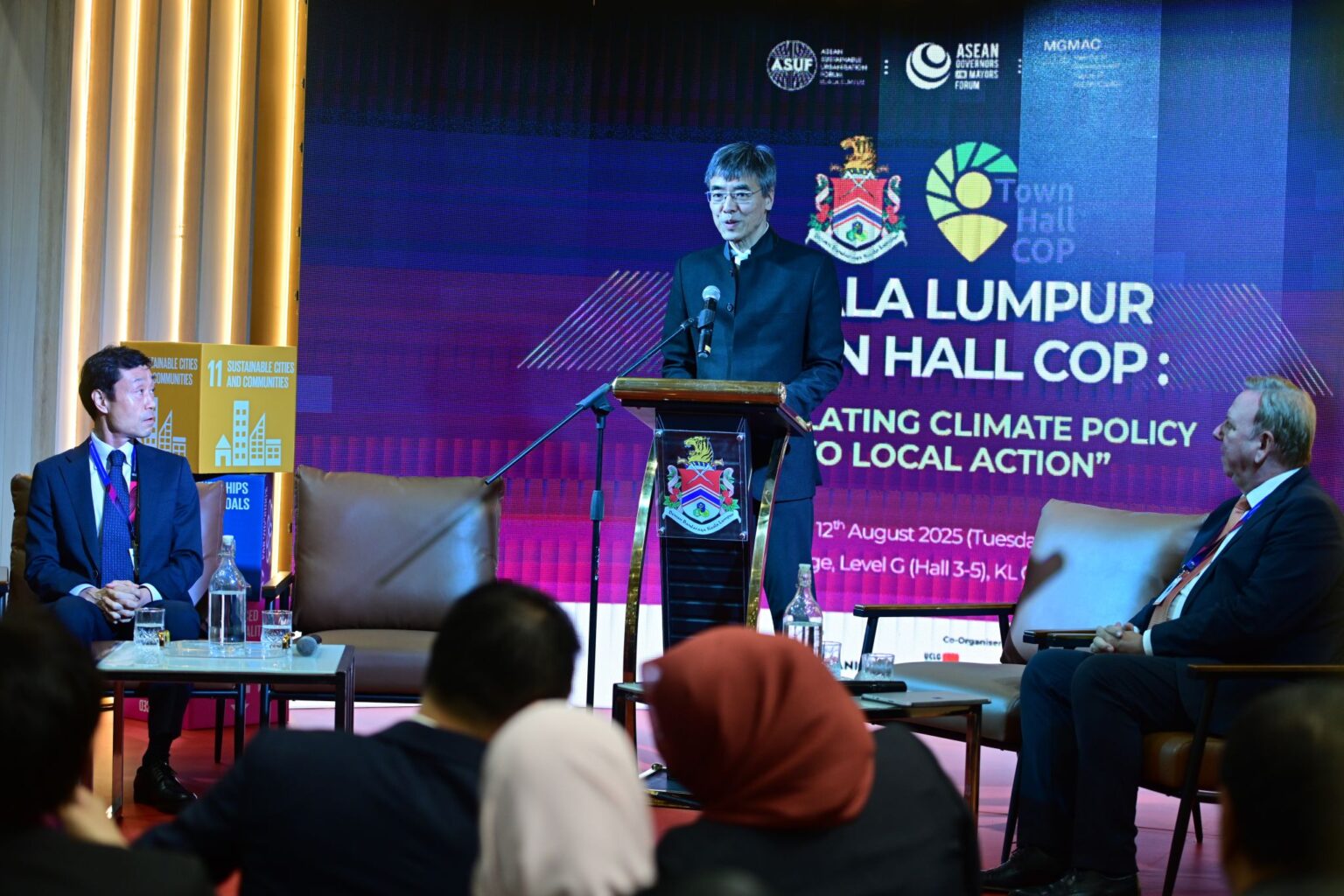
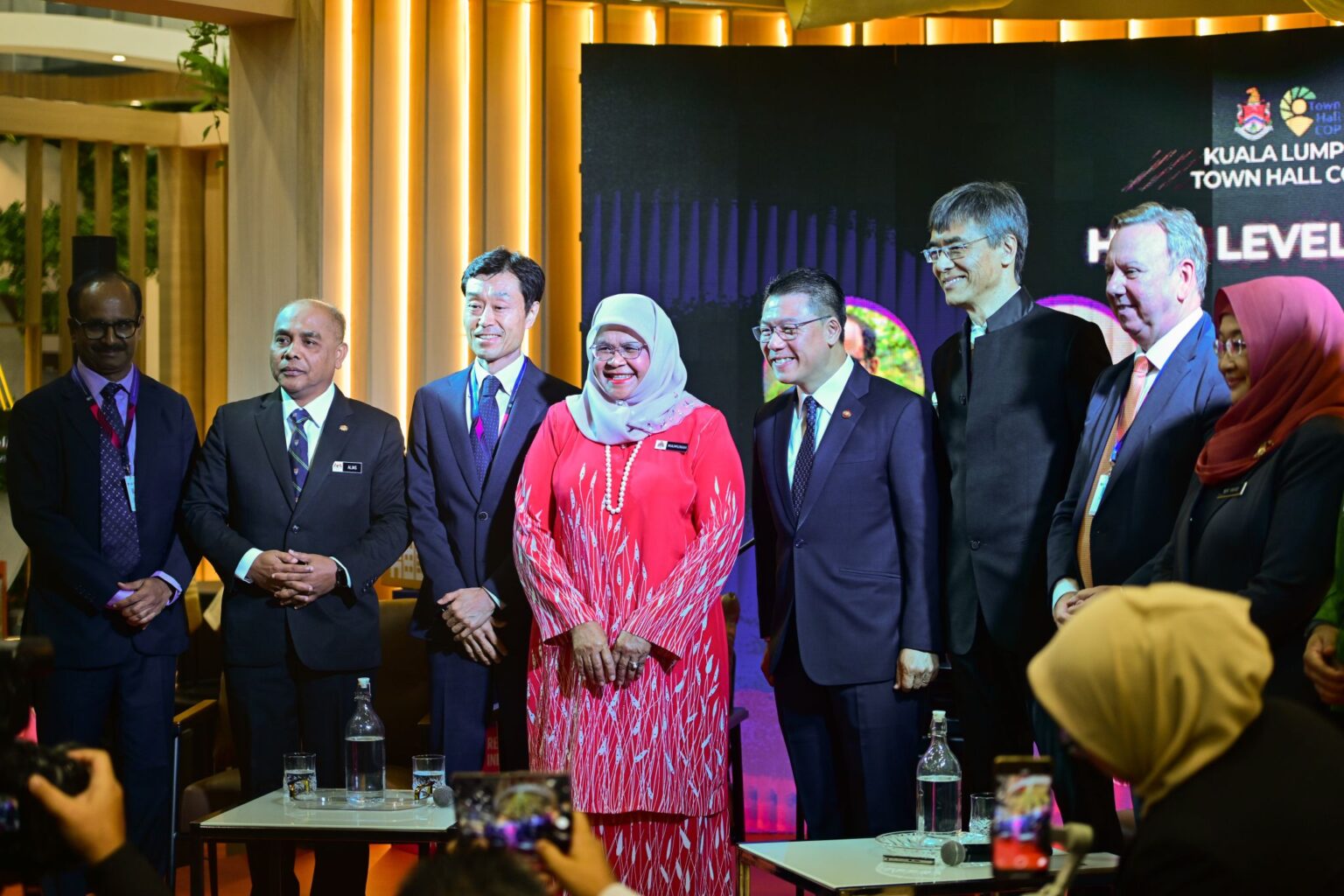
On 12 August, Gino Van Begin, Secretary General, ICLEI – Local Governments for Sustainability, and Emani Kumar, Deputy Secretary General, ICLEI-Local Governments for Sustainability, participated in the opening session of the Kuala Lumpur Town Hall COP — “Translating Climate Policy into Local Action,” — jointly organised by Dewan Bandaraya Kuala Lumpur (Kuala Lumpur City Hall) and ICLEI.
The Town Hall COP, a flagship ICLEI initiative, aims to create an inclusive space to bring climate dialogue to the local level where a wide spectrum of stakeholders can come together to assess climate goals, track progress, and co-design pathways for stronger local action aligned with national priorities.
In his remarks, Emani Kumar highlighted ICLEI’s decade-long collaboration with Malaysian and Southeast Asian cities to advance low-emission, climate-resilient urban development through regional partnerships. He underscored that as a focal point for the Local Governments and Municipal Authorities (LGMA) constituency at the global United Nations Framework Convention on Climate Change (UNFCCC) process, ICLEI advanced climate adaptation, finance access, multilevel climate action, urban sustainability, and fossil fuel transition with scalable mitigation and nature-based solutions.
Gino Van Begin highlighted that empowering local governments and communities is imperative to achieving ambitious national climate goals, and underscored Town Hall COPs as vital platforms for connecting grassroots engagement to national plans. With urban areas generating over 70 percent of global emissions, and meaningfully addressing it in only 27 percent of the Nationally Determined Contributions (NDCs), he called for stronger integration of urban climate priorities as nations prepare their third round of NDCs ahead of COP30. He underlined the role of Town Hall COPs as vital bridges between grassroots engagement of urban climate goals and national climate planning.
Soumya Chaturvedula, Director, ICLEI South Asia, moderated the “ASEAN Sharing Session” at the Town Hall COP.
Empowering Inclusive and Resilient Urban Leadership
On 13 August, ICLEI South Asia, together with the UN Office for Disaster Risk Reduction (UNDRR) and the Global Covenant of Mayors for Climate & Energy (GCoM) Gap Fund, co-organised the session “Leave No One Behind: Empowering Inclusive City Leadership for Disaster Risk Reduction and Climate Finance”.
The dialogue emphasised the need for urgently focusing on ‘inclusion,’ into both resilience planning and financial decision-making, to build urban systems that are resilient, equitable, and accessible to all. Speakers called for empowering marginalised groups and ensuring that local governments have the capacity and resources to access early-stage finance for climate action. ICLEI Secretary General Gino Van Begin opened with a stark reminder from the Intergovernmental Panel on Climate Change (IPCC)’s latest report “The science is clear: we are on the course to exceed 1.5°C of warming within this century, with risks of crossing 2°C if urgent action is delayed. To keep our cities within safe and habitable boundaries, leadership must be inclusive, ensuring that no community is left behind in building resilience and mobilising climate finance.”
Alongside this, ICLEI South Asia conducted a training session on climate action planning and implementation titled “Net Zero Climate Resilient City Action Planning – Approach and Methodology”. The training provided policymakers, technical experts, and city practitioners with practical approaches for preparing and executing climate action strategies following the ICLEI South Asia’s Net Zero ClimateResilientCITIES Methodology. Participants discussed integrating mitigation and adaptation measures with local developmental priorities and explored pathways to strengthen monitoring, reporting, and resource mobilisation for cities. Over 30 participants, mainly from Malaysian cities, including government officials and sustainable urban development practitioners, joined the training.
The session equipped city leaders with practical tools to translate climate commitments into actionable strategies, strengthening their capacity to drive measurable change on the ground.
ICLEI South Asia at the forefront of Green City Action Plans in Malaysia
On 14 August, as part of the ADB’s Green City Action Plans (GCAP) Technical Assistance, ICLEI South Asia co-convened the side event “Towards Climate-Resilient Malaysian Cities: Implementing Green City Action Plans,”. The session brought together Malaysian city representatives, Asian Development Bank (ADB), and technical experts to share progress on GCAPs, an initiative supported by the Ministry of Economy, Government of Malaysia, under the Twelve Malaysia Plan (Malaysia’s twelfth national development plan from 2021-2025 which focuses on achieving shared prosperity through economic empowerment, environmental sustainability and social re-engineering). Mohd. Bashir Bin Sulaiman, Penang Island Chief Resilience Officer, presented the key findings of the Penang Island GCAP. He also introduced disaster management modules and the landslide information system modules developed for the city.
TPR Dr. HJH. Hasnina Binti Hassan, Director of Urban Planning and Landscape, Kota Bharu Municipal Council, shared key findings from the Kota Bharu GCAP, highlighting that the city government had begun implementing certain actions. Examples included Ecological Facilities Enhancement Works at Taman Rusa and the surrounding areas of Taman Perbandaran Tengku Anis (TPTA), Kota Bharu, Kelantan, biodiversity and ecotourism components in Kg Sungai Budor, and landfill mining at the Beris Lalang Landfill, Bachok.
Cr Tan Kai, Chairman, Padawan Municipal Council, spoke about several projects under the Padawan GCAP. He noted the development of a new energy-efficient MPP office building, jointly financed by the Sarawak Government and Padawan Municipal Council. He also mentioned plans to introduce hydrogen buses for public transport in the Padawan area. He shared that a pre-feasibility study on replacing conventional streetlights with smart energy-saving lights in Padawan Municipality will soon be undertaken with support from the GCoM Gap Fund.
The discussions focused on Malaysia’s progress in building green, sustainable and liveable cities, and offered a platform to reflect on replicable strategies for urban resilience, emissions reduction, and sustainable mobility. It showcased Malaysia’s leadership in advancing green urban agendas and created momentum for scaling replicable solutions that can accelerate climate resilience across the region.
GCAPs are roadmaps for cities to move towards a sustainable and resilient urban development. They are crucial to address environmental challenges, achieving sustainable development goals, aligning with national policies, and accelerating competitiveness and resilience.
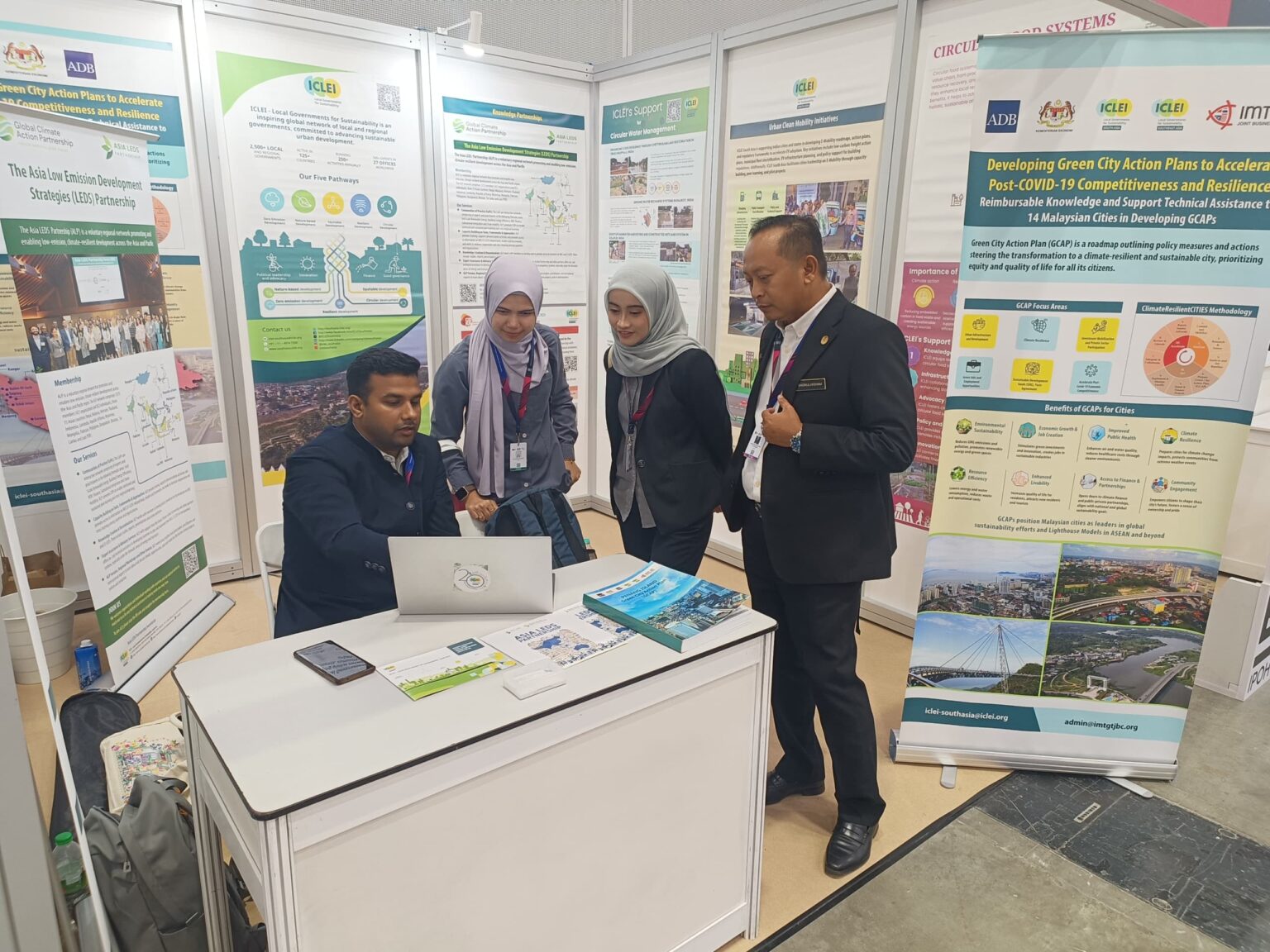
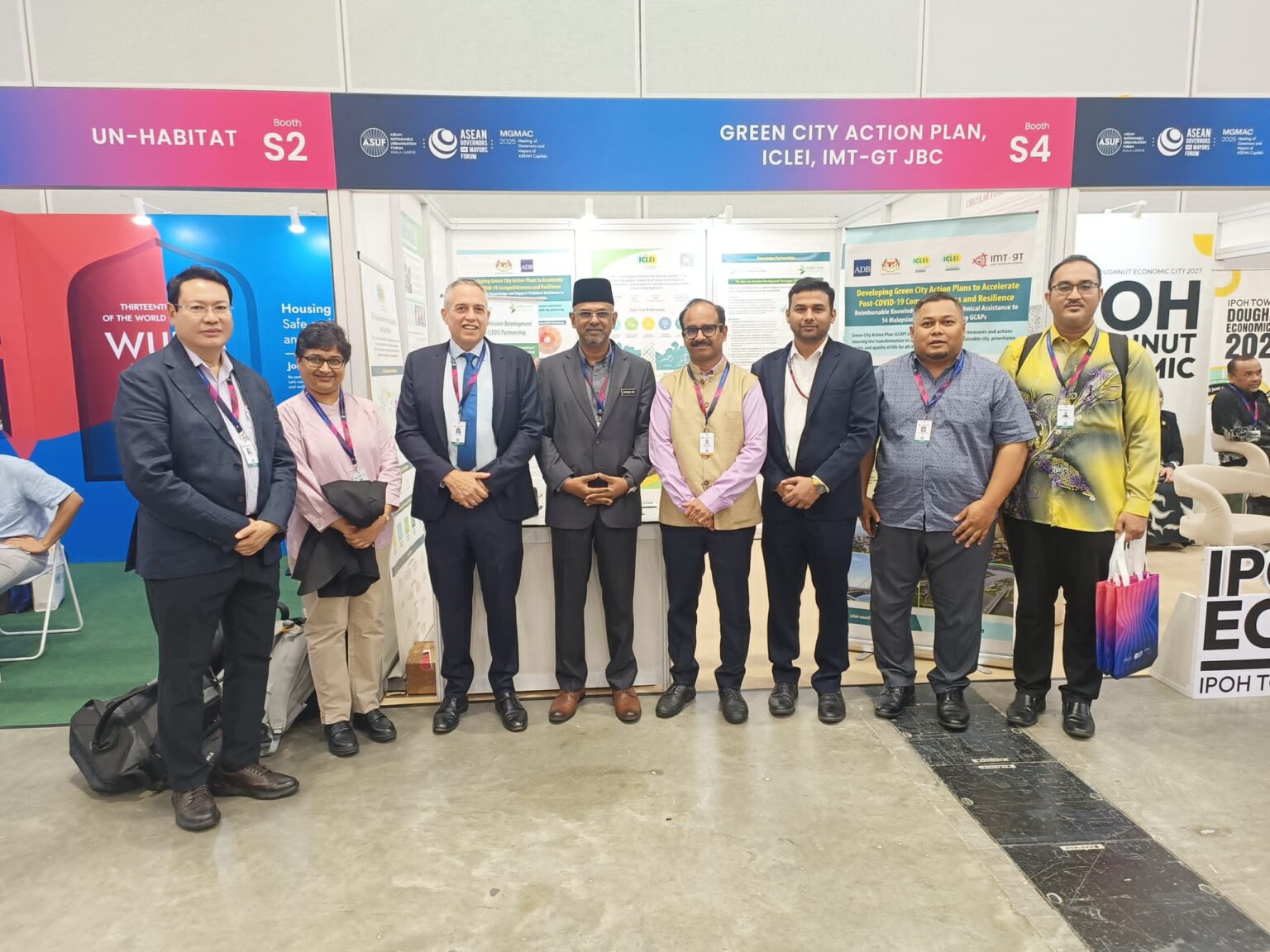
As a part of the project, ICLEI South Asia hosted a GCAP booth at the “ASEAN Future Cities and Regions: Inclusivity and Sustainability” exhibition area throughout the week. The booth highlighted the ongoing work in developing and implementing climate actions across Asian cities. It provided an interactive platform for city leaders, development partners, and financiers to learn about urban climate strategies, share experiences, and explore collaboration opportunities.
By spotlighting practical solutions, the booth helped position Asian cities at the forefront of driving transformative climate action in the region.
ICLEI’s engagements at ASUF 2025 reinforced the importance of local innovation, inclusive governance, and climate leadership in accelerating the global sustainability agenda. By bringing technical expertise, global connections, and a strong regional network, ICLEI South Asia demonstrated its pivotal role in equipping cities with the tools, partnerships, and resources they need to turn ambition into tangible impact.
Looking ahead, these engagements serve as a springboard for scaling cooperation across ASEAN and South Asia, and for ensuring that strong urban climate commitments are embedded in the lead-up to COP30 and beyond.