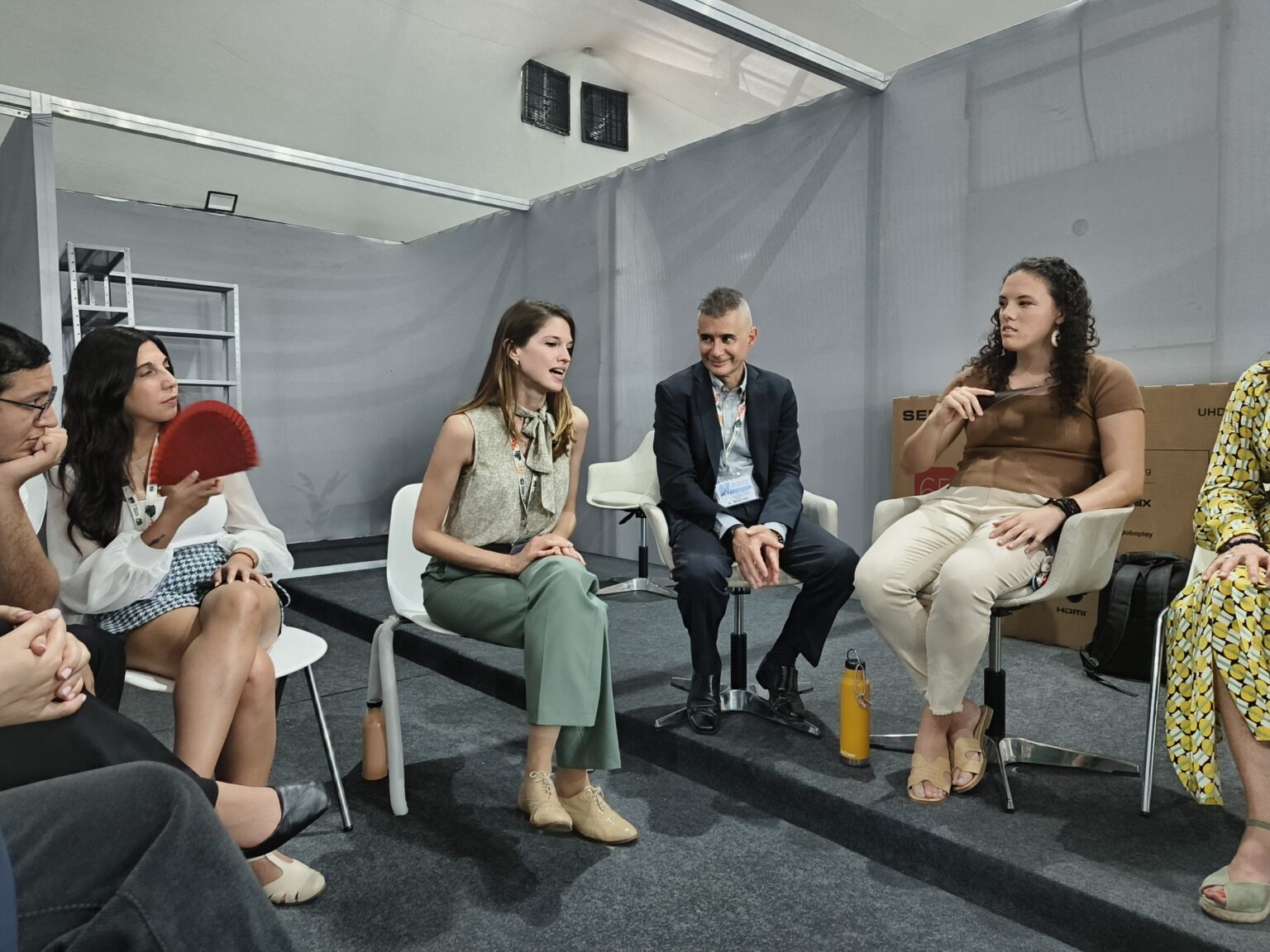
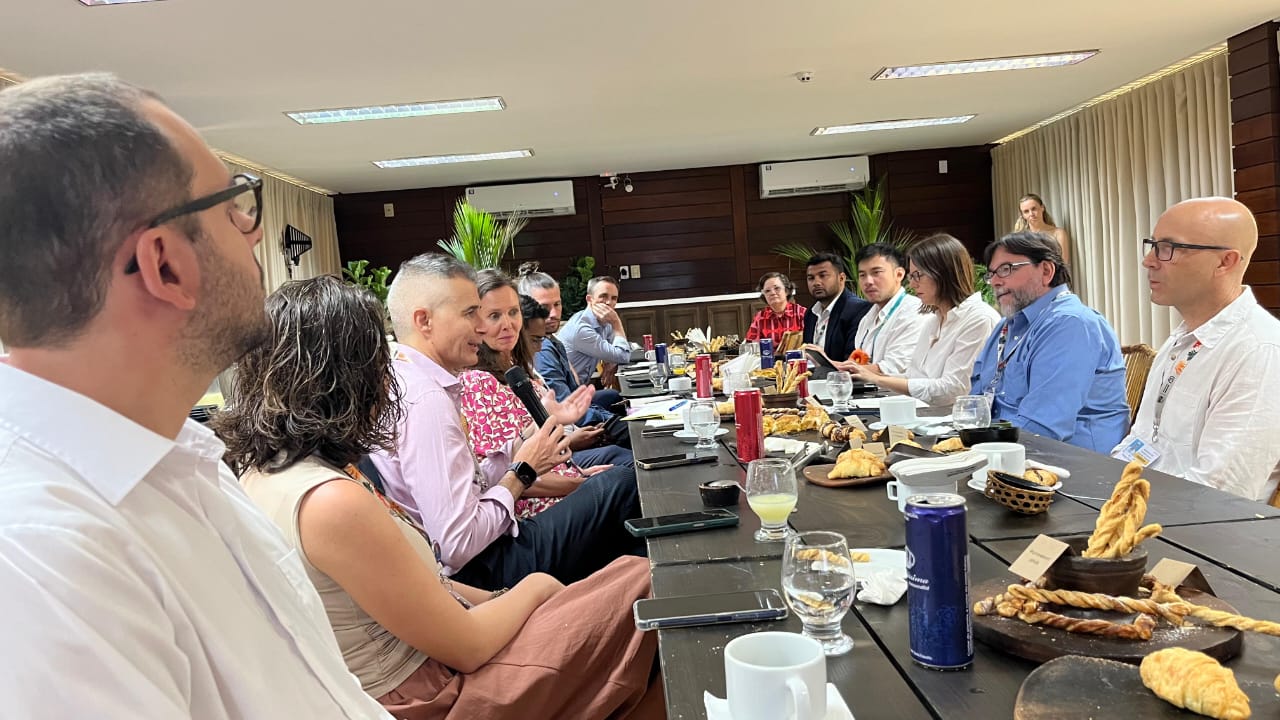
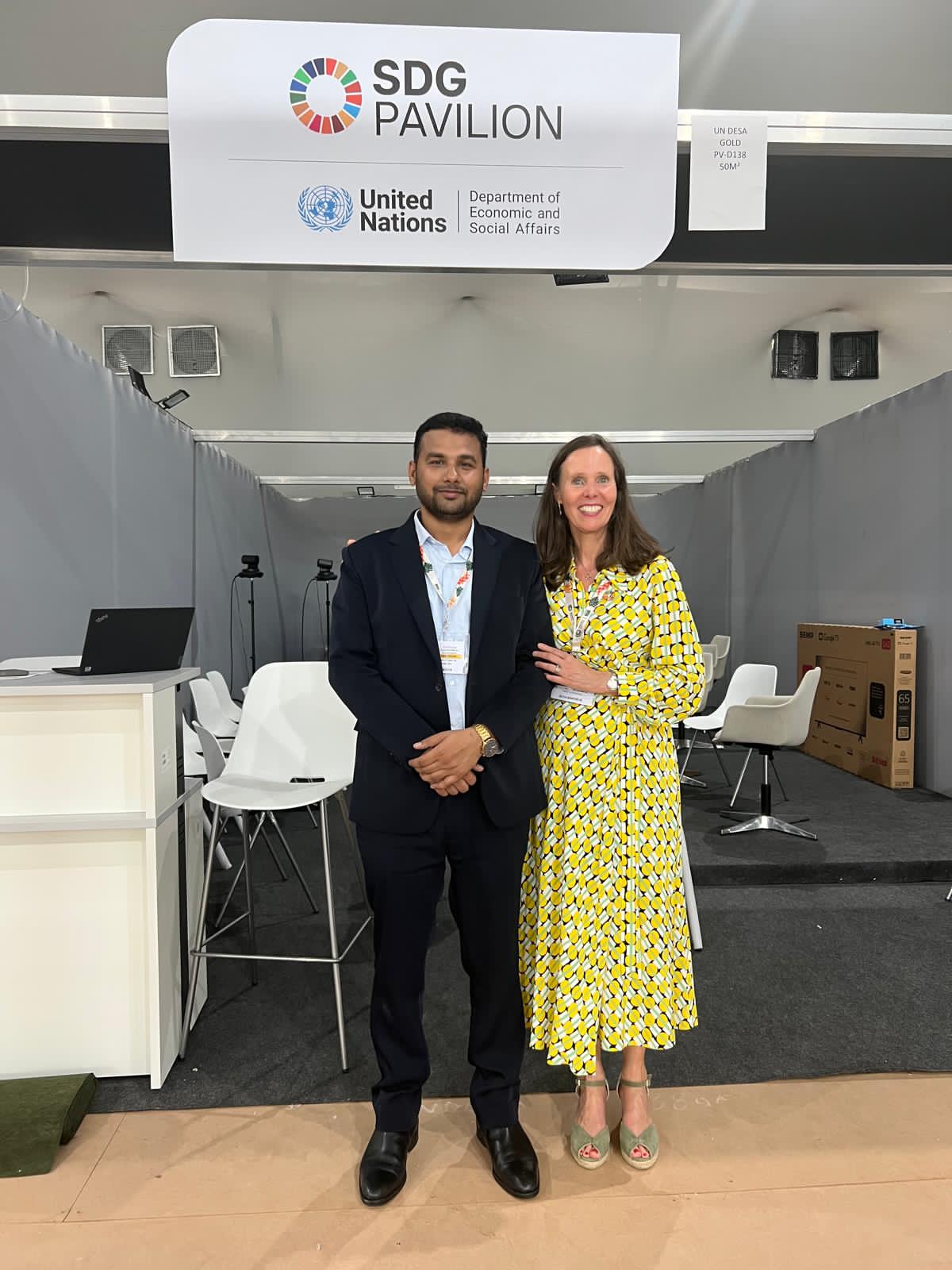
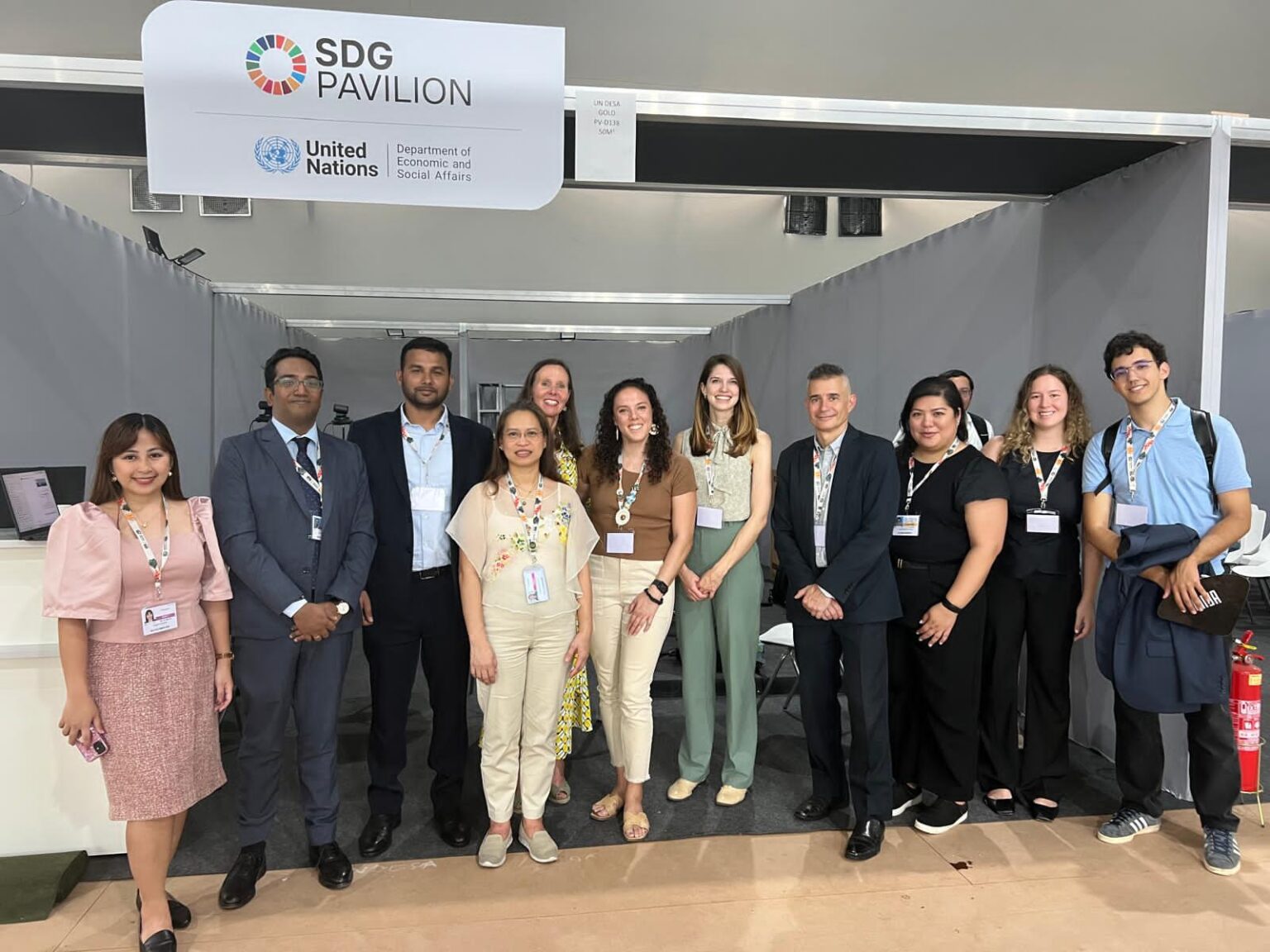
At COP30 in Belém, Brazil, ICLEI South Asia, serving as the Secretariat of the Asia LEDS Partnership (ALP), participated in two side events titled “The Global Climate Action Partnership: Launching a New Era of Accelerated Implementation,” on 10 November 2025 and a breakfast roundtable session on “The Global Climate Action Partnership: From Knowledge to Scaled Impact” on 13 November 2025.
The sessions were organised by the United Nations Office for Project Services (UNOPS), which hosts the Global Climate Action Partnership (GCAP), and explored how collaborative platforms like GCAP can accelerate Nationally Determined Contributions (NDC) implementation, unlock climate finance, and scale proven solutions across Africa, Asia, and Latin America.
GCAP is a global initiative dedicated to accelerating low-emission development pathways, enhancing access to finance, and driving the global energy transition. It operates through a diverse global network of national governments, technical organisations and experts, and development agencies. The Asia LEDS Partnership (ALP) is one of the three regional platforms of GCAP, promoting low-emission, climate-resilient development across the Asia and Pacific region.
While “Accelerated Implementation” marked GCAP’s entry into a new era, gearing up for faster and effective implementation of climate goals, the roundtable brought together leaders from government, international agencies, and youth, and aligned with the COP30 call for a Global Mutirão, a collective effort to drive faster, fairer climate action worldwide.
From Climate Ambition to Action
“Global Climate Action Partnership: Launching a New Era of Accelerated Implementation,” brought together global experts, practitioners, and development partners to discuss and explore how cross-regional collaboration and knowledge exchange can accelerate climate action and partnerships between governments, communities, and the private sector. It focused on transitioning from global climate ambition to real-world action.
The session featured insights from Francisco Maciel, Co-Chair, GCAP; Angela Enriquez, Senior Advisor, SLOCAT Partnership; Hershey dela Cruz, Chief, Energy Cooperation and Coordination Division, Energy Policy and Planning Bureau, Department of Energy, Philippines; Julia Dorbandt, Policy Advisor, IKI – Federal Ministry for the Environment, Climate Action, Nature Conservation and Nuclear Safety (BMUV), Germany; Tamojit Chatterjee, Senior Specialist for Energy Transition Policy and Governance, SEforAll. The discussion was moderated by Katrin Lichtenberg, Head, Water, Environment and Climate Portfolio, UNOPS.
To illustrate how global frameworks translate into regional action, the session spotlighted contributions from the Asia LEDS Partnership. Speaking on behalf of the ALP Secretariat, Keshav Jha, Senior Manager (Research & Advocacy), ICLEI South Asia, presented an overview of ALP’s work. He highlighted the efforts under the Partnership’s flagship initiative — Leadership Group for Clean Transport in Asia (LG-CTA) — active since 2021, that brought together 10 countries to work on a common shared goal of decarbonising the transport sector.
He shared examples of technical assistance delivered by ALP across five CoPs (Communities of Practice), such as building energy efficiency, clean mobility, grid renewable energy, NDC finance, and sub-national integration, and informed that peer learning is effective as knowledge is shared more widely across the network.
He highlighted that sometimes barriers are very specific to a country and often require a unique set of solutions. A combination of structured peer learning together with targeted support, including appropriate financing models and technical assistance, enables countries to move towards implementation, he noted.
The Philippines’ experience with ALP support
A key moment in the session was the intervention by Ms. Hershey dela Cruz, who underscored the significant contributions of ALP and GCAP in advancing the Philippines’ clean energy planning efforts. She highlighted how the partnership strengthened the country’s technical capacity by training more than 50 officials in Production Cost and Capacity Expansion Modeling using the SIENNA tool, under a technical assistance initiative supporting the hybridization of renewable energy systems in the Island of Palawan. SIENNA is an open-source energy system modelling tool that enables planners to simulate generation expansion pathways, assess renewable energy integration scenarios, and identify least-cost investment options to support evidence-based power sector planning.
These efforts, she described, are helping the remote islands transition toward more reliable and renewable energy-based systems while enabling informed and data-driven energy policy decisions. She emphasised that ALP’s support has bolstered renewable energy integration and contributed to the broader national goals of energy efficiency and resilience.
Her remarks served as a concrete and compelling example of how GCAP’s regional platforms, such as ALP, are translating global climate goals into tangible, on-ground impact.
Strengthening Implementation Pathways across Asia
The roundtable discussion “The Global Climate Action Partnership: From Knowledge to Scaled Impact” featured insights from Katrin Lichtenberg, Head, Portfolio for Water, Environment and Climate, UNOPS; Francisco Maciel, Co-Chair, GCAP. The session was moderated by Amanda McKee, Director, Knowledge and Learning, NDC Partnership.
Representing the Asia LEDS Partnership under GCAP, Mr. Keshav Jha noted that ALP’s support is driven directly by the needs expressed by more than 16 Asian countries across transport, energy, finance, and subnational integration, rather than by top-down agendas. By convening the right mix of actors, ALP has helped countries move from ideas to actionable policies, tools, and pilots.
Through its thematic Communities of Practice (CoPs), ALP provides a range of support, including peer exchanges and technical assistance, support to governments in designing, planning and implementation of NDCs and Long-Term Low Emission Development Strategies (LT-LEDS) and to accelerate climate action.
He highlighted that since 2016, over 5,000 national officials and stakeholders have been trained across energy, transport, sub-national integration, climate finance, and building energy efficiency. This long-running support has contributed to concrete outcomes, including EV roadmaps, fuel-efficiency frameworks, agrivoltaics guidance, BESS deployment pathways, and policy reviews on green hydrogen and EV charging in countries such as the Philippines, Nepal, Bhutan, Fiji, and Nauru.
He emphasised that while many countries have strong ideas, they continue to need support in building technical know-how, structuring bankable project pipelines, and aligning domestic finance mechanisms with their climate ambitions.
Key discussion themes
The discussions at both sessions highlighted several core priorities for advancing climate action that included:
- Participants discussed GCAP’s role in connecting policy, science, and practice to translate national climate commitments into measurable, ground-level results.
- While proven solutions exist across clean energy, electric mobility, and climate finance, the implementation gap remains the biggest challenge.
- Focus needs to shift from planning to execution, particularly by developing investable and replicable project pipelines that can accelerate delivery.
- Participants recognised UNOPS’ important role in bridging policy intent with first- and last-mile implementation support.
- The panel emphasised on peer learning, technical assistance, collaboration, and transparent knowledge exchange, encouraging countries to share successes, learn from failures, and adapt proven models.
- Aligning efforts with NDCs and regional priorities, and institutionalising robust monitoring and evaluation systems.
- Speakers stressed the importance of leveraging synergies with existing systems and complementary initiatives, fostering a collective sense of purpose among diverse stakeholders, and ensuring that financing flows effectively to frontline communities while supporting data-driven, results-oriented accountability.
Together, the two sessions at COP30 demonstrated how GCAP is entering a new phase of accelerated, implementation-focused climate action—one that is grounded in collaboration, regional leadership, and practical support to countries. Across both events, GCAP and its Asia regional platform, ALP, highlighted the essential role of peer learning, targeted technical assistance, and cross-regional cooperation in translating climate commitments into measurable progress. As GCAP advances this new era, ALP will continue to provide regional leadership through structured peer exchanges, specialised technical support, and sustained engagement with member countries, enabling them to move more decisively from climate ambition to on-ground implementation.