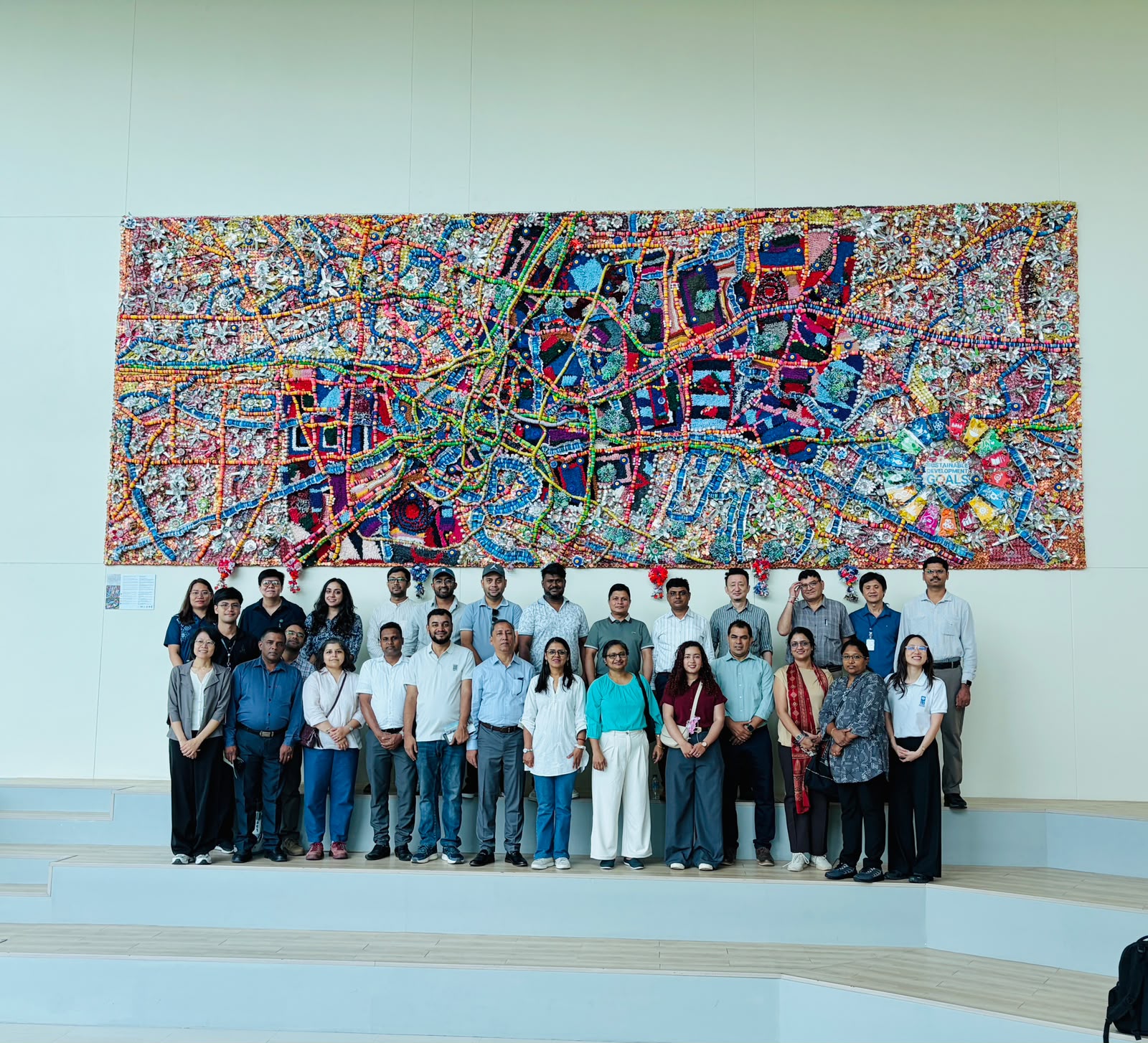
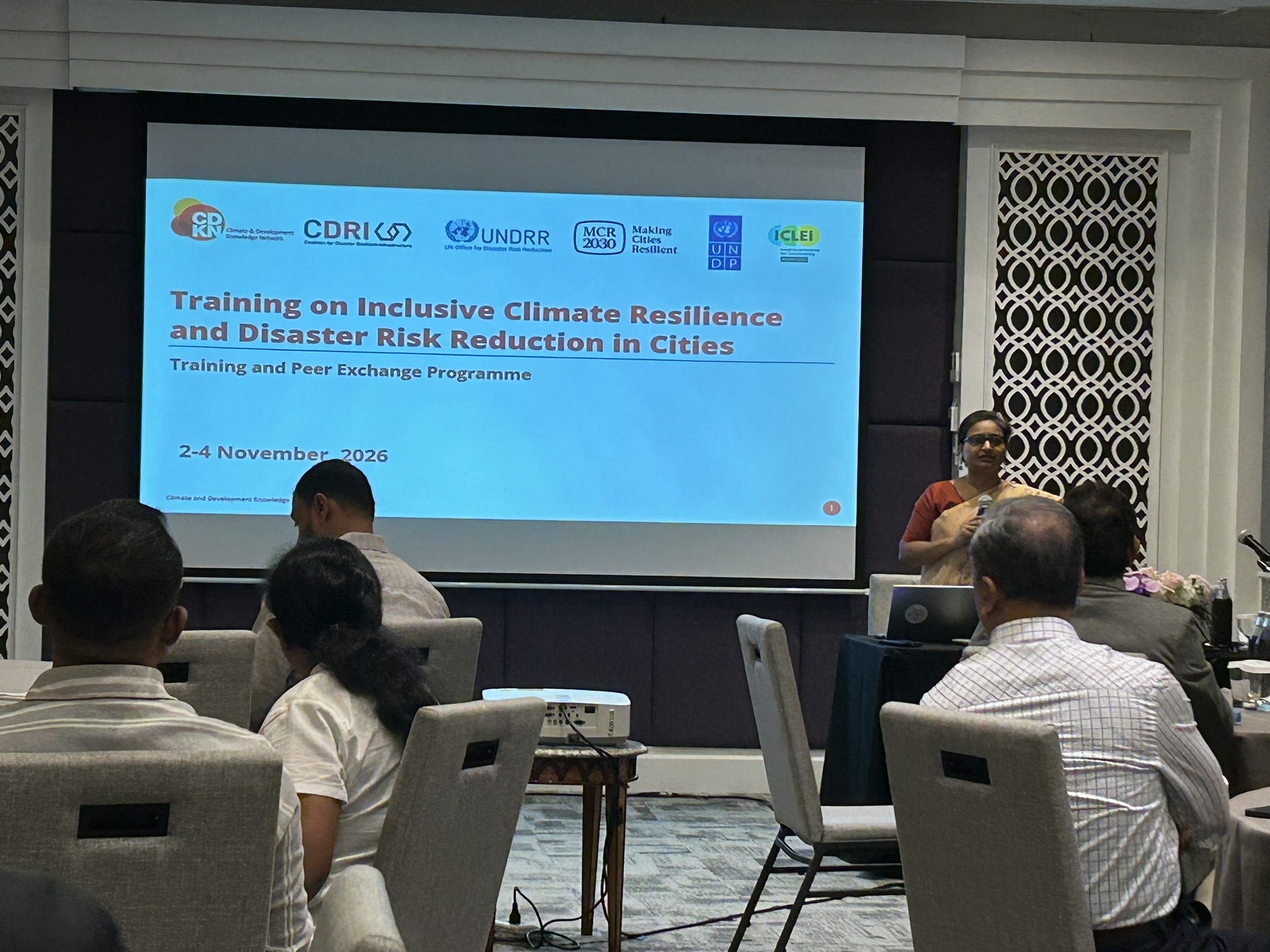
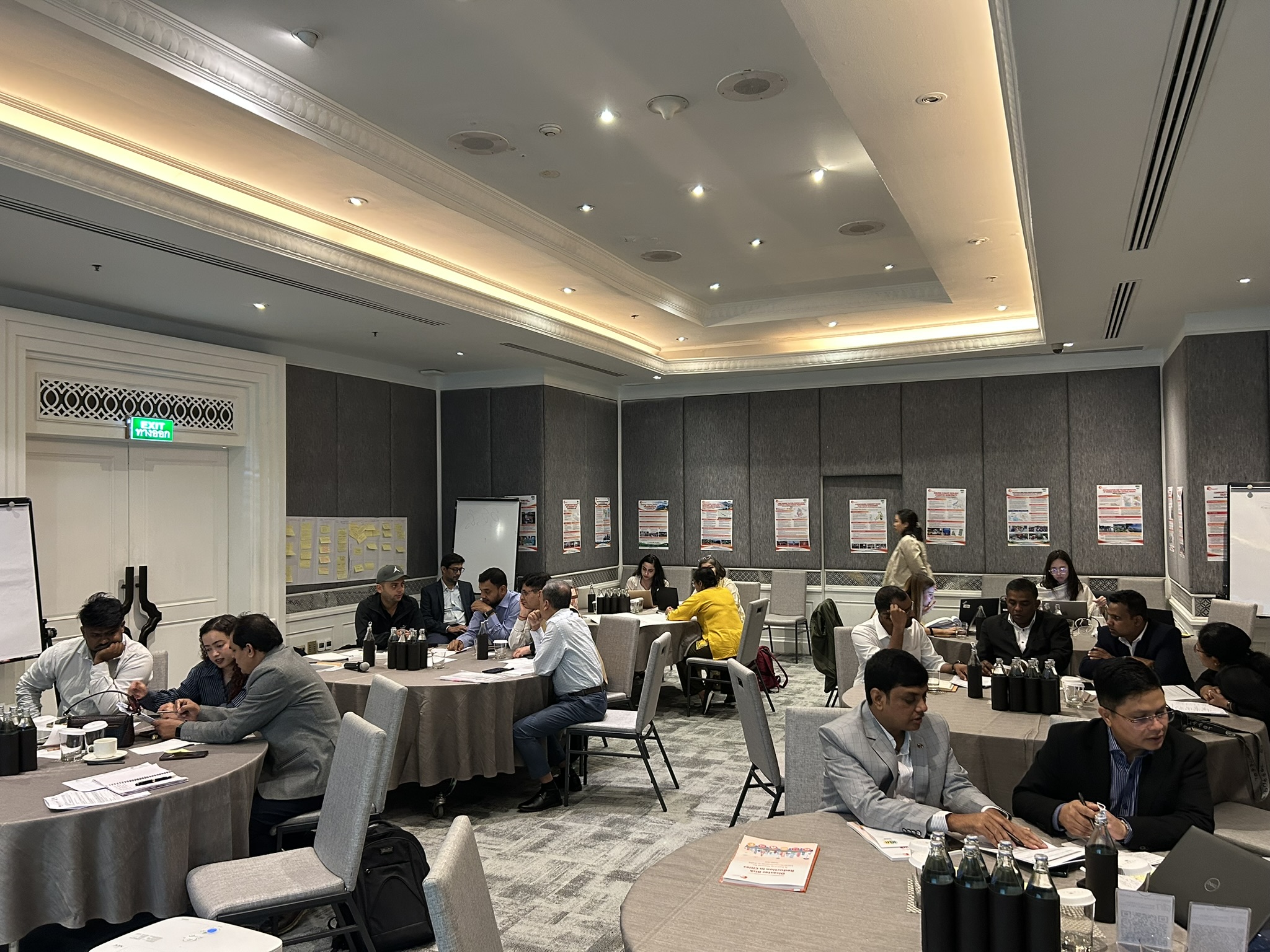
ICLEI South Asia, in collaboration with the United Nations Office for Disaster Risk Reduction (UNDRR), UNDP and the Coalition for Disaster Resilient Infrastructure (CDRI), organised a three-day training and peer exchange workshop on Inclusive Climate Resilience and Disaster Risk Reduction (DRR) in Cities on 2-4 November 2026, in Bangkok, Thailand.
14 city officials from 10 municipalities across Bangladesh, India, Nepal and Sri Lanka attended technical sessions and exchanged local experiences and best practices to strengthen regional cooperation on resilience and DRR.
The training sessions included:
- Climate resilience planning and DRR, with a focus on integrating Gender and Social Inclusivity (GESI) into local planning frameworks, by Bedoshruti Sadhukhan, Associate Director, ICLEI South Asia.
- Introduction to sponge cities, with a focus on ecosystem-based adaptation (EbA), nature-based solutions (NbS) in resilience planning, and locally-led adaptation (LLA) in risk reduction by Stanislav Kim, Regional Team Leader, Senior DRR Advisor, Crisis Bureau, UNDP Bangkok Regional Hub.
- Resilient infrastructure planning, development and governance, with focus on water infrastructure, by Raina Singh, Lead Specialist, and Aishwarya Raj, Senior Specialist, CDRI.
- Integrating GESI in climate and disaster resilience, by Ryce Chanchai, Global Gender Advisor, UNDRR.
- Practical applications of the DRR Scorecard developed by UNDRR, by Sunisa Ho, Associate Programme Management Officer, UNDRR, Dr. Apoorva Patel (PhD), Professor, Gujarat National Law University (GNLU), India, and Dr. Vipul Nakum, PhD, Manager – DRR Department, GIFT City.
- Financing climate and disaster resilience, by Cristina Gregorio, Regional Climate Finance Specialist, UNDP Bangkok Regional Hub.
- A panel discussion on Inclusive Climate Resilience Practices, focusing on extreme heat and health.
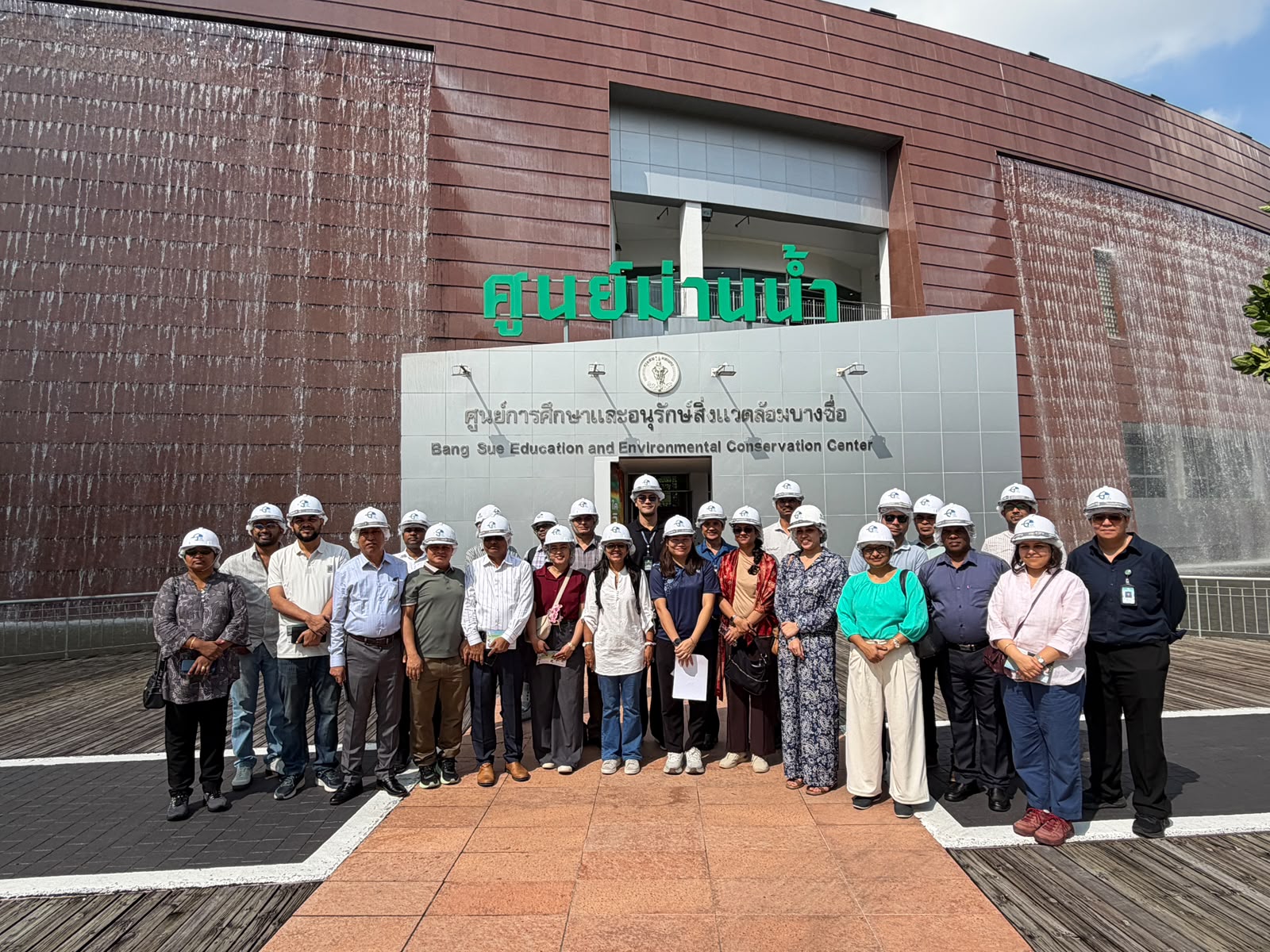
- A site visit to the Bang Sue Education and Environmental Conservation Center, operated by the Bangkok Metropolitan Administration (BMA), to learn about their municipal wastewater management system through the integration of grey, green and blue infrastructure in Bangkok. The site visit was facilitated by Sooin Bang, Integrated Urban Development Specialist and Project Manager (Regional Tsunami Project), UNDP.
The training marked the completion of a year-long capacity building programme for city officials under the ‘Climate and Development Knowledge Network (CDKN) – Accelerating Inclusive Action,’ supported and funded by the Ministry of Foreign Affairs of the Netherlands and the International Development Research Centre (IDRC) through the Step Change Initiative. The initiative has equipped city officials with practical knowledge and institutional capacity for assessing, planning, financing, implementing, and monitoring local climate and DRR actions.