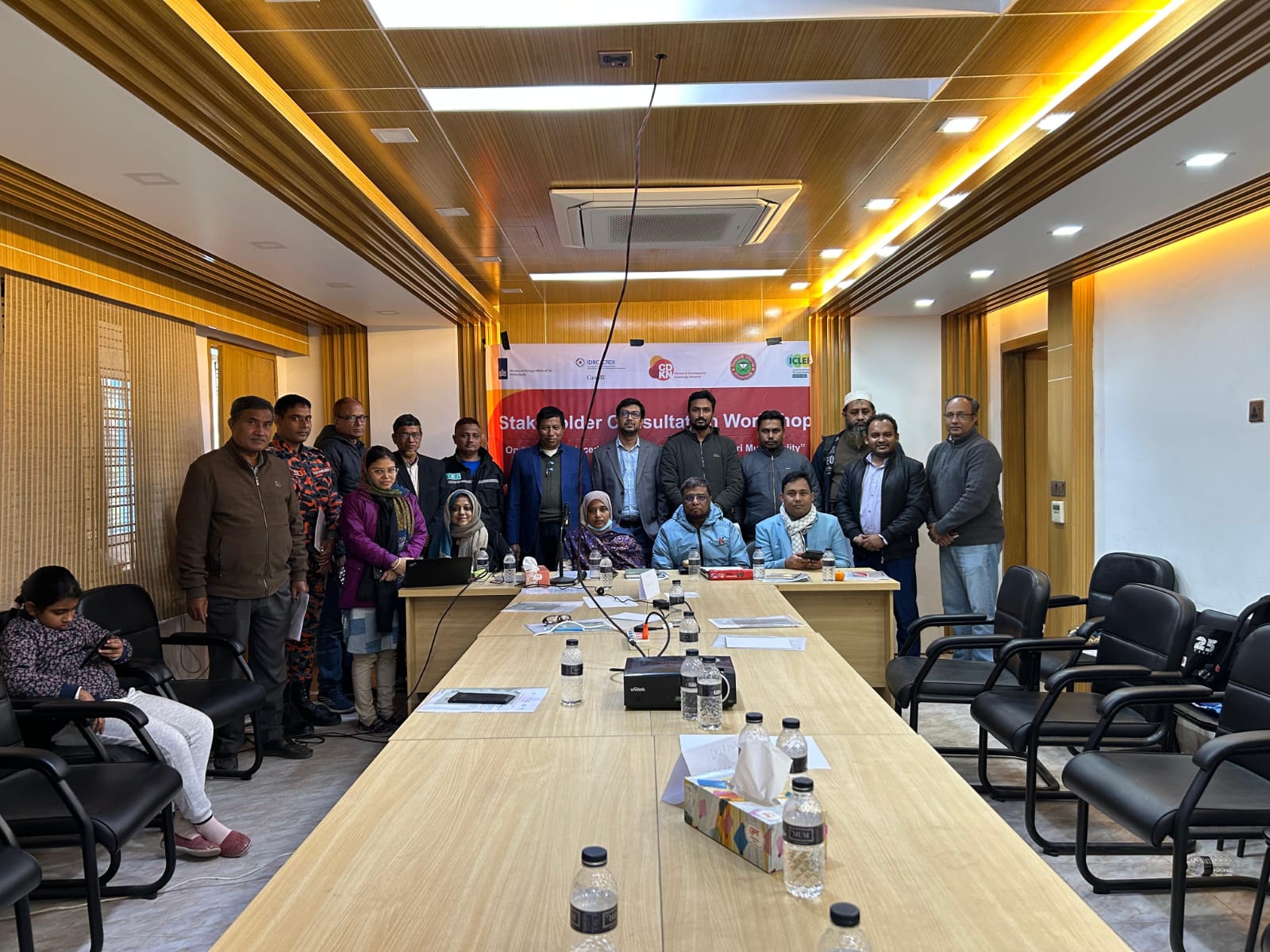
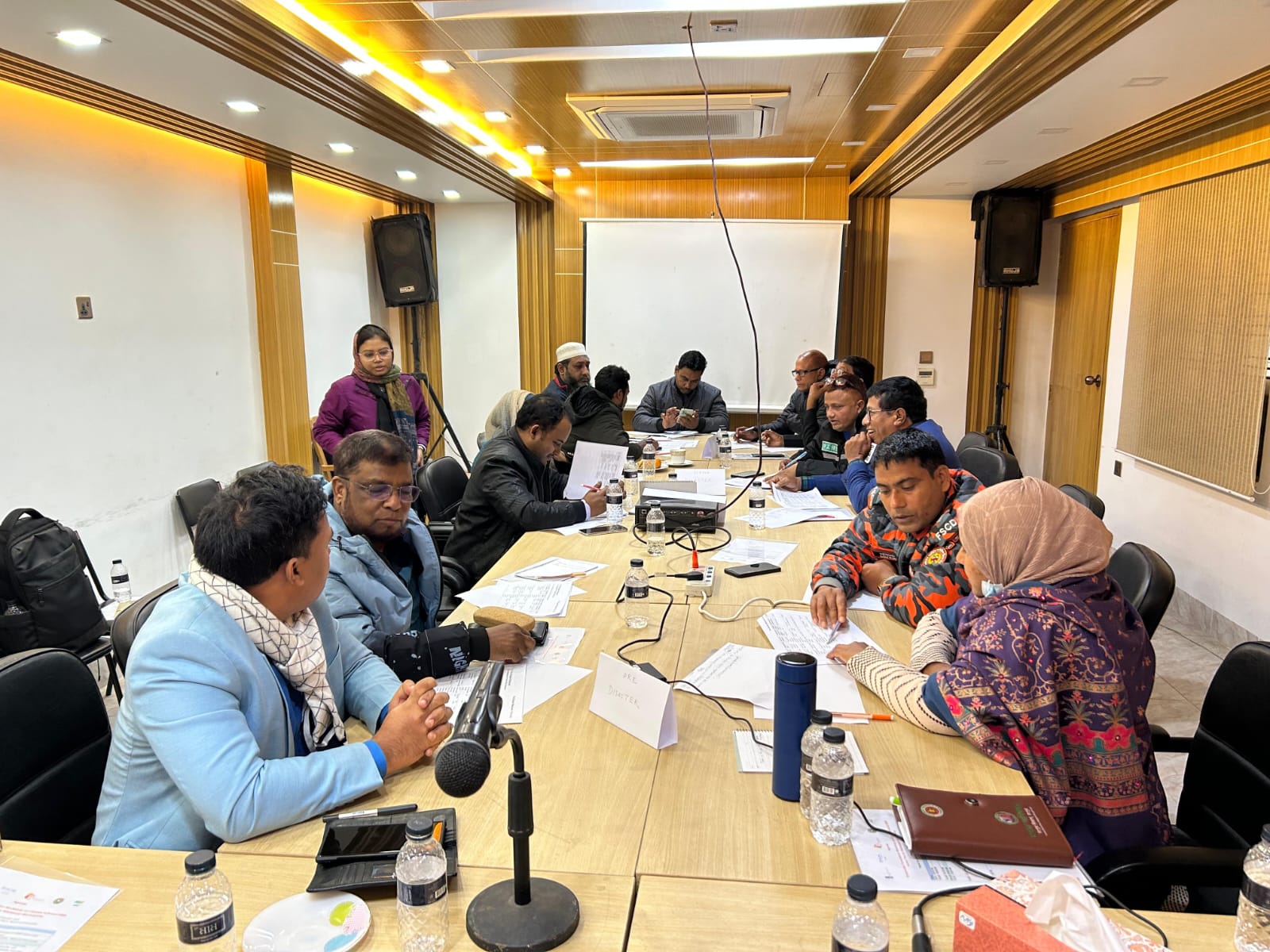
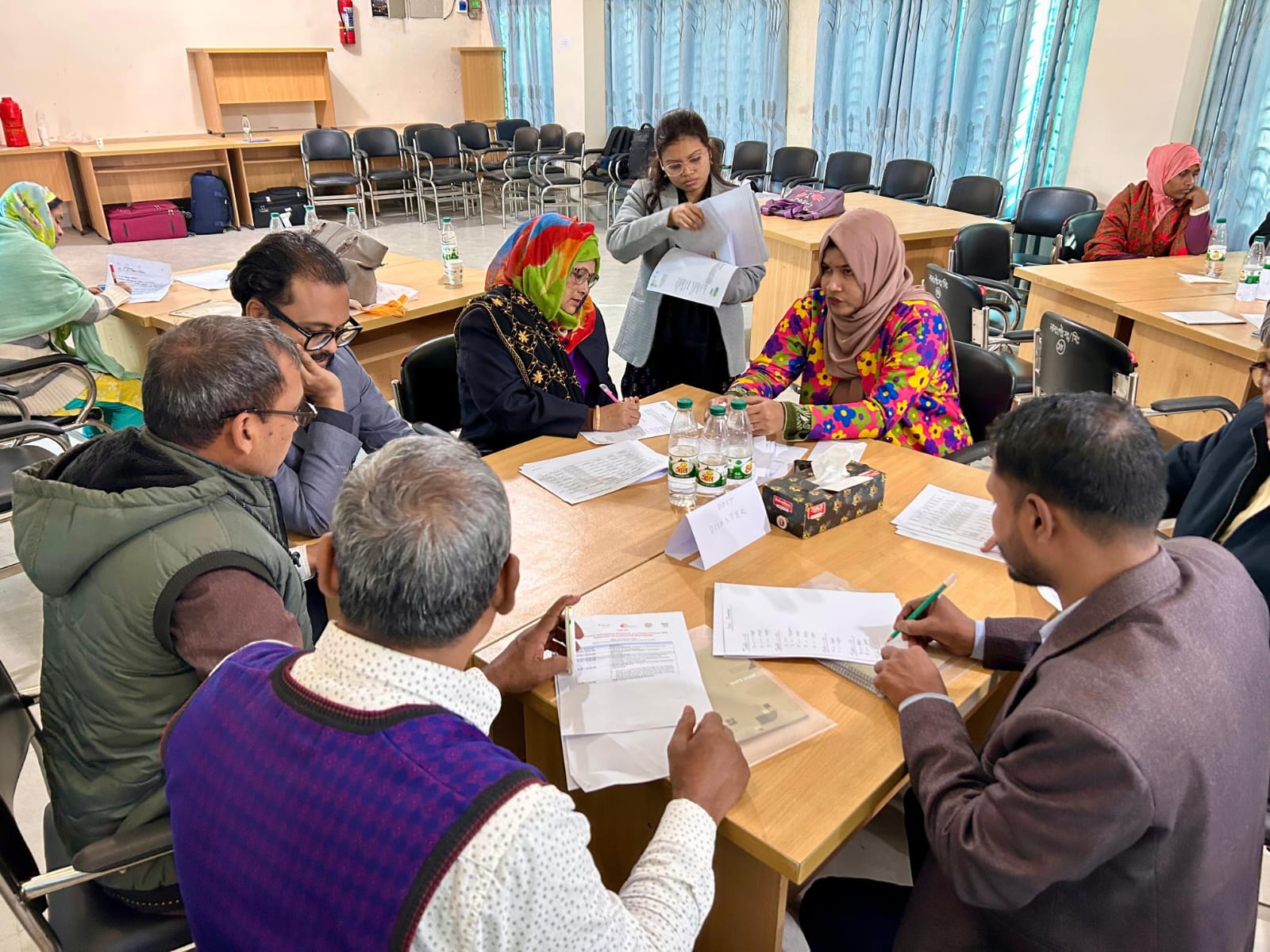
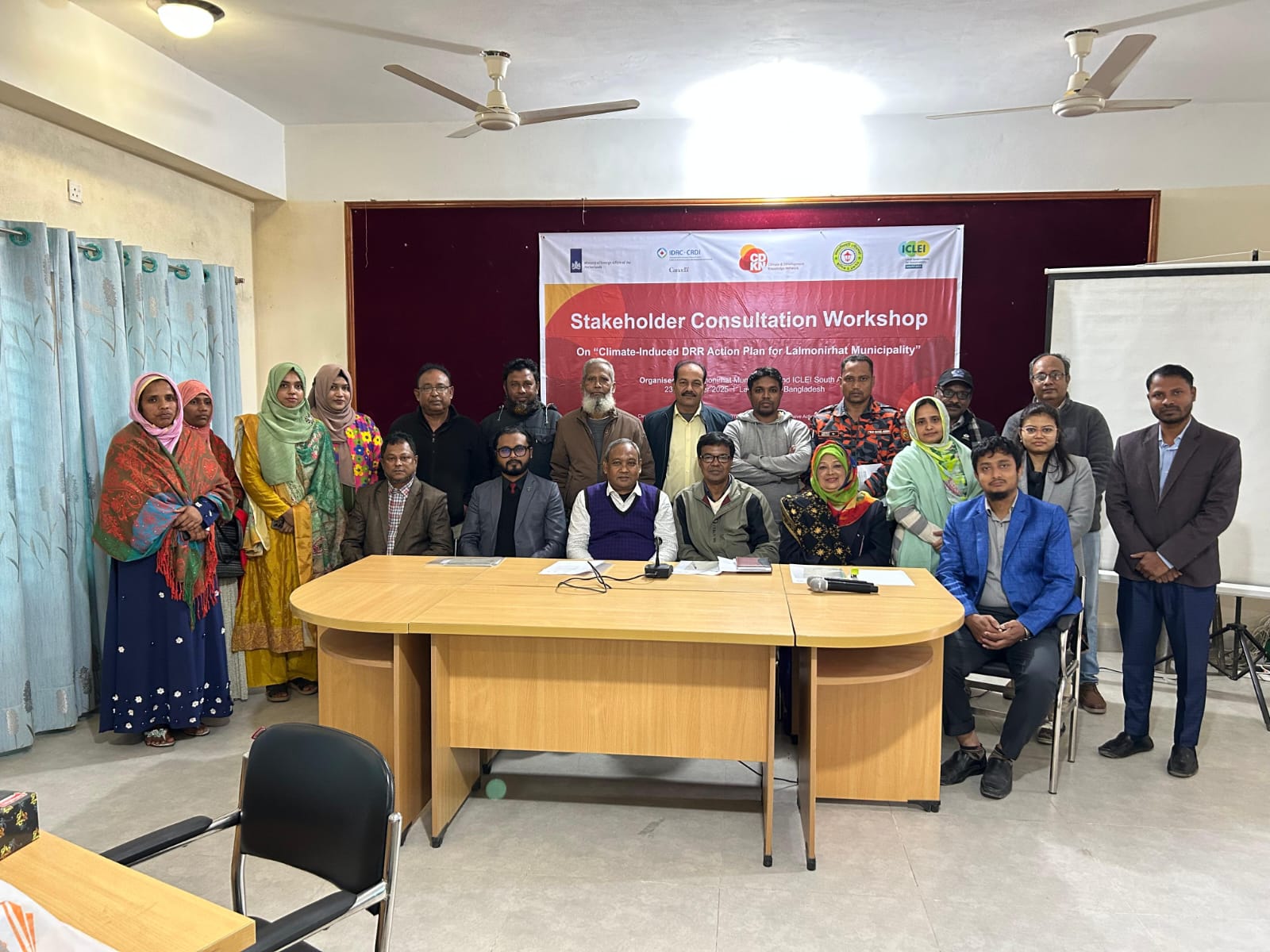
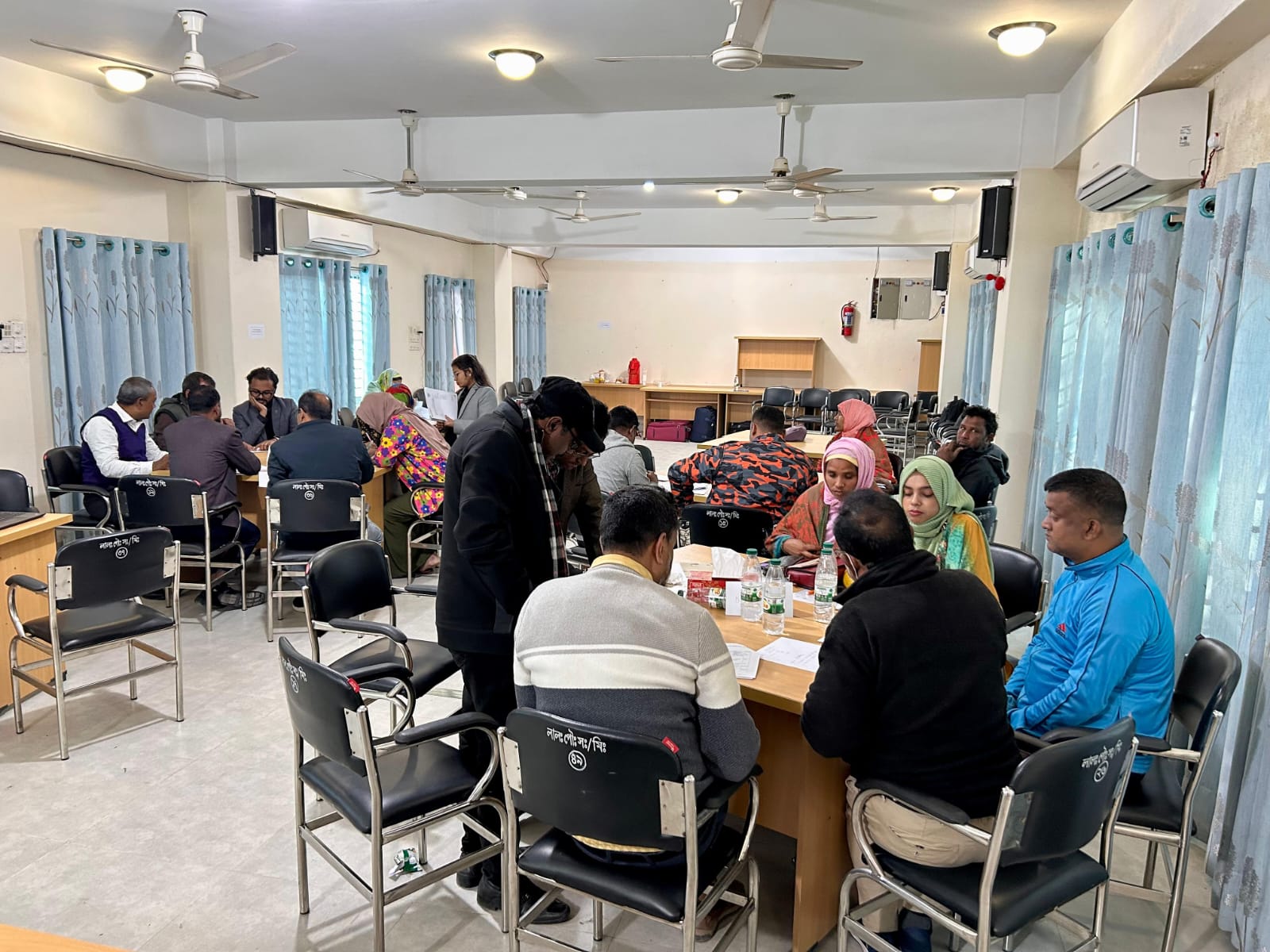
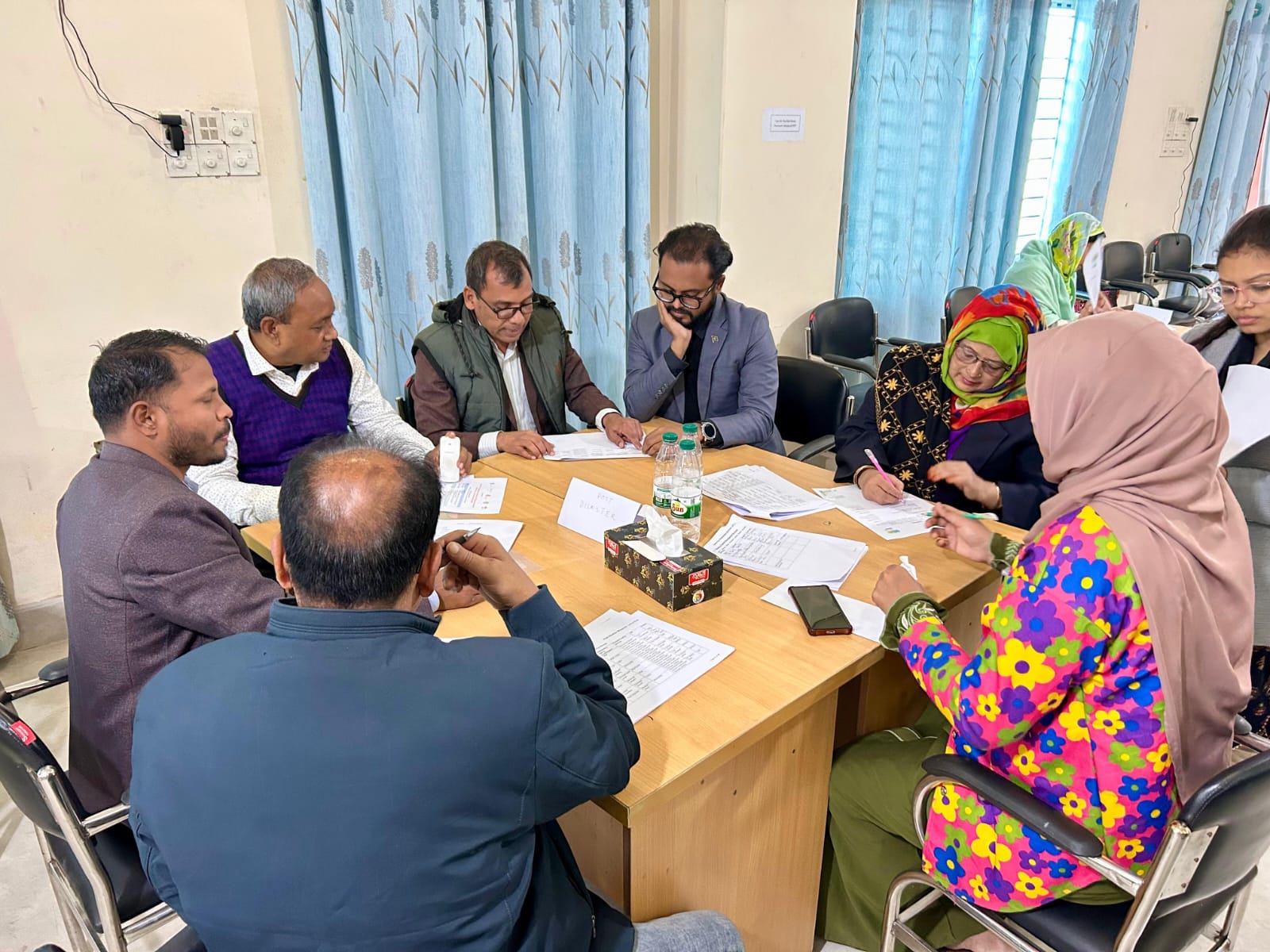
ICLEI South Asia organised two stakeholder validation workshops in Lalmonirhat Municipality and Nilphamari Municipality on 23 and 24 December 2025, respectively, under the CDKN Phase 3 project. The workshops aimed to review and validate the findings of hazard risk assessments, refine hazard-specific interventions across pre-, during-, and post-disaster phases, and prioritise interventions.
In Lalmonirhat Municipality, 27 participants (19 male and 8 female) attended the workshop. The participants represented a diverse range of institutions and sectors, including the Department of Agricultural Extension (DAE), Civil Surgeon’s Office, Municipal Climate Core Team, Community-based Organisations (CBO), NGOs, Northern Electricity Supply Company Ltd. (NESCO), and other local community representatives.
The Nilphamari workshop brought together 25 participants (22 male and 3 female) including members of the Climate Core Team, Upazila Livestock Office, Medical Practitioner, Fire Service and Civil Defence, Teachers, Hospitals, NESCO officials, and the Department of Agricultural Extension.
Since 2023, ICLEI South Asia has been supporting this initiative through a structured and consultative process. . Data were systematically collected through consultations, field visits, and Focus Group Discussions (FGDs).
Building on this groundwork, the validation workshops began with a detailed presentation summarising the key findings from earlier stakeholder consultations. The presentations outlined hazard scenarios, their ward-wise impacts, and proposed interventions structured across three critical phases: pre-disaster preparedness, emergency response during-disaster, and post-disaster recovery.
In addition, key lessons from earlier initiatives, existing institutional gaps, and newly emerging priorities of both municipalities were also highlighted. Participants were encouraged to critically review the findings to ensure that the proposed interventions were realistic, locally appropriate, and feasible within existing institutional and financial capacities.
To facilitate participatory and collective validation of the proposed interventions, a World Cafe session was conducted where participants were encouraged to examine disaster preparedness across the phases of pre-disaster, during-disaster, and post-disaster actions.. Participants reviewed the proposed measures, shared practical insights from their professional and community experiences, and suggested improvements and additions to strengthen implementation pathways.
The validated interventions emerging from these consultations provide a strong, locally grounded foundation for integration into the Municipal DRR and Climate Action Plans of Lalmonirhat and Nilphamari. The next step will focus on translating these agreed priorities into formal planning documents, followed by institutional review, and approval through appropriate municipal processes.