Themed ‘ Action-Oriented Transition: Translating Resilient, Scalable, and Inclusive Solutions for Circular Cities,’ the hackathon begins on 22 May 2026 for young adults aged 18 to 30 years from countries where our partners are based (India, Bhutan, Bangladesh, Nepal, Maldives, Sri Lanka, Hong Kong, Thailand).
Theme: Action-Oriented Transitions: Translating resilient, scalable, and inclusive Solutions for Circular Cities
At its core, this theme is about replacing the unsustainable “take-make-waste” linear model with a closed-loop, regenerative urban ecosystem. Instead of treating resource depletion and climate shocks as isolated problems, a circular city treats waste, water, and food as a single, interconnected web. The heart of this theme is synergy. The hackathon emphasizes that true climate resilience isn’t built in silos. The intersection of these three domains is where the magic happens.
The Three Interconnected Pillars:
The theme revolves around the cross-cutting linkages between three critical domains:
Zero Waste: Redesigning material flows so nothing is wasted. Organic waste becomes compost or biogas, construction debris re-enters supply chains, and industrial by-products become inputs for other sectors.
Integrated Water Management: Closing the water loop by treating wastewater as a resource rather than a liability. This approach promotes wastewater treatment and reuse, rainwater harvesting, greywater recycling, groundwater recharge, and the restoration of urban wetlands and natural drainage systems
Urban & Peri-Urban Food Systems: Creating a hyper-local loop. These systems reclaim organic waste for soil nutrients and use treated wastewater for irrigation, shortening supply chains to slash emissions and food spoilage.
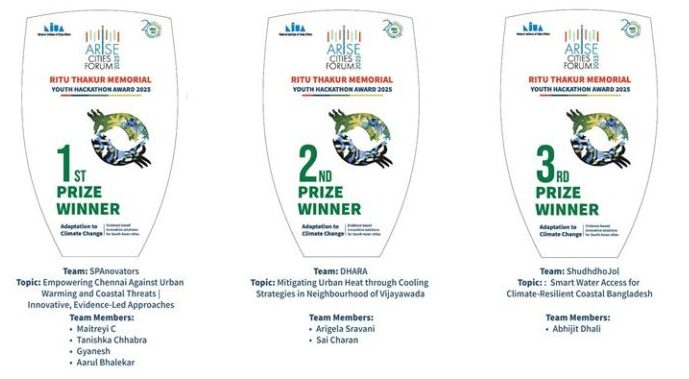
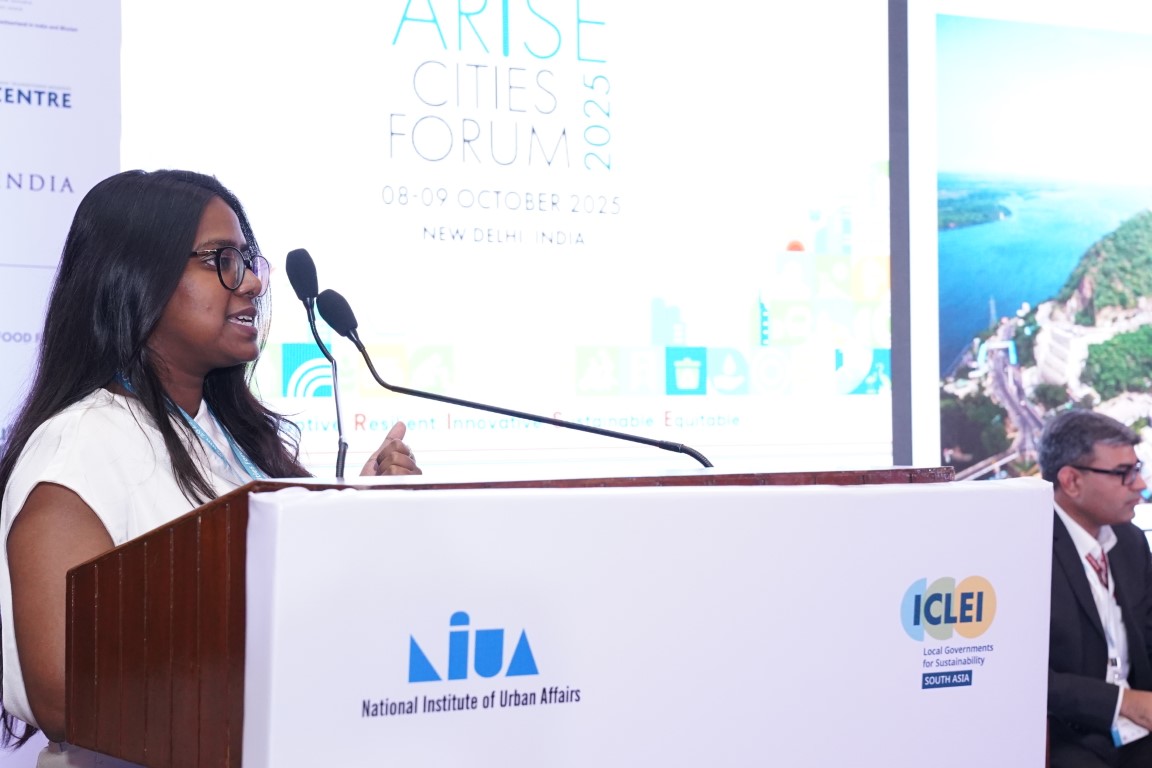
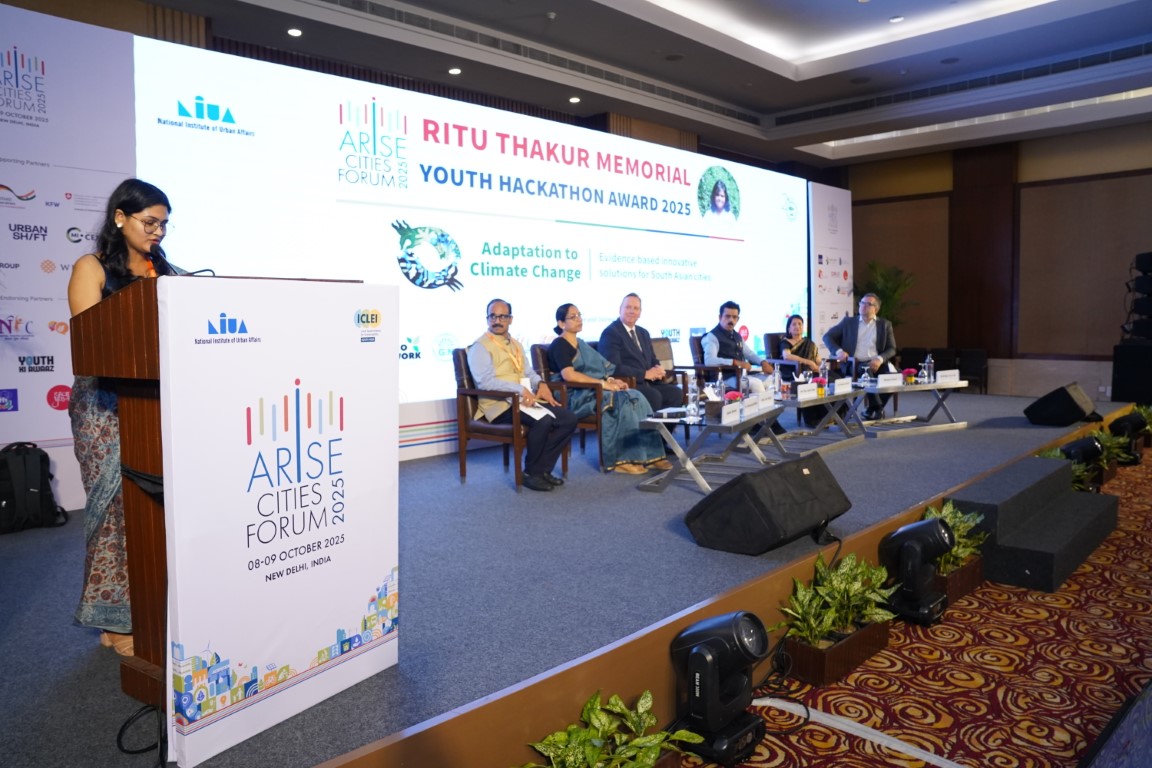
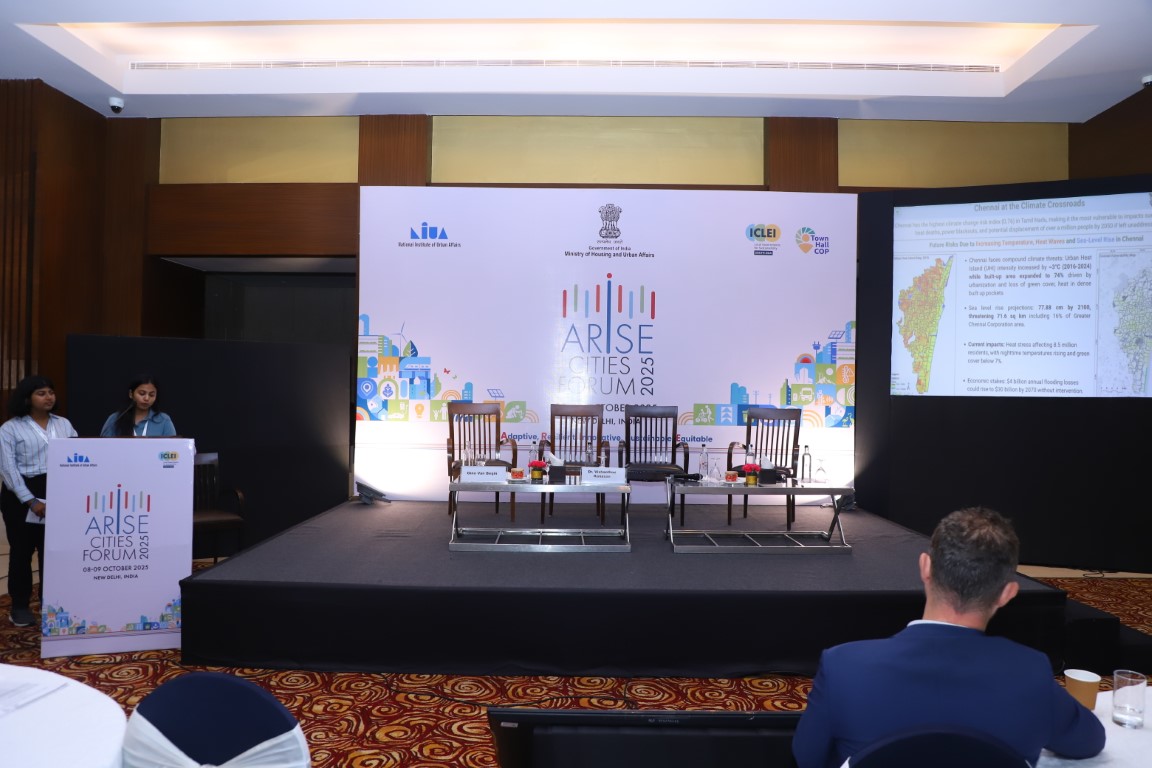
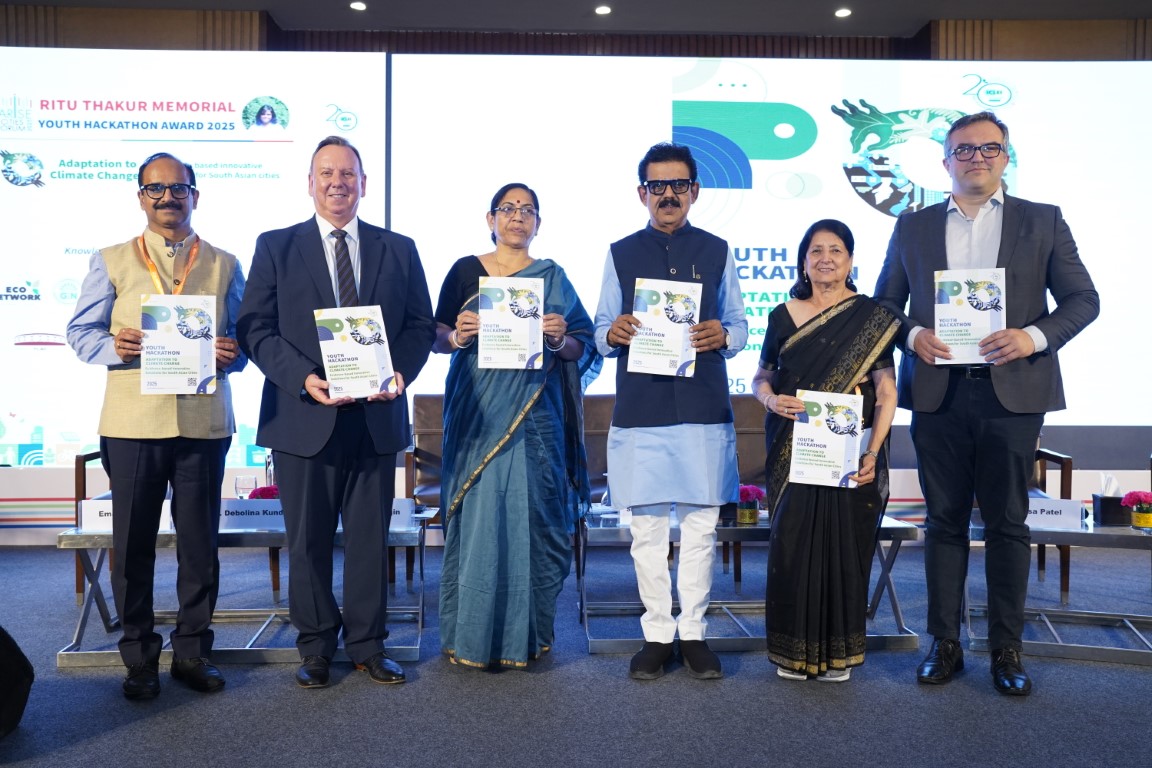
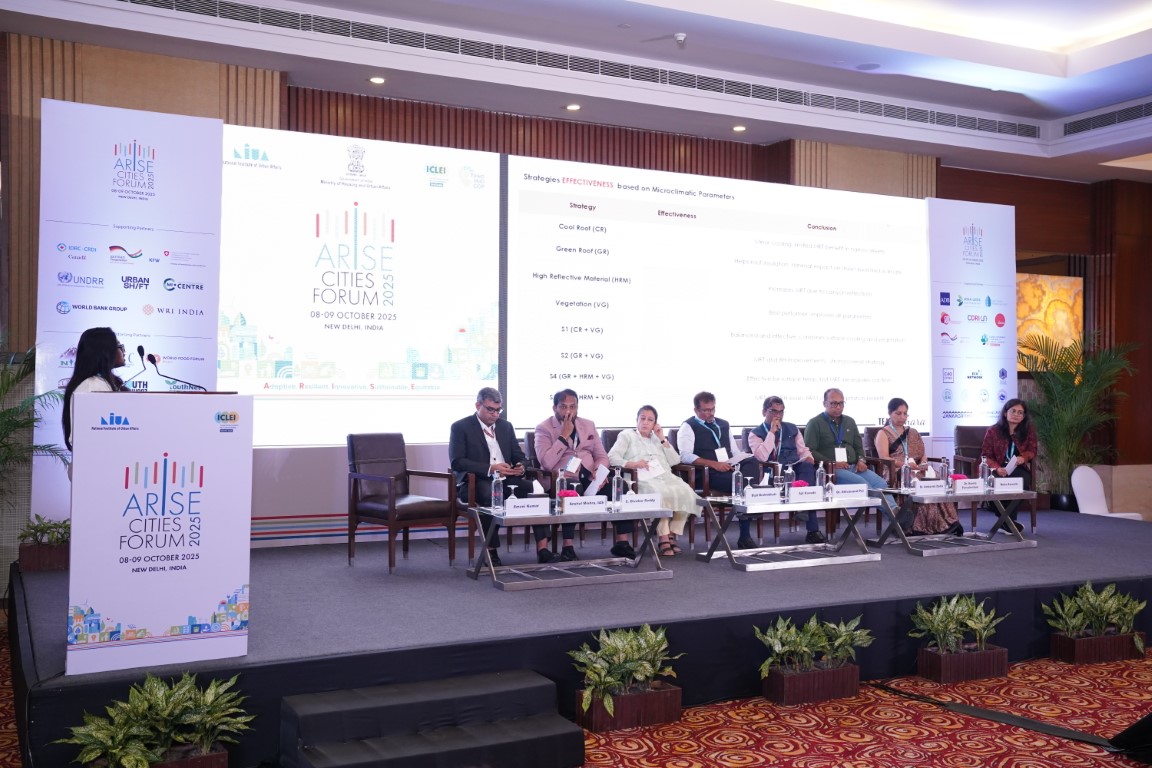
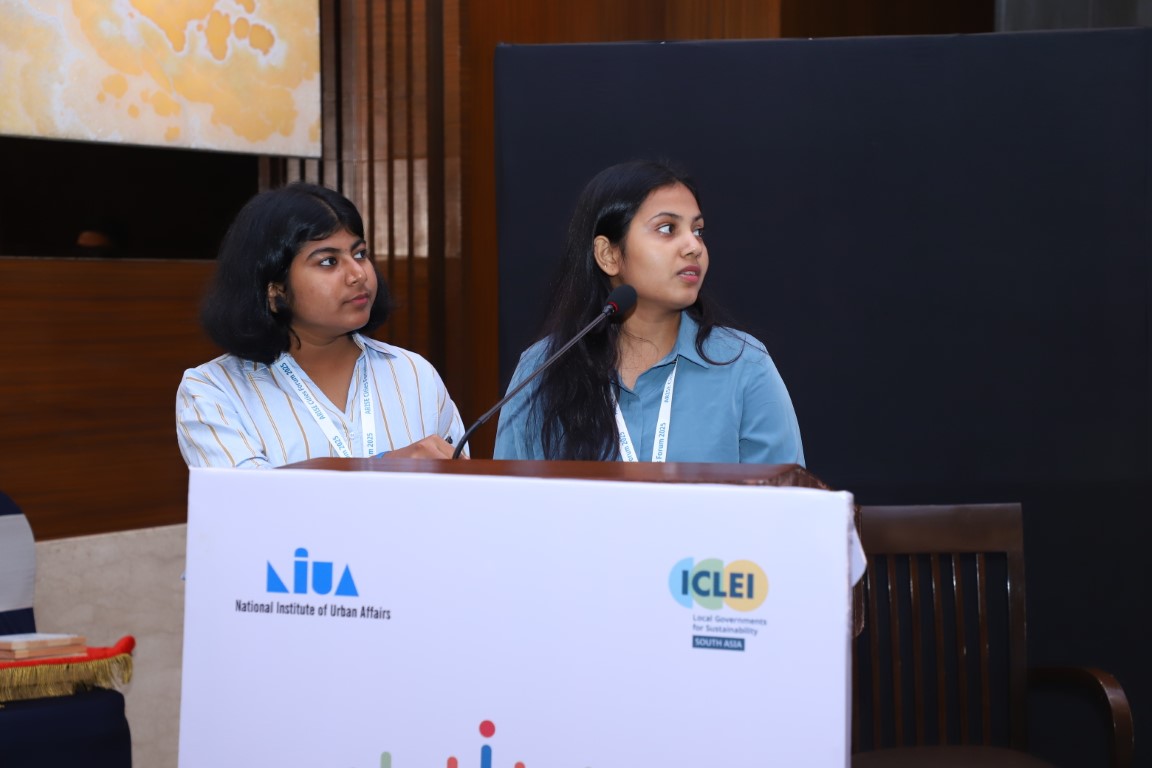
Hackathon Details:
Details of the hackathon:
1. Eligibility Criteria:
- Age group: Participants should be between 18 and 30 years old.
- Geographic eligibility: Open to individuals from the countries where our partners are based (India, Bhutan, Bangladesh, Nepal, Maldives, Sri Lanka, Hong Kong, Thailand).
- Participant backgrounds: We welcome students, young professionals, entrepreneurs, researchers, educators and startups working in sustainability and innovation.
- Relevant Fields – We invite people from diverse fields, such as climate science, urban and environment planning, social science, economics, mobility, energy, biodiversity, and other disciplines.
- Team Composition: Teams may comprise 1 to 3 members to encourage individual and collaboration.
2. Theme: Action-Oriented Transitions: Translating resilient, scalable, and inclusive Solutions for Circular Cities.
3. Expected output: Participants will select a city and identify its real-time urban, environmental, and socio-economic challenges in the context of circular development.
Align the proposed solutions with relevant sub-themes such as zero waste, integrated water management, urban and peri-urban food systems.
4. Submission Format:
- A1 size Poster Presentation
- A4 Summary of 500 words (1 page, font size 11) – Must include problem statement, proposed solutions, feasibility, scalability, sustainability impact.
5. Evaluation:
Round 1: Internal Evaluation (compliance with eligibility criteria)
Round 2: External Evaluation (evaluation by partners and selection of top 5 ideas)
Round 3: External Jury (presentation of the Top 5 ideas)
Round 4: Announcement of winners
6. Criteria for selection:
Total 40 points scoring mechanism
Problem Understanding and Contextual Relevance – 10 points
Innovation and creativity – 20 points
Feasibility, Scalability, and Sustainability Impact – 10 points
7. Guidelines for poster submission:
- Identify the challenge/problem
- Highlight city-specific needs
- Outline the concept for the innovative solution
- Detail out the Local Actions/ Strategies/ Practical Solutions to be adopted or implemented
- Present potential Impacts/Outcomes
8. Awards & Recognition: Winners will receive prizes and certificates and an opportunity to present their innovative solutions at ARISE Cities Forum 2026.
9. How is this hackathon different?
- Participants will tackle real-world challenges faced by cities, businesses, and policymakers.
- Winning ideas get an opportunity to be featured in the COP31 booklet, ensuring visibility on global platforms.
- Hybrid format enables both virtual and in-person participation.
- Solutions will be mapped to relevant SDGs for measurable impact.
- Offers valuable networking opportunities for young participants.












MEET THE TEAM
Sayli Mankikar
Associate Director
Sayli Mankikar
Associate Director
Dechen Wangmo
Project Officer
Dechen Wangmo
Project Officer
Pitchaporn Likitpanjamanon
GIS Expert
Rick Sarkar
Associate - Communications (South Asia)
Manju Adhikari
Senior Project Officer
Manju Adhikari
Senior Project Officer
Manasa Garikaparthi
Senior Project Officer
Manasa Garikaparthi
Senior Project Officer
Dipak Bhowmick
Technical Lead
Dipak Bhowmick
Technical Lead
Sankalita Dey
Communications Manager
Sankalita Dey
Communications Manager
Satarupa Roy
Senior Project Officer
Satarupa Roy
Senior Project Officer
Shinjini Saha
Knowledge Management Expert
Shinjini Saha
Knowledge Management Expert
Aditi Guha Thakurta
Policy & Research Associate
Shinjini Saha
Knowledge Management Expert
Yada Ponchamni
Junior Transport Planner
Shinjini Saha
Knowledge Management Expert
FAQs
1. Is there any registration fee?
Answer: No, there is no registration fee.
2. What is the duration allotted for the final presentation? What is the expected number of presentation slides?
Answer: The Top 3 ideas will be briefed on the process in due time.
3. Are there any other relevant details or documents available, such as a rulebook or previous year’s presentations for reference?
Answer: Guidelines are available on the website. For specific queries, please reach out to us at [email protected].
4. What is the duration and location of the competition?
Answer: The hackathon will be conducted online for all participants, except for the final round, which will be held in a hybrid format in New Delhi, India, for the teams with the Top 3 selected ideas.
The overall duration of the hackathon is from May 25th to October 28th, 2026.
5. Will participation certificates be provided?
Answer: Qualified candidates from the submitted entries are eligible for Participation Certificates.
6. What are the knowledge-sharing webinars?
Answer: The knowledge-sharing webinars are interactive sessions designed to build participants’ capacity by providing valuable insights, tools, and case studies related to urban resilience and climate adaptation. These webinars will be conducted during and after the submission phase of the hackathon.
Their purpose is to support participants in developing stronger, evidence-based solutions to the challenges presented. Experts and practitioners will share relevant experiences, data sources, and best practices that can help teams refine their ideas and approaches.
7. What and when will be the orientation webinar?
Answer: The orientation webinar will be notified. It is highly recommended for all participants to attend this session, as it will provide a clear understanding of the hackathon process, the central theme, and the expected outcomes. Additionally, the session will include a Q&A segment to address any questions or concerns participants may have.
For any queries and discrepancies, please reach out at:
[email protected]
1. What is the submission date and time? Is there any submission link?
Answer: After the registration deadline, eligible participants will be updated on the submission date and time. They will also be provided with the hackathon guidelines, including links to upload the submissions.
2. Will you be providing any specific guidelines, formatting requirements, or judging criteria that should be followed for the submission?
Answer: All participants will receive a toolkit containing the hackathon brief. This will include evaluation criteria, submission guidelines, submission formats, and references.
3. Will participants receive confirmation or feedback after submitting their information?
Answer: Yes, participants will receive a confirmation message once they have successfully uploaded their files and submitted the Google Form.
However, individual feedback on submissions will not be provided. Please note that only one final submission is allowed before the deadline. No edits or additional submissions will be accepted once the deadline has passed.
4. Why was our submission not considered?
Answer: Please note that submissions will not be considered under the following circumstances:
- Failure to meet the submission deadline
- Incomplete entries, such as missing poster, summary, or references
- Non-compliance with the prescribed submission format
- Submissions sent via email instead of the designated submission form
- Multiple submissions made by the same team
- Submission that does not correspond to the specified topic or thematic focus.
1. Can the team members be changed after registration?
Answer: No, member changes are not allowed.
If at least one member of the team meets the eligibility criteria, the registration is considered valid. Remaining members who do not meet the eligibility criteria will be disqualified from participating and will not receive participation certificates for the submitted entry.
2. Can new team members be added after registration?
Answer: No, new members cannot be added after registration.
3. What are the opportunities for the participants with the Top 3 ideas?
Answer: Participants whose ideas rank among the Top 3 will have the opportunity to present their solutions before an expert jury and participate in ICLEI South Asia’s flagship event.
Additionally, some entries will be featured in the Hackathon 2.0 COP31 booklet, amplifying the voices of youth from Asia-Pacific. Winning teams will be awarded prize money and certificates.
4. Why were our registrations not considered?
Answer: Registrations are evaluated based on strict adherence to the stated eligibility criteria. Teams or participants who do not meet the requirements mentioned below will not be considered eligible for participation:
- Age group between 18 and 30 years old
- Geographic eligibility: Open to participants from countries across the Asia-Pacific where our partners are based, including India, Bhutan, Bangladesh, Nepal, Maldives, Sri Lanka, Hong Kong, and Thailand
- Team composition: Teams can have 1 to 3 members
- Wrong information provided about any of the above criteria
- Registration was done after the deadline of 14th June, 2026, 11:59 PM IST
Note: Registrations will only be accepted from countries where our partners are based, including India, Bhutan, Bangladesh, Nepal, Maldives, Sri Lanka, Hong Kong, and Thailand.
5. Why was our registration considered partially eligible?
Answer: Participating teams or individuals are considered partially eligible if at least one member in the team meets the eligibility criteria, with missing or incomplete details in their registration, such as:
- Individual age of team members
- Teams composed of both eligible and ineligible members
- Team members from outside Asia-Pacific countries, including India, Bhutan, Bangladesh, Nepal, Maldives, Sri Lanka, Hong Kong, and Thailand, will not be eligible
- Teams with more than three members
Note: Only entries having all the details of registered team members meeting the eligibility criteria will be considered during submission.
For any queries and discrepancies, please reach out at:
[email protected]