Waste has a cost even when it is hidden. Municipalities around the world carry the financial burden of waste collection, disposal, public health impacts, and citizen complaints, even though many of the decisions that generate waste are made upstream by producers and industries. But who pays for waste, and who really should?
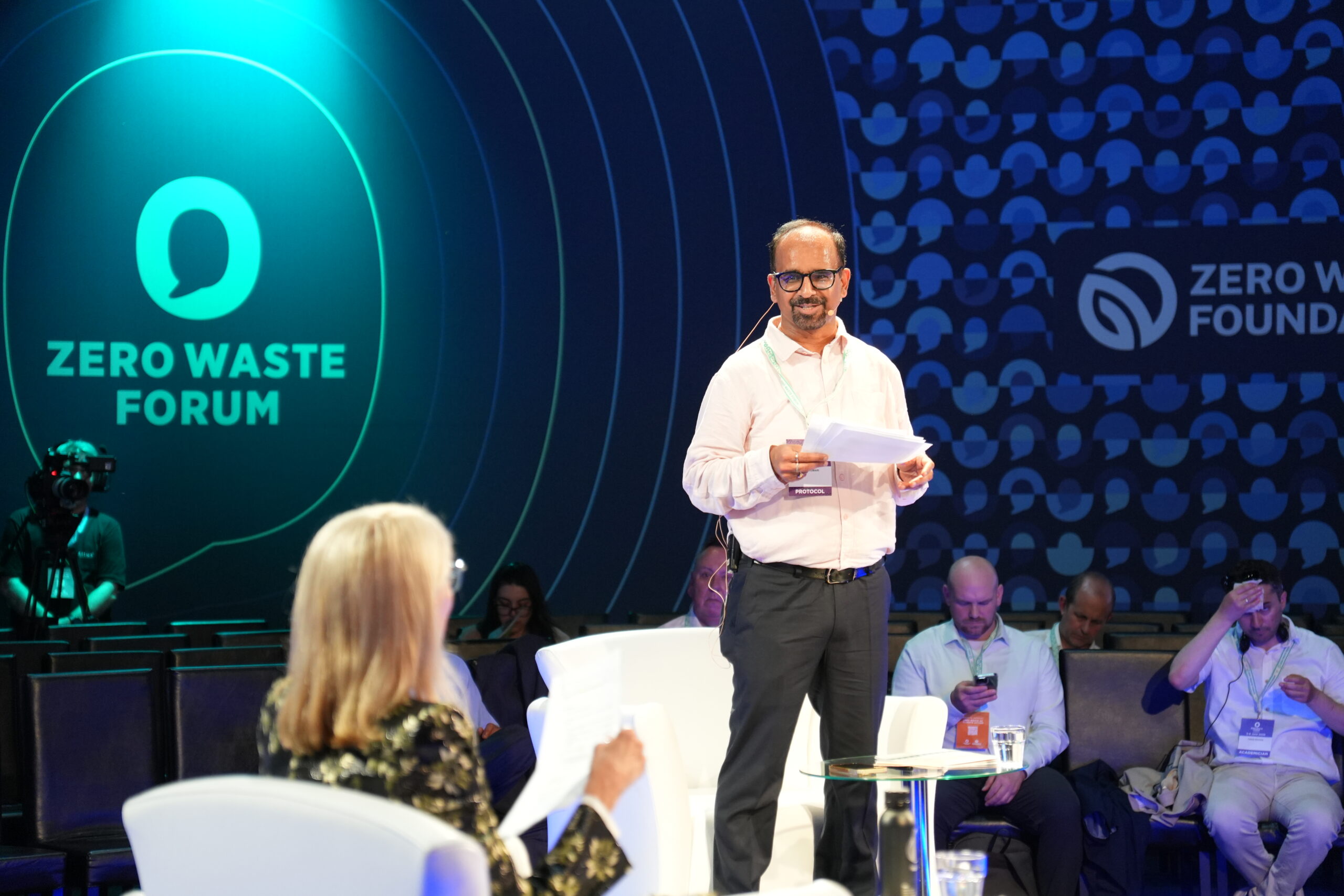
This formed the basis of the session “Municipalities: Who Pays the Waste Cost?,” at the Zero Waste Forum organised by the Zero Waste Foundation from 5-7 June 2026 in Istanbul, Türkiye. Moderating the session, Soumya Chaturvedula, Executive Director, ICLEI South Asia, underscored that while there is growing international recognition on zero waste strategies being essential for climate action, global ambitions cannot succeed without strong financing systems at the municipal level.
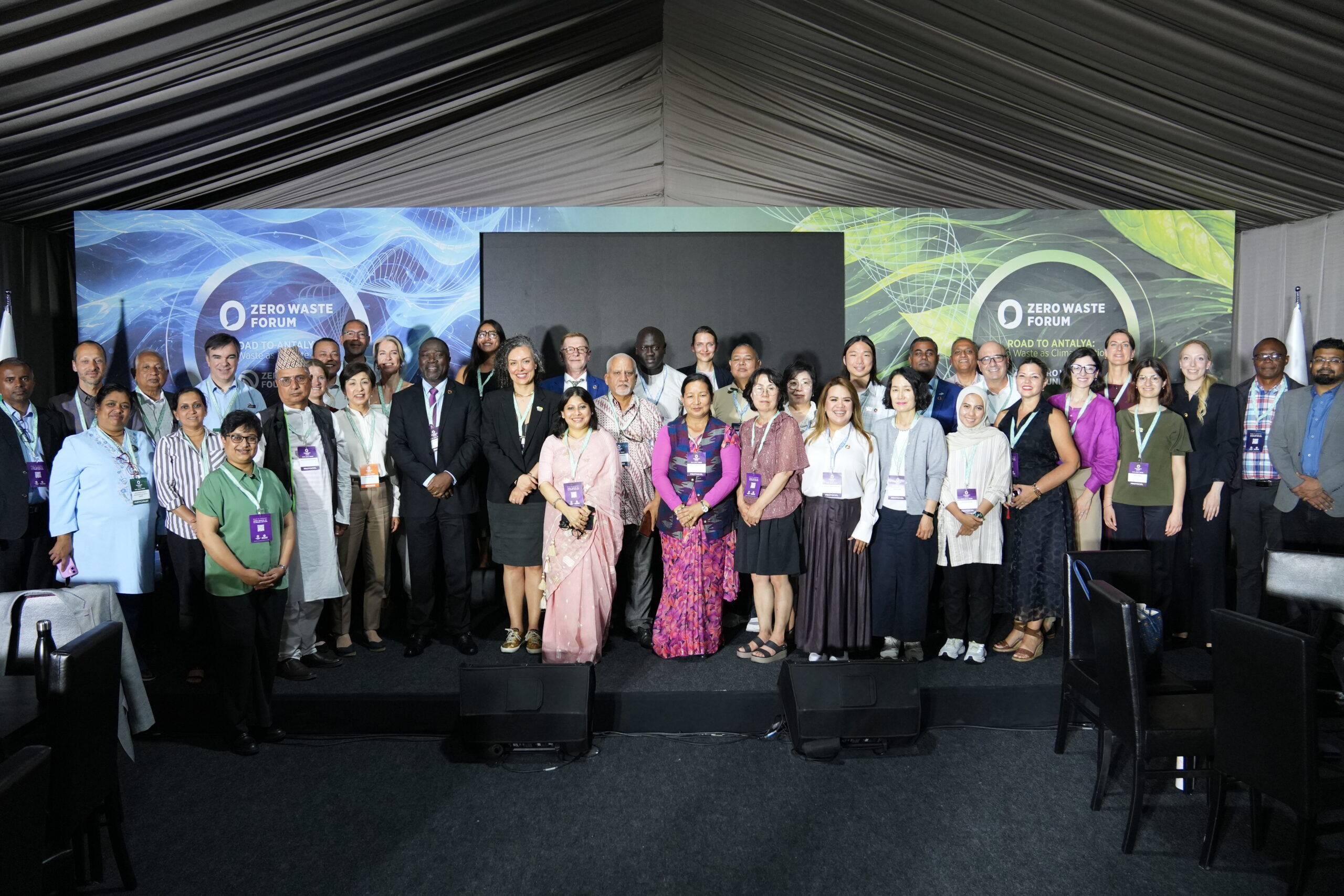
The session brought together representatives from including Baptiste Roubaud, International Policy Officer, General Secretary, CITEO; Victor Kotey, Environmental Health Analyst, Waste Management Department, Accra Metropolitan Assembly; Nalini Shekar, Co-Founder, Director of Finance and Special Projects, Hasiru Dala; and Mike Stockman, Director of Programs, Circular Innovation, Delterra. Discussions focused on municipal budgets, producer responsibility, public finance, procurement, informal labour, and the economic case for reducing waste at source.
Today, waste is a major economic, environmental, and social challenge whose true costs are often hidden from public view. To elaborate this, Ms. Chaturvedula explained the contrast of linear and circular waste systems. Current linear waste systems follow a “take-make-dispose” model that externalises costs onto cities, communities, and ecosystems. These systems hide the true cost of waste through pollution, greenhouse gas emissions, loss of resources, and the health impacts faced by communities living near dumpsites and incinerators. In contrast, circular systems aim to reduce waste generation and keep materials in use for as long as possible.
Global Inequalities in Waste Management
Although recycling is often presented as a solution to the waste problem, practices such as waste exports, chemical recycling, and informal processing frequently externalise the environmental and human costs of consumption onto poorer regions, reinforcing patterns of “waste colonialism.” Regional disparities reveal the uneven realities of global waste management. In Asia, open dumping remains widespread, affecting 79% of waste in South Asia and 64% in Southeast Asia. Africa faces severe challenges, with only 55% waste collection coverage, over 90% of waste dumped or openly burned, and recycling rates as low as 4% despite most waste being recyclable. Europe has improved recycling rates significantly, increasing municipal recycling from 19% in 1995 to 48% in 2024 while reducing landfills. However, Europe also generates the world’s highest e-waste per capita, much of which is exported to Asia and Africa where weaker systems often push waste into informal and hazardous processing networks.
Ms. Chaturvedula highlighted the growing global crisis around plastics and electronic waste. Plastic use is projected to nearly triple by 2060, while e-waste generation is rising far faster than documented recycling. 40% of e-waste supposedly recycled in the United States is reportedly exported. Most end up in Asia and Africa. Guiyu, China, and Agbogbloshie in Accra, Ghana, are among the most polluted places on Earth. The severe human and environmental consequences, particularly for informal workers exposed to toxic materials endanger them and their surrounding communities alike.
Economic tools for reducing Waste
Addressing the true cost of waste requires shifting responsibility across the entire lifecycle of products, from production to disposal. Extended Producer Responsibility (EPR) offers a structural counterweight by making producers financially responsible for collecting and processing the waste they generate, thereby encouraging more durable, repairable, and recyclable product designs. However, weakly enforced or low-fee systems risk becoming little more than a licence to pollute.
On the consumer side, tools such as pay-as-you-throw schemes and deposit-refund systems can create direct economic incentives to reduce waste and improve material recovery, especially when backed by strong enforcement measures.
Public procurement also plays a critical role, as governments and municipalities can use their purchasing power, which accounts for 12–30% of GDP in many countries, to promote reusable products, recycled materials, repairability, and take-back systems, helping reshape market demand toward circularity.
At the same time, an honest waste economy must recognise the role of informal waste workers, who recover a substantial share of recyclables under unsafe conditions and whose labour remains largely invisible in formal cost accounting.
Local solutions and global lessons
Speakers highlighted several case studies from their countries to demonstrate how local solutions can create more inclusive and sustainable systems.
Victor Kotey presented a women-led zero waste initiative in Accra that focused on composting and recycling. The project established a women-led cooperative, strengthened local waste management skills, and developed composting facilities through community participation and stakeholder collaboration.
Highlighting CITEO’s work Baptiste Roubaud presented France’s shared financing model for packaging waste management, where producers, local authorities, and recycling operators jointly contribute to collection and recycling systems through EPR mechanisms.
Nalini Shekar emphasised the importance of decentralised waste systems, public-private partnerships, and financial support for waste pickers and women-led enterprises. She noted that empowering waste pickers and local entrepreneurs is critical to building climate-friendly waste systems.
Drawing from Delterra’s work in Argentina, Mike Stockman highlighted the importance of collaboration among governments, businesses, communities, and the recycling sector to create scalable circular economy solutions.
The discussion emphasised that waste should not be viewed simply as a disposal problem to be managed cheaply, but as a systemic economic issue tied to production and consumption patterns. With global municipal waste projected to rise from 2.6 billion tonnes in 2022 to 3.9 billion tonnes by 2050, and disposal costs continuing to increase worldwide, source reduction and circular systems are both environmental necessities and economic imperatives.