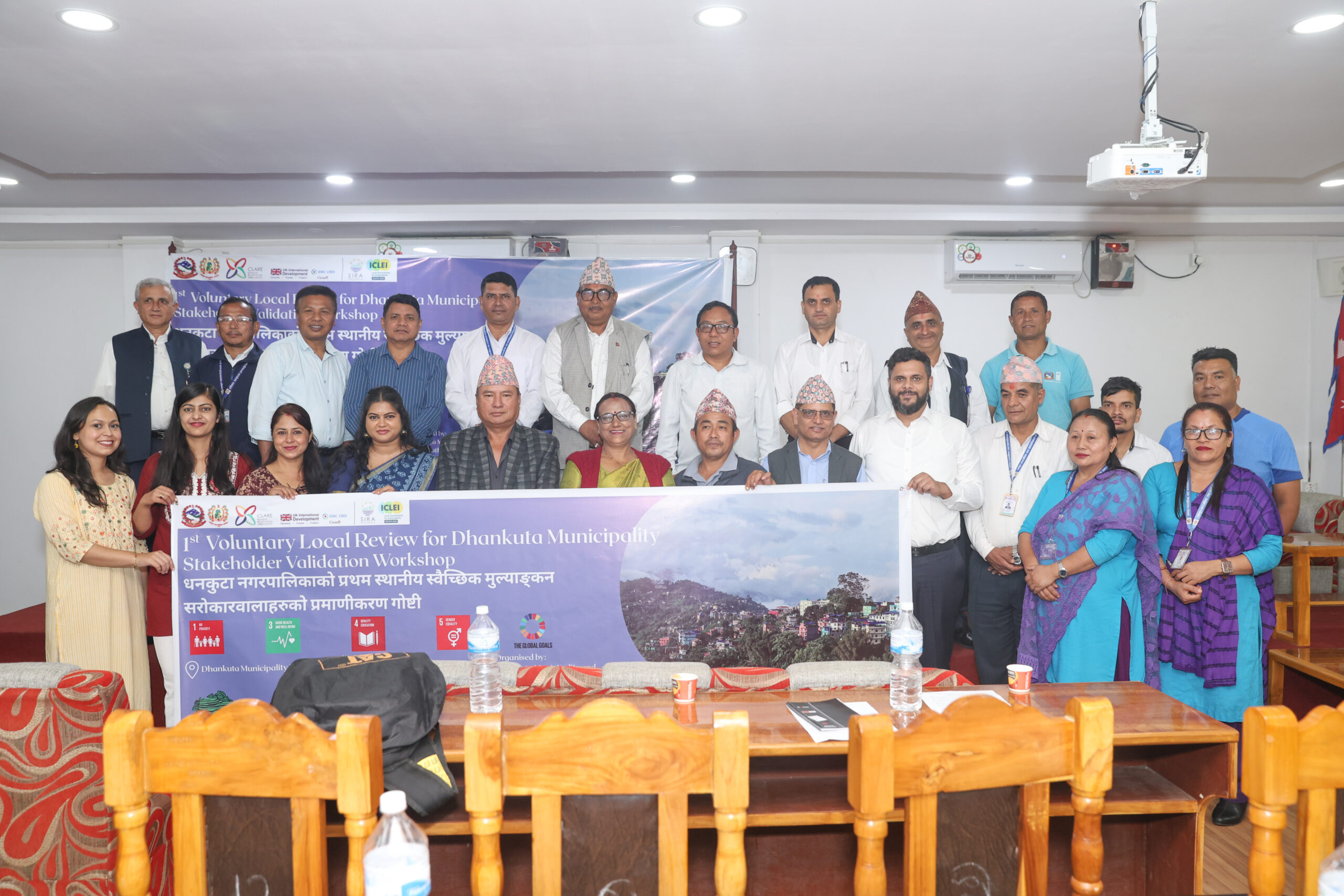
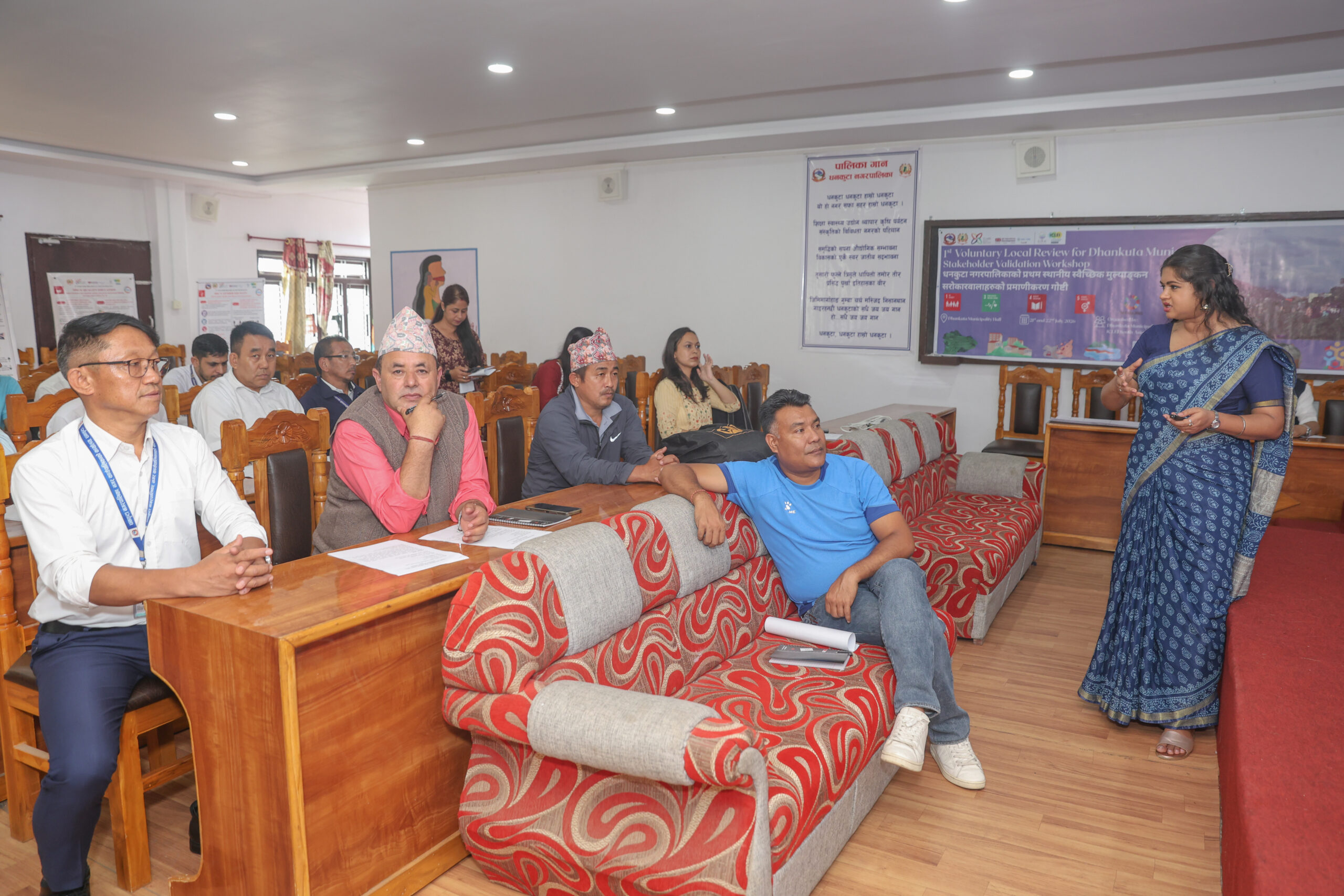
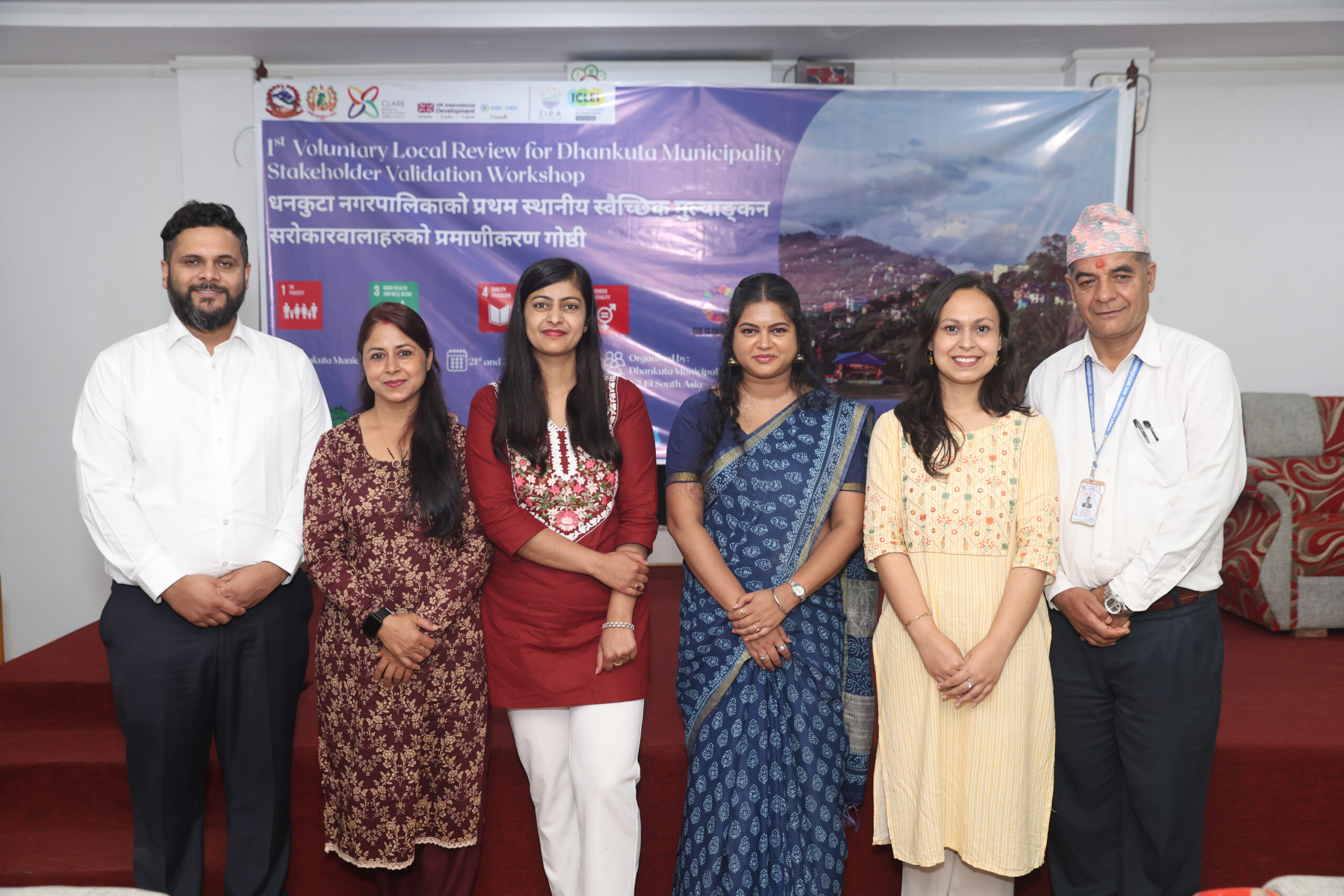
Dhankuta, Nepal: Dhankuta Municipality has completed an important milestone in its journey towards localising the Sustainable Development Goals (SDGs) by successfully conducting a two-day stakeholder validation workshop for its first Voluntary Local Review (VLR) on 21st and 22nd July 2026. The municipality is preparing its first VLR with technical support from ICLEI South Asia under the Enhancing Local Capacities in Socially Inclusive Resilience in Asia (SIRA) project.
The VLR evaluates the progress on four priority SDGs including SDG 1 (No Poverty), SDG 3 (Good Health and Well-Being), SDG 4 (Quality Education) and SDG 5 (Gender Equality), to strengthen evidence-based planning and accelerate sustainable local development.
The workshop brought together 72 participants, including the Mayor, Deputy Mayor, ward representatives, government line agencies, civil society organisations, academia, and the media, to review and validate the VLR findings. The workshop enabled non-government stakeholders to validate the findings on the first day, followed by government stakeholders on the second, ensuring that the recommendations reflected diverse local perspectives.
The workshop was inaugurated by Mr Chintan Tamang, Hon’ble Mayor of Dhankuta Municipality. Delivering the welcome remarks at the event, Mr Dasharath Rai, Chief Administrative Officer, Dhankuta Municipality, highlighted the municipality’s commitment to sustainable development through its first VLR and the alignment of its periodic plan with the SDGs. He noted that Dhankuta is among the few municipalities in Nepal undertaking a VLR.
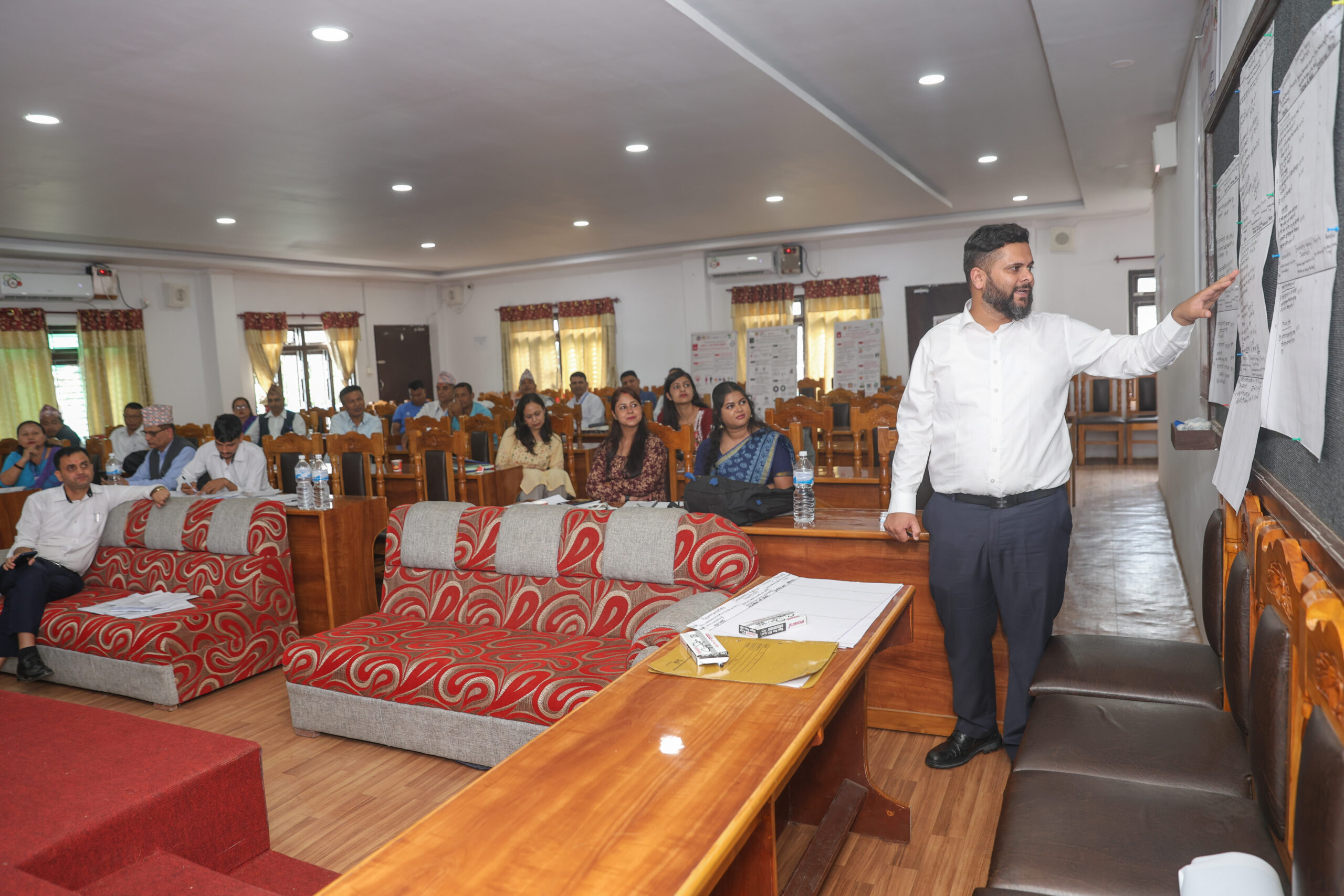
Representing ICLEI South Asia, Satarupa Roy, Senior Project Officer, introduced the VLR process, outlining its objectives, methodology, and timeline, and facilitated the breakout discussions. Luna Wosti and Surya Kala Khanal, interns under the SIRA programme at Dhankuta municipality, presented the municipal status of the four selected SDGs. The presentation highlighted achievements in maternal and child health, education, access to basic services, and women’s representation in politics in the Municipality. Dhankuta has also formulated local policies and legal frameworks to support the implementation of the SDGs. The assessment also identifies persistent challenges such as poverty, increasing cases of tuberculosis, suicide rate, and domestic and gender-based violence.
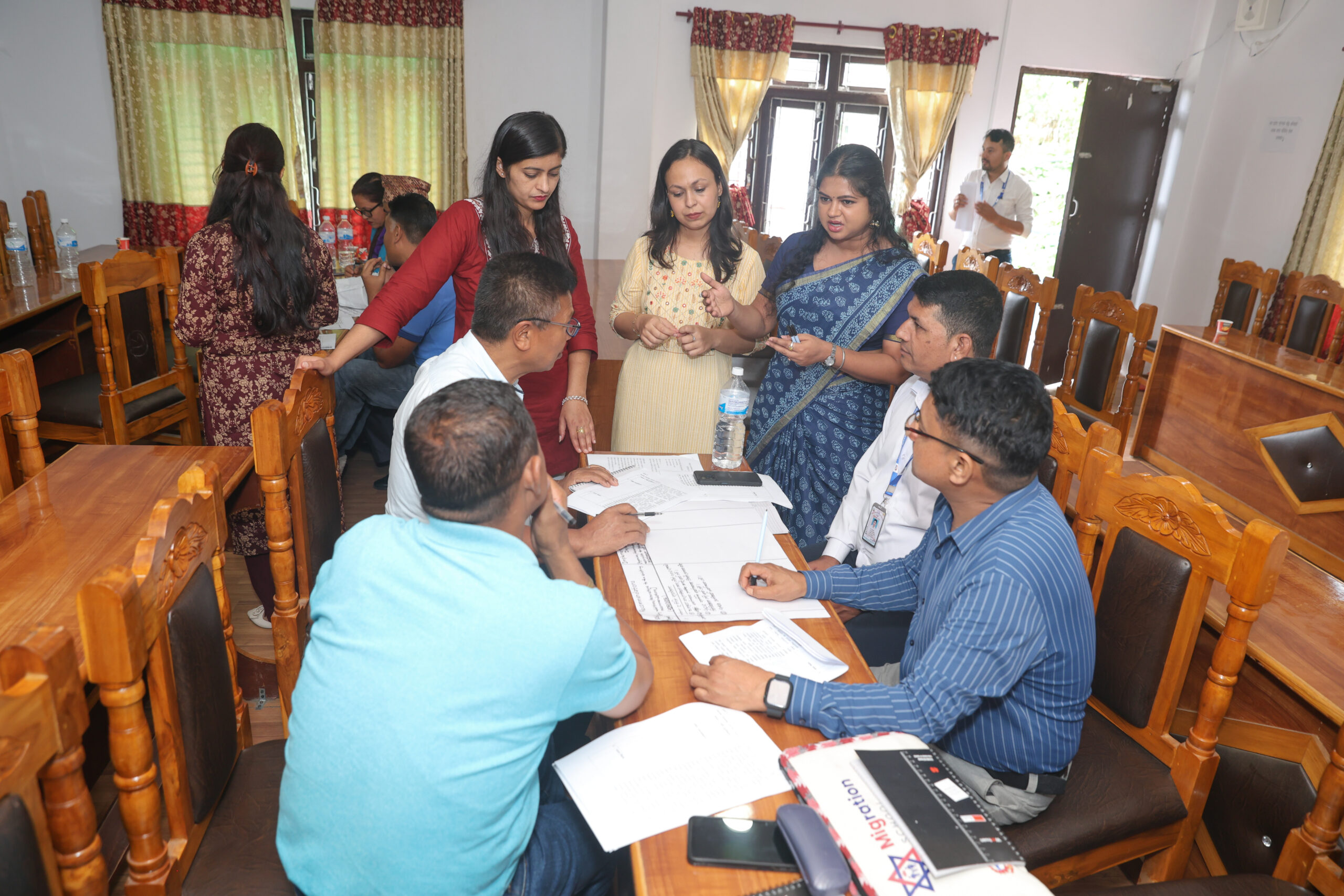
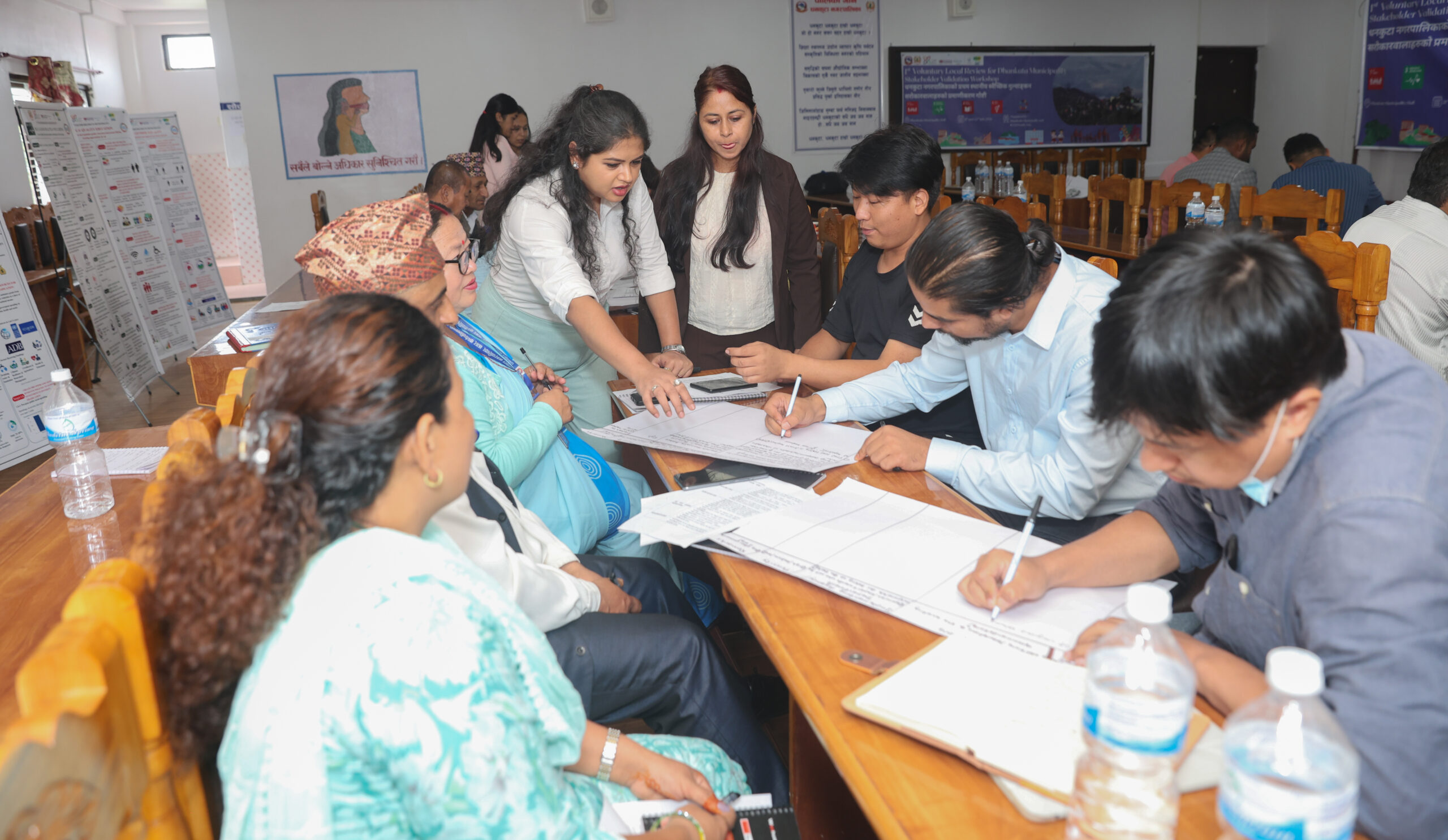
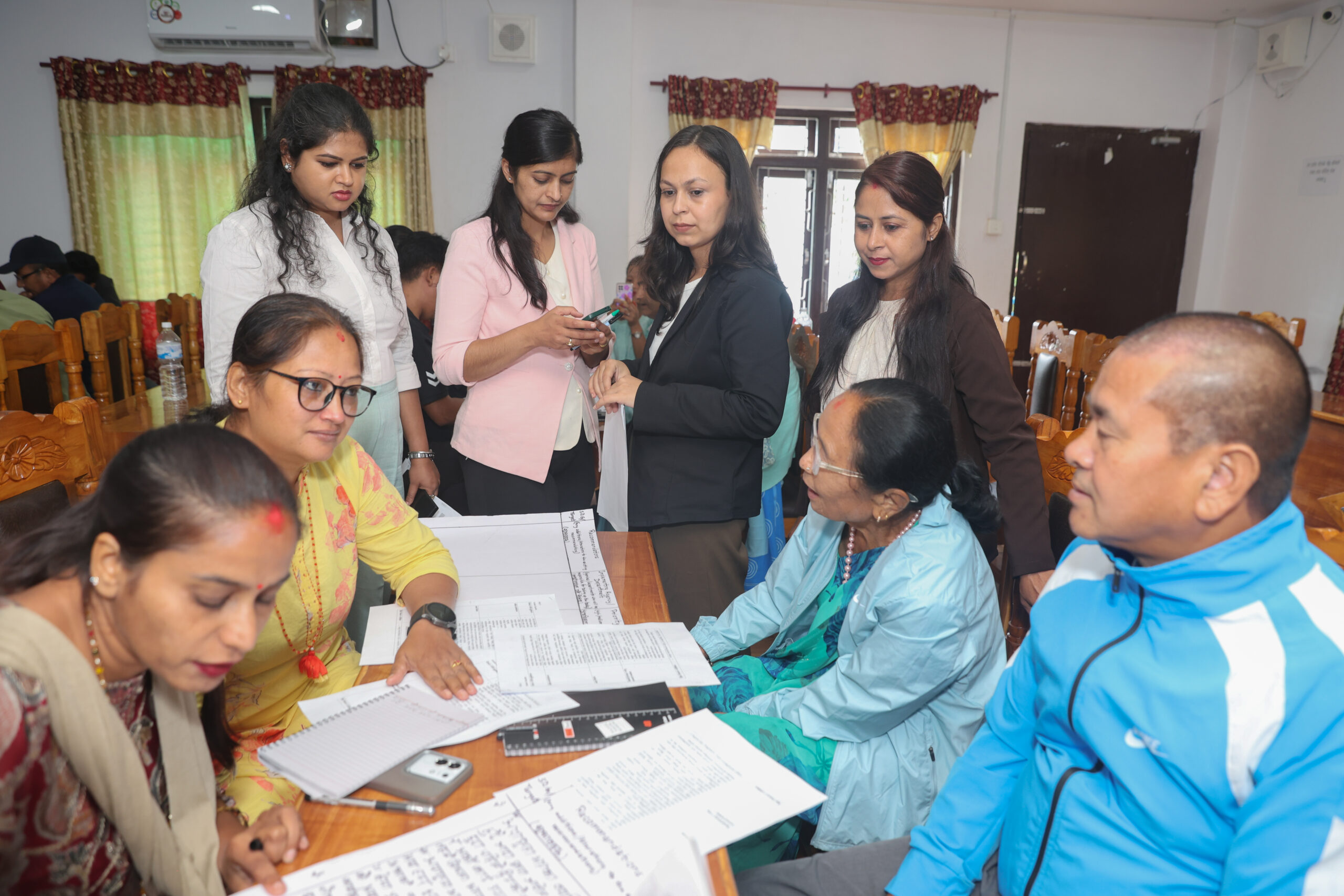
Through thematic group discussions, participants reviewed and refined draft recommendations for the SDGs. The workshop identified priorities to strengthen livelihoods, promote agriculture and local businesses, improve health services and education, and advance Gender Equality and Social Inclusion (GESI) in the municipality. Participants also identified priority interventions, responsible agencies, and emphasised the importance of capacity development, awareness and regular monitoring to support the effective SDG implementation.
Concluding the workshop, Mayor Chintan Tamang thanked all participants and acknowledged ICLEI South Asia’s technical support. The validated recommendations will inform the final VLR, providing Dhankuta Municipality with a roadmap to advance SDG implementation. Participants expressed interest in preparing future editions of the VLR to track progress on these four SDGs and to add other goals to assess the status of drinking water, climate change, economic development, and the municipality’s sustainability.
The final VLR will provide evidence-based interventions to address challenges and serve as a roadmap to accelerate the implementation of the SDGs in the municipality.
ICLEI South Asia continues to support local governments across the region in translating the Sustainable Development Goals into practical, locally driven action by strengthening institutional capacities, fostering stakeholder participation, and embedding the SDGs into local planning and governance processes.