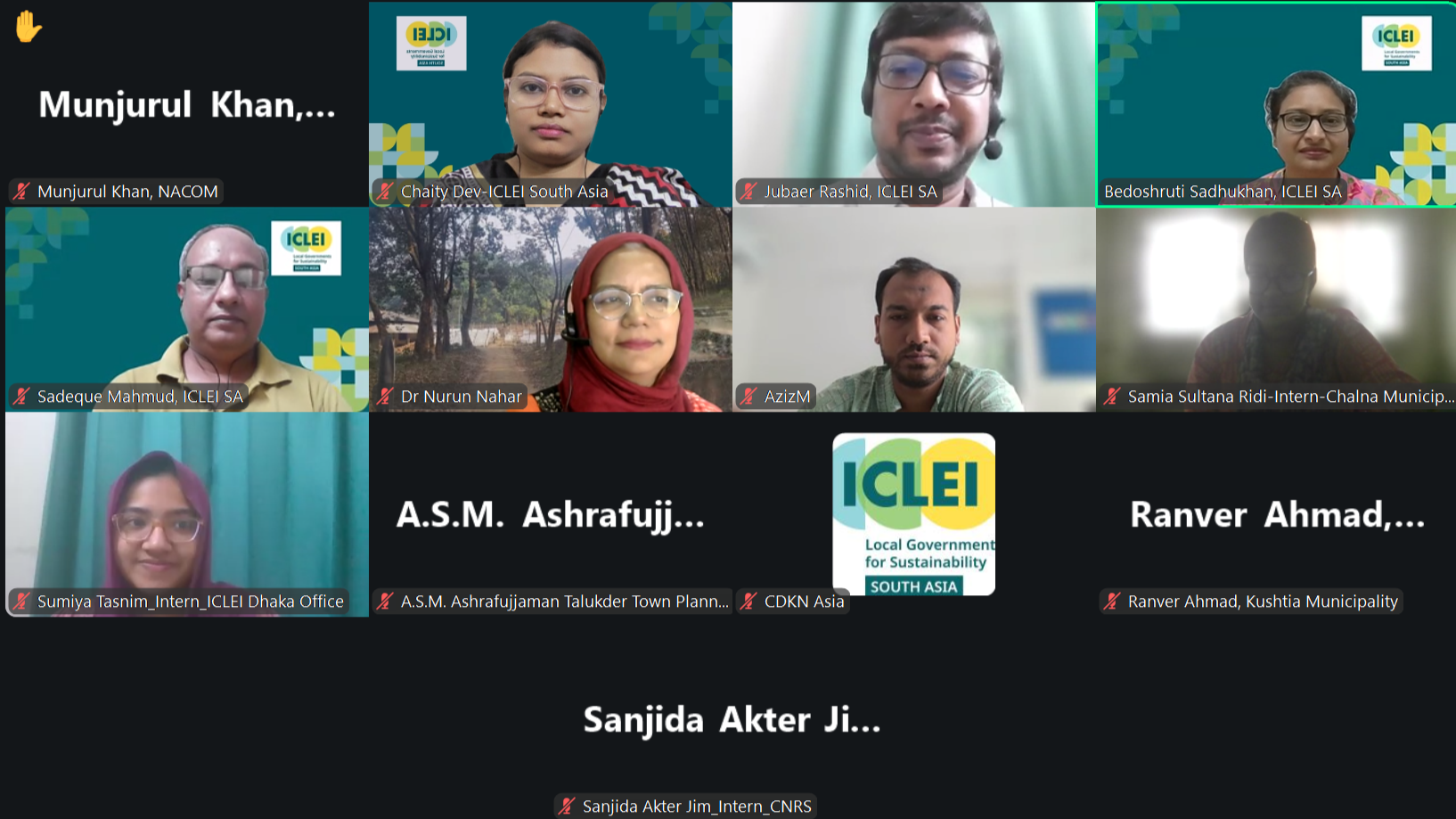
As Bangladesh’s cities face growing challenges from flooding, waterlogging, urban heat, pollution and ecosystem degradation, Nature-based Solutions (NbS) present a critical opportunity to build resilience while strengthening biodiversity and community well-being. In this context, ICLEI South Asia convened a policy dialogue on 4 August 2026 to validate the draft policy brief “Harnessing Nature for Urban Resilience: Integrating Nature-based Solutions (NbS) into Development Planning in Bangladesh” and gather expert perspectives on mainstreaming NbS into national and local development planning.
Mr Emani Kumar, Deputy Secretary General, ICLEI & Executive Director, ICLEI South Asia, opened the dialogue by underscoring the importance of NbS for climate-resilient and sustainable urban development. Ms Bedoshruti Sadhukhan, Associate Director, ICLEI South Asia, introduced the ICLEI–Climate and Development Knowledge Network (CDKN) project.
Dr Nurun Nahar, Additional Secretary, Ministry of Environment, Forest and Climate Change in Bangladesh, highlighted the need to move beyond existing policies towards stronger implementation, including through blue-green infrastructure and wetland restoration.
Jubaer Rashid from ICLEI South Asia presented the policy brief, highlighting the role NbS can play in strengthening urban resilience, biodiversity, ecosystem health, and community well-being in Bangladesh. The presentation also introduced the IUCN Global Standard and NbS Self-Assessment Framework, practical lessons from a case study on Rajshahi City, and key entry points for mainstreaming NbS into urban planning.
The panel discussion brought together diverse perspectives. Mr Mokhlesur Rahman, Executive Director, CNRS, stressed that long-term management, institutional complexity and maintenance must be addressed from the outset. Independent consultant Dr. Haseeb Irfanullah called for an updated and coherent policy framework grounded in national policies and examples. Mr Hamidul Islam Chowdhury, GIZ, called for strengthening institutional mechanisms and capacities for NbS implementation. Ms Rumana Sultana, Lecturer, Rajshahi University, highlighted the need to institutionalise existing NbS rather than creating new solutions.
Further recommendations emphasised practical, locally tailored implementation. Mr Tapas Ranjan Chakraborty (BRAC) called for integrating NbS into urban planning; Mr ASM Ashrafuzzaman Talukder (Lalmonirhat Municipality) stressed institutional support and clear guidelines; and Mr Tareq Aziz (IUCN) highlighted biodiversity, sustainability and city-specific guidance.Additionally, Mr Munjurul Hannan Khan, Executive Director and Founder, NACOM, stressed clearly defined legal and institutional responsibilities, while Mr Ranveer Ahmed, Town Planner, Kushtia Municipality, called for clear financing responsibilities, stronger municipal ownership and routine integration of NbS into local planning.
The dialogue underscored the need to strengthen and scale existing policies, knowledge and locally led NbS. The panellists reiterated that success requires moving beyond policy intent towards clear institutional roles, sustainable financing, practical guidance, strong municipal ownership, long-term maintenance, and context-specific approaches responsive to Bangladesh’s cities and communities.