Climate-induced disaster risks are increasing across South Asia. The August 2026 floods in Nepal also signalled the urgency to mainstream disaster risk reduction (DRR) and resilience in development work.
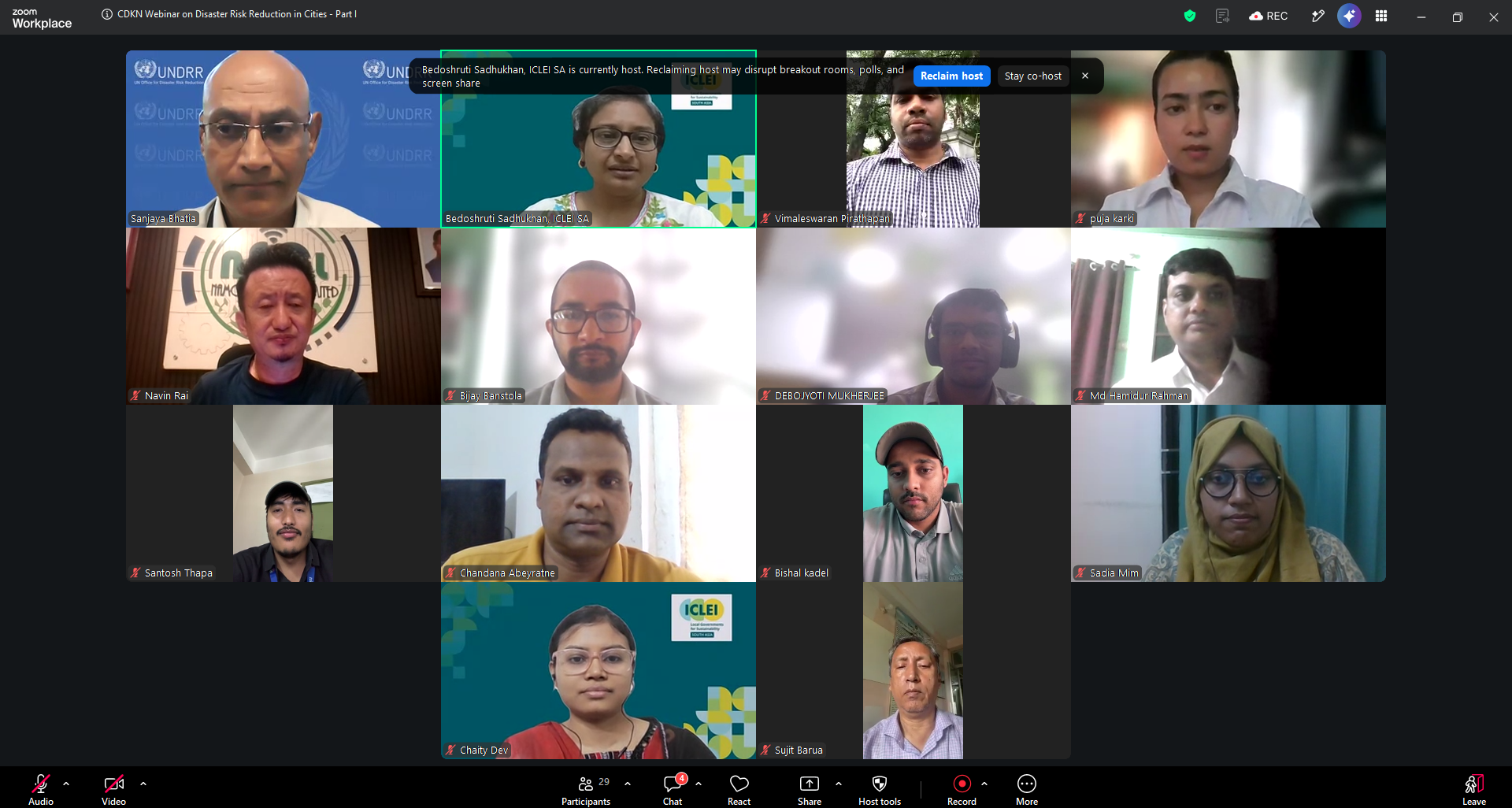
To strengthen the capacities of city administrations on DRR in cities, ICLEI South Asia conducted a webinar on 25th August 2026. The webinar marked the beginning of a series on DRR under Climate and Development Knowledge Network (CDKN) Asia’s year-long training and peer exchange programme for local governments on climate resilience, DRR and sustainable solid waste management in cities.
17 officials from 15 municipalities of Bangladesh, India, Nepal and Sri Lanka participated in the sessions. The participants gained insights into mainstreaming gender equality and social inclusion (GESI) and the ecosystems approach into city-level climate-induced disaster resilience planning. They also learnt about institutional structures and the stakeholder landscape related to DRR in cities. The webinar further told them about the communication and consultation mechanisms for DRR in cities.
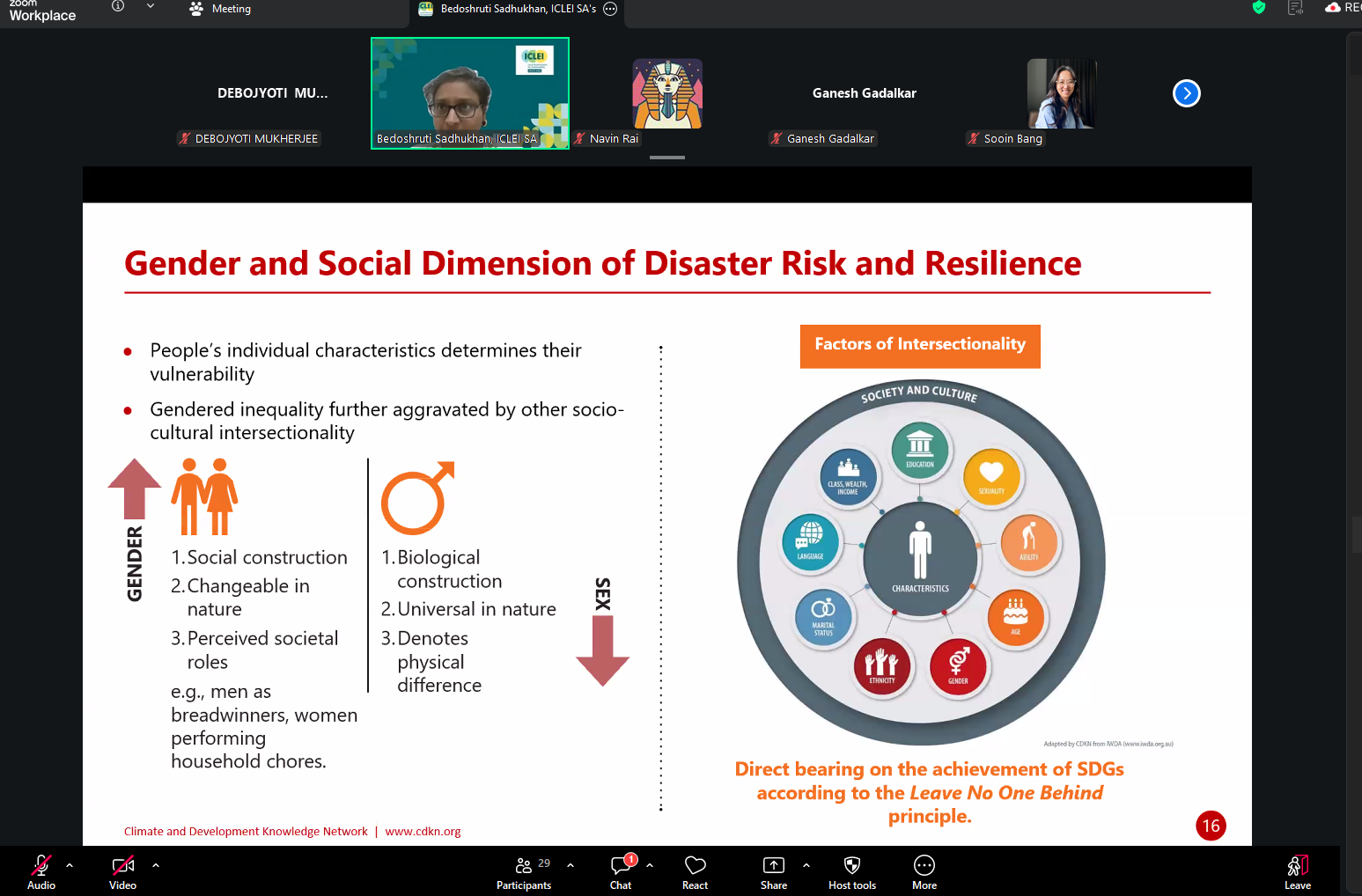
The webinar comprised four sessions and a quiz. It began with Ms. Bedoshruti Sadhukhan, Associate Director, ICLEI South Asia briefly recapitulating the fundamentals of DRR discussed during an in-person workshop in October 2025. She then deliberated on integrating GESI in DRR. In this session, participants were told about aspects of intersectionality, the role of women and youth as ‘agents of change’, and the principles and steps for inclusive multi-stakeholder engagement.
The second technical session on the integration of the ecosystems approaches in DRR was delivered by Mr Sanjaya Bhatia, Head of Office, UNDRR Office for Northeast Asia and Global Education and Training Institute. He highlighted the importance and ways of integrating ecosystem-based adaptation in DRR through cases such as rehabilitating grazing land in Sudan, restoration of lakes in Hubei Province, China, and investment in green infrastructure in New York.
In the third session, Ms. Anuradha Adhikari, Deputy Manager, ICLEI South Asia presented the engagement process, with a focus on inclusivity. This included the relevance and functions of a Disaster Resilience Core Team (DRCT), methods of engagement with organisational and community stakeholders, steps to formulate a city-wide communication strategy, and key considerations for effective stakeholder consultations.
The sessions concluded with a peer exchange opportunity. Ms. Puja Karki, Senior Engineer, Disaster Management Section Chief, Lalitpur Metropolitan City (LMC), Nepal shared disaster management practices from the city. Key points were the institutionalisation of Ward Disaster Management Committees for micro-resilience planning and implementation, the MoU between LMC and UNDP for technical support to develop a GESI strategy, and the restoration of the ancient Saptapatal Pond to improve groundwater recharge and reduce street flooding.
Participants expressed their appreciation for the webinar, indicating that it enriched their understanding of gender and social inclusivity as well as the ecosystems approach for DRR.
CDKN Asia’s training and peer exchange programme is being implemented under the third phase of the ‘Climate and Development Knowledge Network (CDKN) – Accelerating Inclusive Action’ project, supported and funded by the Ministry of Foreign Affairs of the Netherlands and International Development Research Centre (IDRC) through the Step Change Initiative.