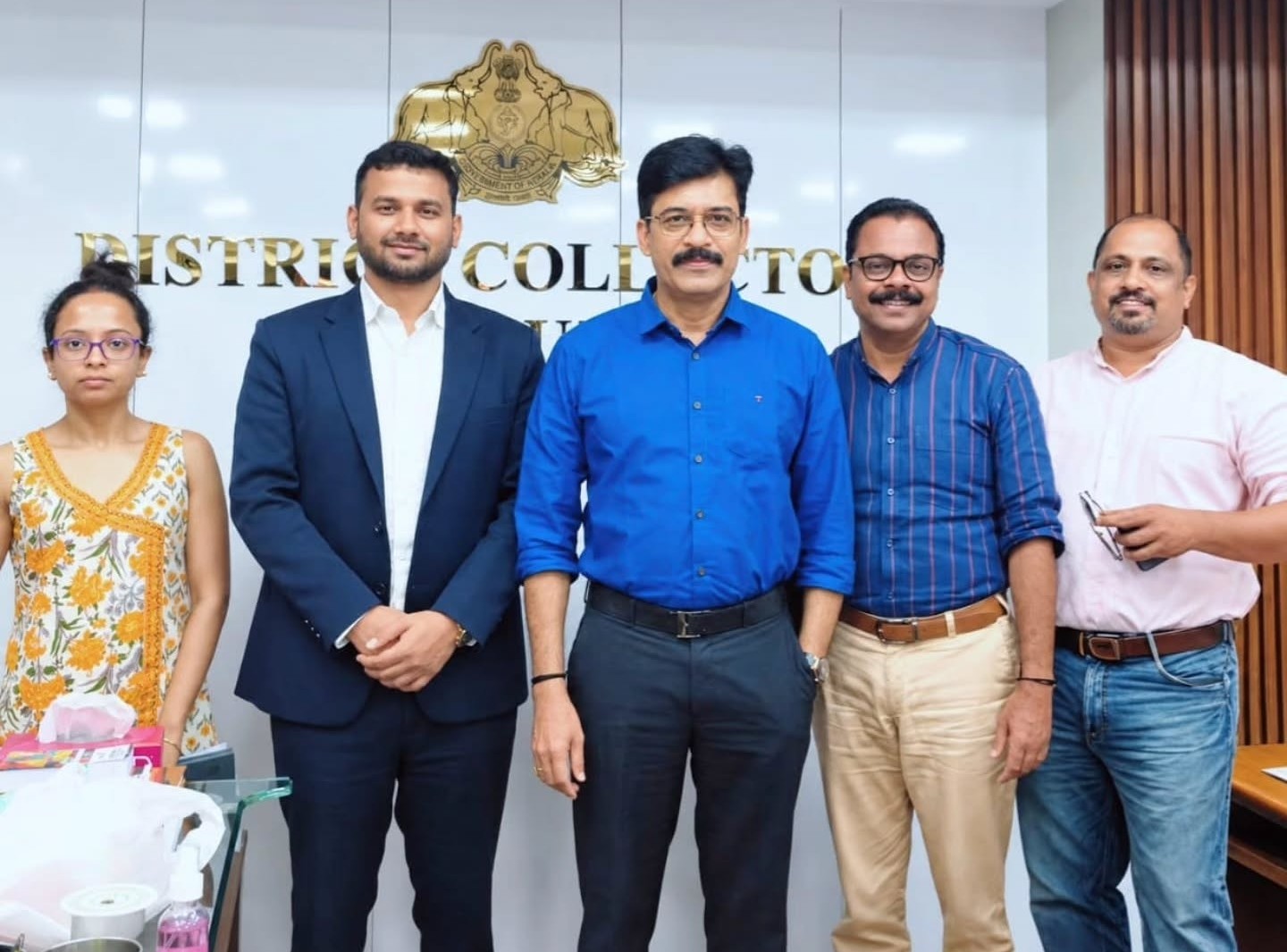
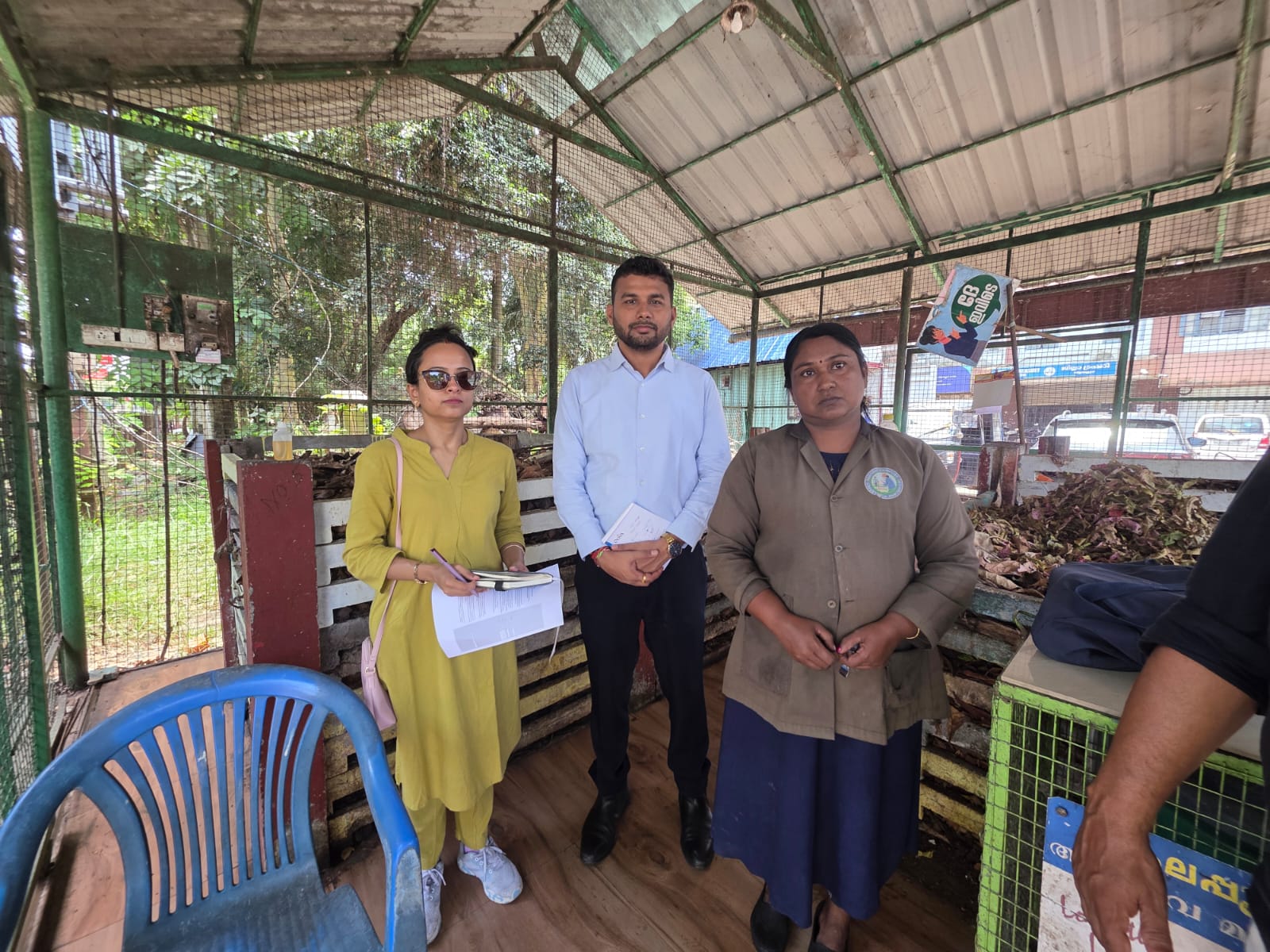
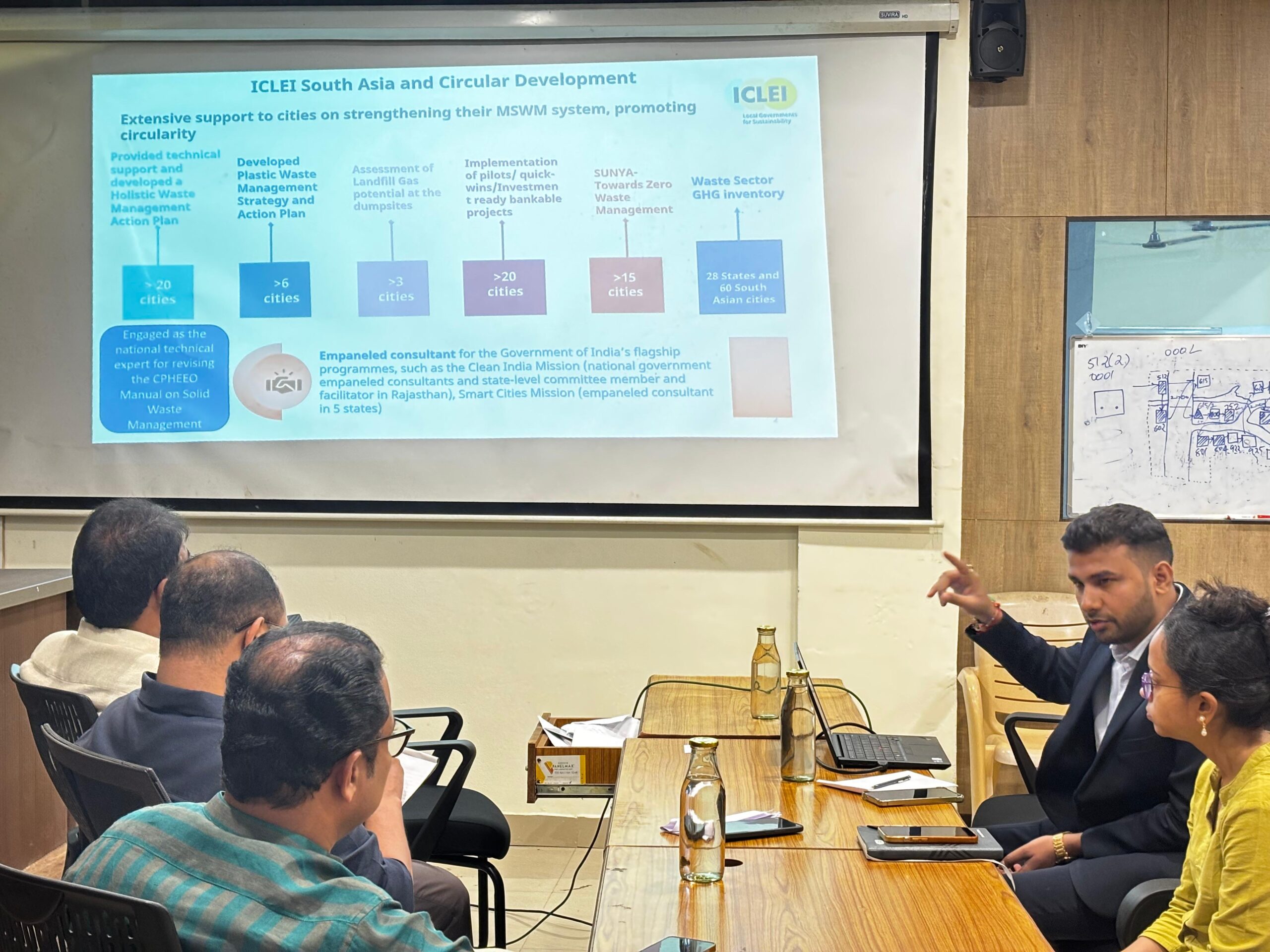
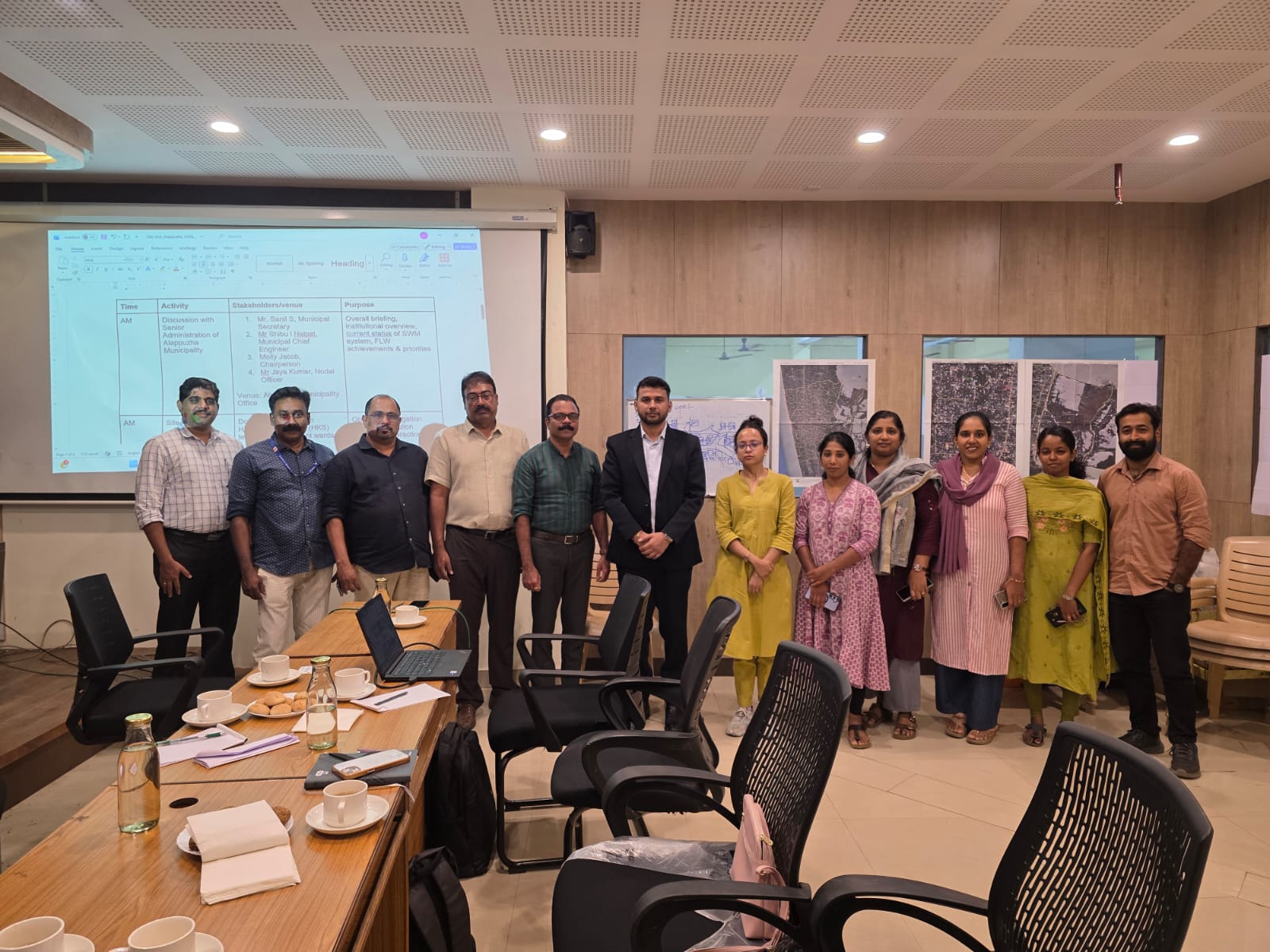
The Food and Agriculture Organization (FAO) and ICLEI South Asia have partnered to share city-level best practices in food waste management and circular bioeconomy solutions across Asia. As part of the initiative, ICLEI South Asia undertook a site visit to key waste processing facilities and held discussions with government and private stakeholders in Alappuzha, Kerala from 8 to 11 September 2026.
The delegation held meetings with the District Collector of Alappuzha, the Municipal Secretary, solid waste management officers, Health Inspectors, and other senior officials as well as officials from the Suchitwa Mission – a state mission for waste management. The team also consulted bulk waste generators and collection service providers, including government and private partners.
The team assessed organic waste management systems at different levels – ranging from household biogas and bio-bin systems to community and institutional aerobic composting units, on-site wet waste processing operations of bulk waste generators, and material recovery facilities managed by the Haritha Karma Sena – a collective from the local self-help groups in Kerala. Interactions with local organisations, including the TAGS Forum, provided insights into operational practices, community participation, and existing challenges such as feedstock quality, maintenance, and market linkages for compost.
Alappuzha’s decentralised waste management model, built around the “Clean Home Clean City” approach, offers valuable lessons for efficient management of food waste through locally contextualised solutions. Findings from the visit will inform the preparation of a case study, which will be included in an Asia-level regional compendium of food loss and waste management solutions.
This initiative expands on FAO’s regional goals of reducing food loss and waste and ICLEI South Asia’s expertise in urban sustainability, municipal waste systems, and city network knowledge products in South and Southeast Asia.