Asian cities are expected to account for nearly 56 percent of global transport-related CO₂ emissions by 2050 if current trends continue. At the same time, more than 1.2 billion people across Asia still lack access to safe, reliable, and affordable public transport. Rapid motorisation is intensifying these challenges further, with Asia’s vehicle fleet projected to triple by 2040. Congestion alone is already estimated to cost the Asia-Pacific region USD 1.7 trillion annually, while transport-related air pollution continues to pose severe public health risks.
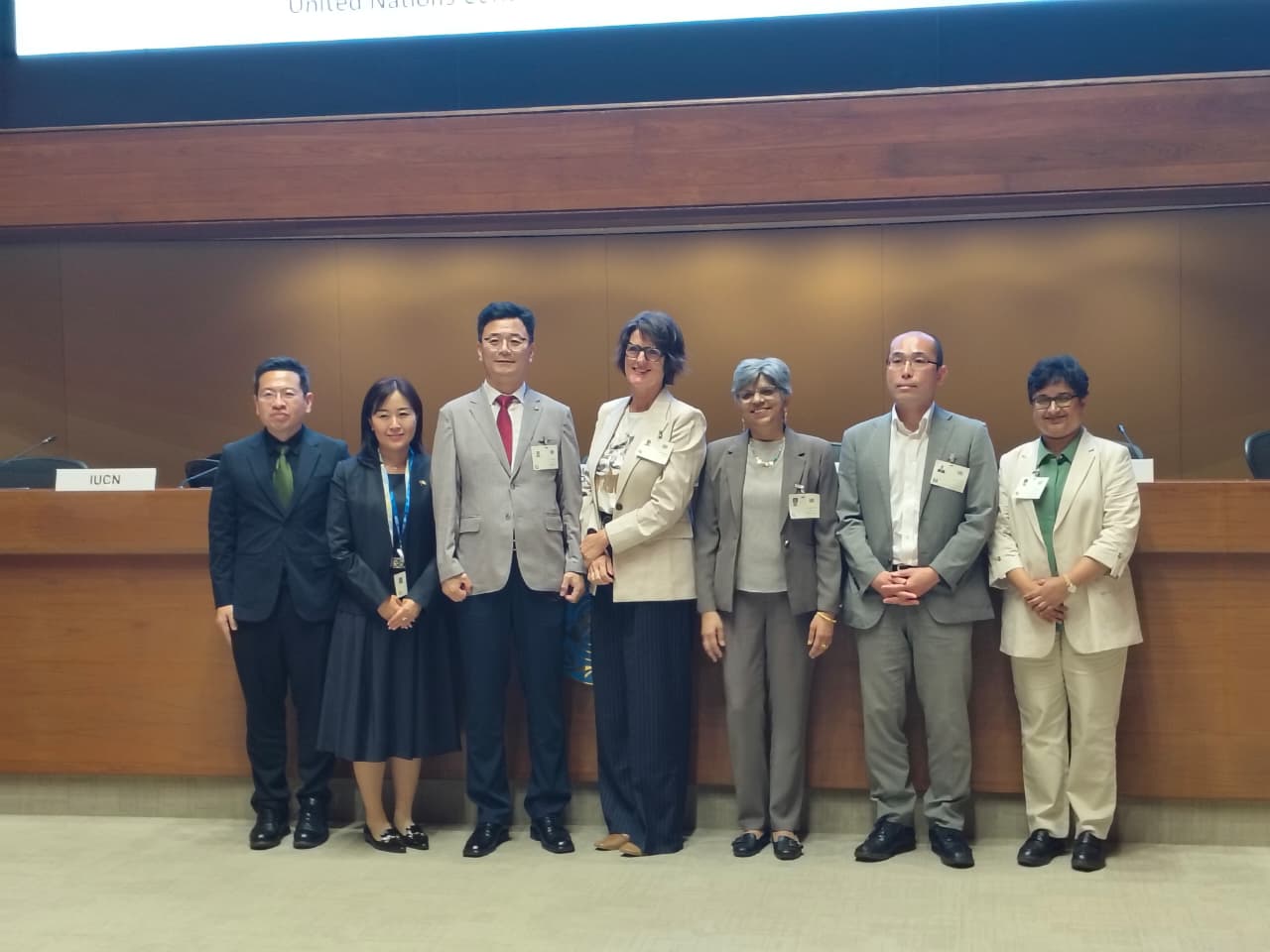
Against this backdrop, ICLEI South Asia participated in the Environmentally Sustainable Transport (EST) Regional Meeting and Capacity-Building Workshop towards Accelerating Implementation of the Aichi 2030 Declaration (2021–2030) held from 16–18 March 2026 in Bangkok. Representing ICLEI offices across the Asia-Pacific region and serving as the Secretariat of the Asia LEDS Partnership, ICLEI South Asia used the platform to highlight how cities across the region are advancing the transition toward sustainable and low-carbon mobility systems.
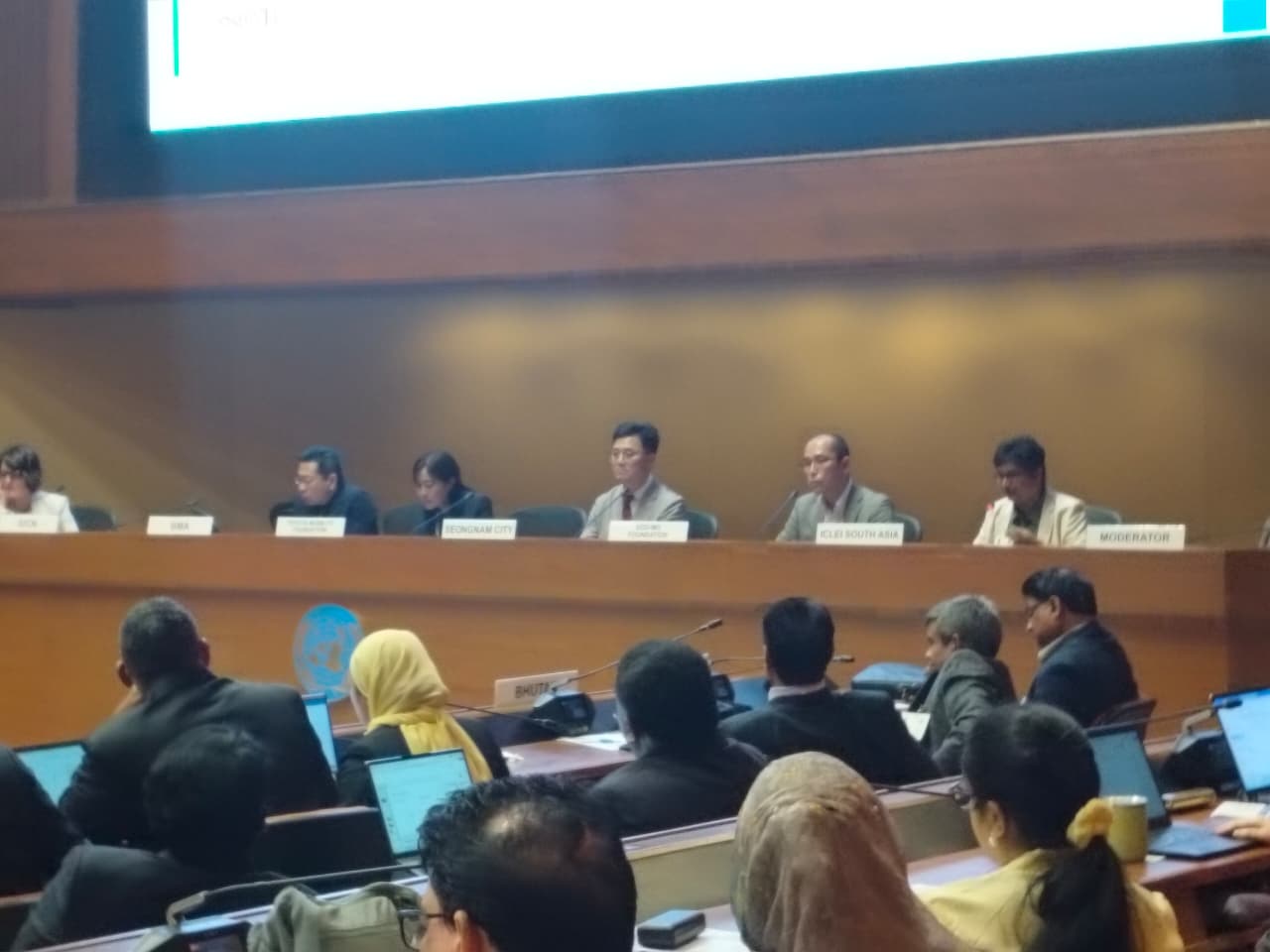
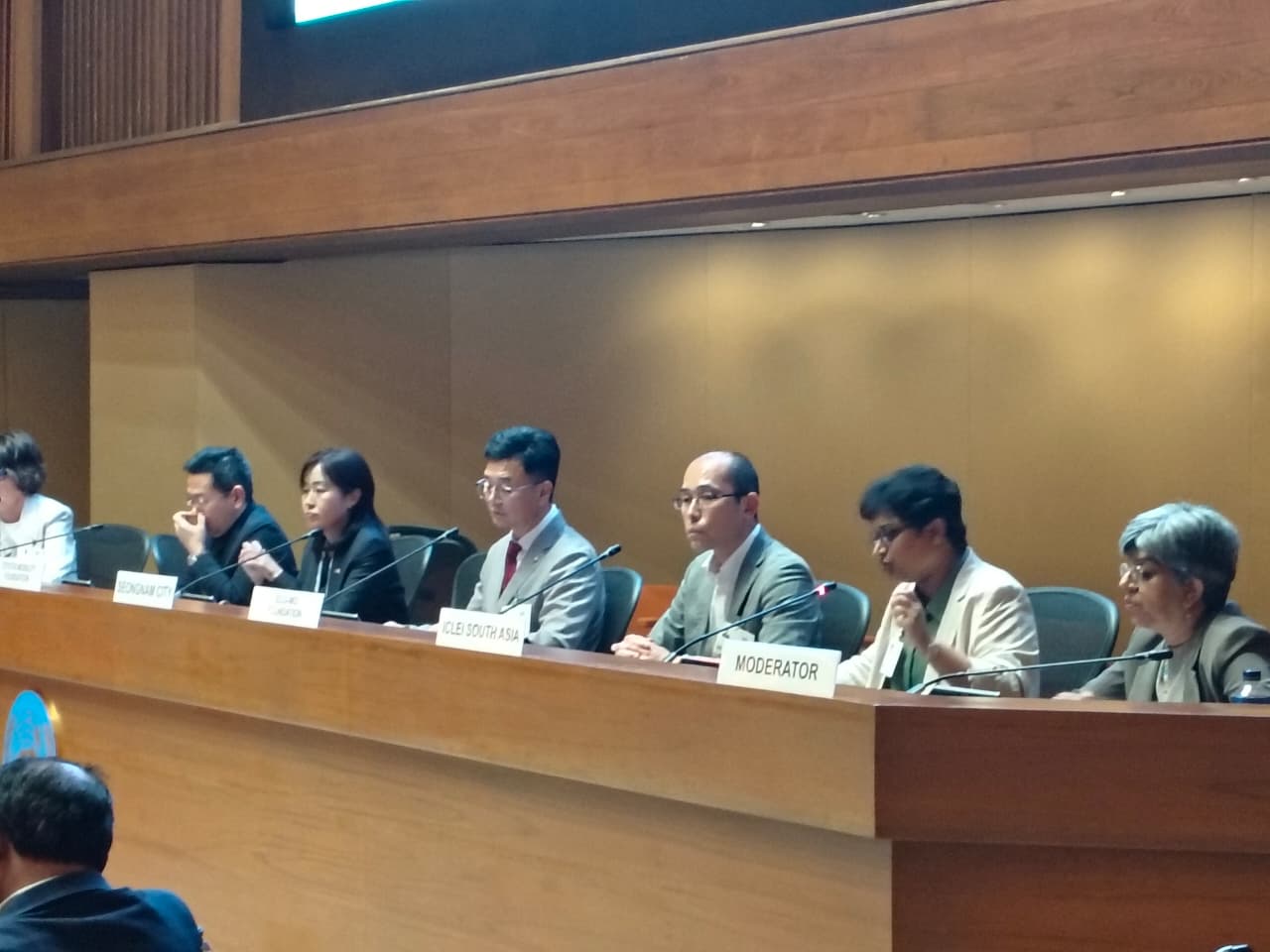
Speaking at the session titled “Shaping Safe, Secure and People-centred Urban Mobility for Liveable Cities,” Soumya Chaturvedula, Director, ICLEI South Asia, presented “Eco-mobility Solutions – Learnings from the Region,” outlining how cities can move beyond fragmented interventions and instead adopt an interconnected approach to sustainable mobility. Resilient and liveable cities emerge when public transport, walking, cycling, electric mobility, urban freight reform, and integrated land-use planning converge within a shared urban vision, she emphasized.
A significant focus of the discussion centred on strengthening public transport systems and integrating Transit-Oriented Development (TOD) into urban planning. ICLEI emphasised that sustainable mobility begins with compact, connected, and transit-accessible cities. Ms. Chaturvedula highlighted ICLEI’s ongoing Bangkok TOD project within which a roadmap is being developed in partnership with UN-Habitat and Bangkok Metropolitan Authority. The initiative is helping shape station-area planning, affordable housing integration, pedestrian accessibility standards, and land value capture mechanisms to support long-term low-carbon urban growth.
ICLEI highlighted its work in helping cities reclaim public space through Non-Motorised Transport (NMT) across multiple cities and contexts — from safe school zone design and cycling network planning in Udaipur, to pedestrian-first street redesigns in Ludhiana, and heritage-focused mobility interventions in Gwalior. In the Philippines, tactical urbanism intervention in Quezon City transformed public streets into shared community spaces through parklets and active mobility lanes. ICLEI South Asia has conducted structured NMT readiness assessments across 28 Indian cities using a five-dimensional readiness scoring, evaluating infrastructure, safety, policy, demand, and transit integration.
Through the TUMI E-Bus Mission, ICLEI South Asia has supported more than 14 Indian cities in adopting electric buses. The initiative has enabled over 500 e-buses to become operational while facilitating commitments for more than 4,500 additional buses. Collectively, these programmes have catalysed nearly USD 500 million in investment and helped avoid approximately 50,000 tonnes of CO₂ emissions.
ICLEI South Asia has supported the government of Himachal Pradesh in developing India’s first cold-climate electric vehicle policy. As part of the transition, 310 electric buses have been deployed on intercity routes, supported by 48 charging depots established at Himachal Road Transport Corporation workshops and a real-time performance monitoring system. The initiative also includes an e-taxi programme offering subsidies for 250 electric taxis operating in major tourism destinations. Additionally, more than 350 charging stations have been installed along key national highway corridors and integrated with Himachal Pradesh’s renewable energy systems.
Through its EcoLogistics programme, ICLEI South Asia supported cities in designing low-emission freight systems that reduce congestion while improving delivery efficiency. In Panjim, the establishment of an urban consolidation centre helped reduce freight trips by 28 percent, while an e-cargo pilot in Kochi demonstrated measurable emissions reductions through zero-emission last-mile delivery systems. Meanwhile, off-peak delivery schemes piloted in Shimla are now being explored for replication in cities globally.
ICLEI also stressed the importance of institutional capacity, governance reform, and climate finance in sustaining urban mobility transitions. The organisation works with cities to establish dedicated mobility authorities, develop standardised monitoring frameworks, strengthen emissions accounting systems, and improve access to climate finance opportunities.
ICLEI South Asia’s role as Secretariat of the Asia LEDS Partnership further strengthens regional cooperation on sustainable transport. Through networks such as the Leadership Group for Clean Transport in Asia (LG-CTA), ICLEI South Asia facilitates technical assistance, peer learning, and policy exchange across countries including Bangladesh, Nepal, Thailand, Indonesia, Bhutan, Sri Lanka, and the Philippines. These collaborations support governments in areas ranging from EV policy development and public transport planning to freight reform and transport financing mechanisms.
Sustainable urban mobility requires integrated systems that place people, accessibility, equity, and climate resilience at the centre of urban development. By working directly with local governments, ICLEI continues to support cities in shaping a cleaner, safer, and more inclusive urban future.