Waste management in India and the Global South is slowly but surely transitioning to resource recovery, moving away from the linear ‘take-make-waste’ approach. This indicates a growing need for practical, financeable, and scalable circular solutions.
Against this backdrop, the Embassy of the Kingdom of the Netherlands in India, in collaboration with ICLEI South Asia, organised the Accelerator Session “Financing the Loop: Designing Circular Waste Pilots in India” at the World Circular Economy Forum (WCEF) 2026 on 17 September in Gandhinagar. ICLEI – Local Governments for Sustainability advocates for the adoption and implementation of a circular development framework, moving to an economic system where the value and utility of infrastructure, products, components, materials and nutrients is maintained for as long as possible, as included in its Circular City Actions Framework.
The session explored how cities, businesses, civil society, development partners and financiers can work together to develop and scale circular waste solutions, while drawing on lessons from Netherlands-India collaboration. Ms. Marieke Spijkerboer, Director, Circular Economy, Ministry of Infrastructure and Water Management, Government of the Kingdom of the Netherlands, set the context for the discussion.
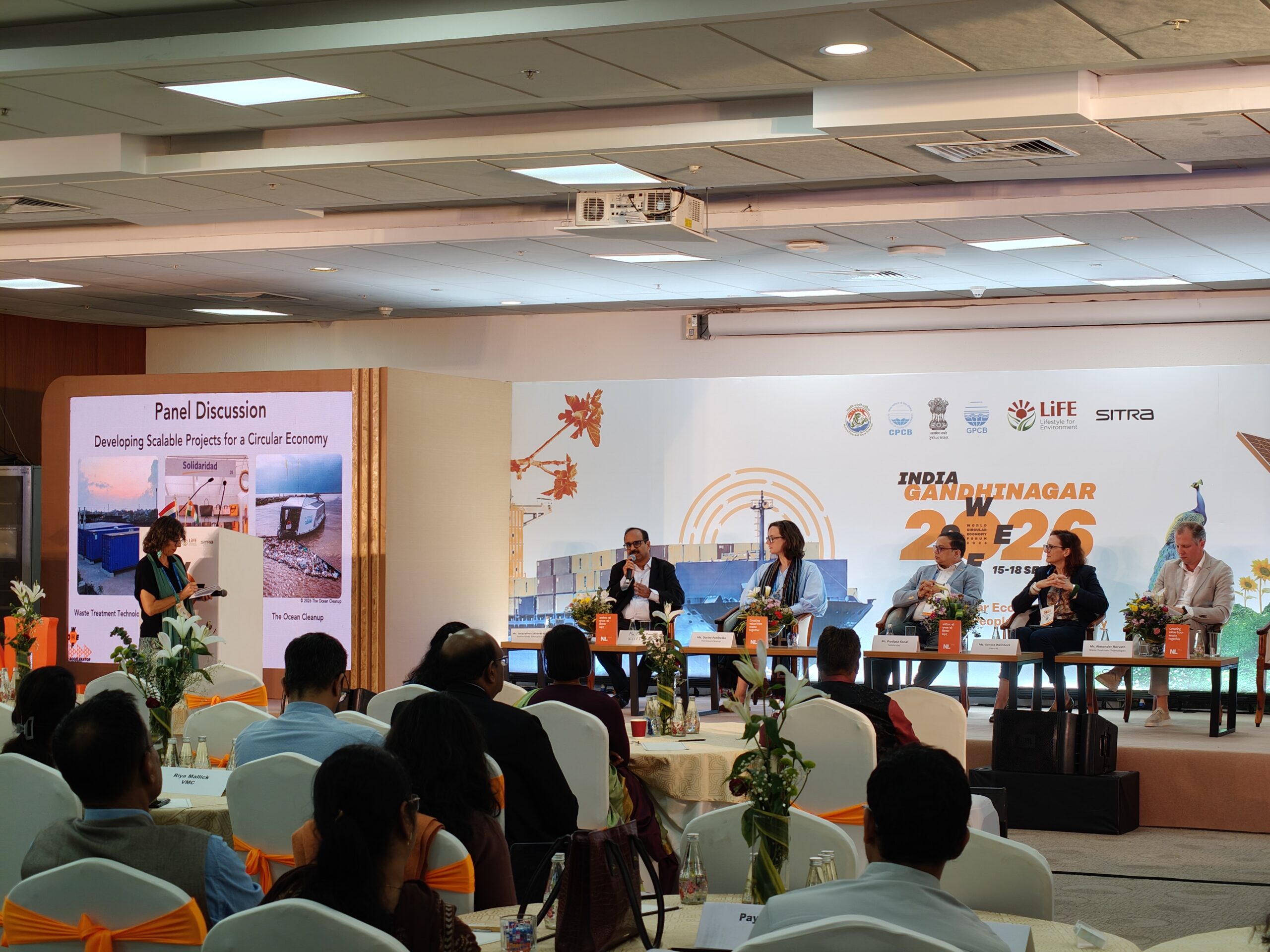
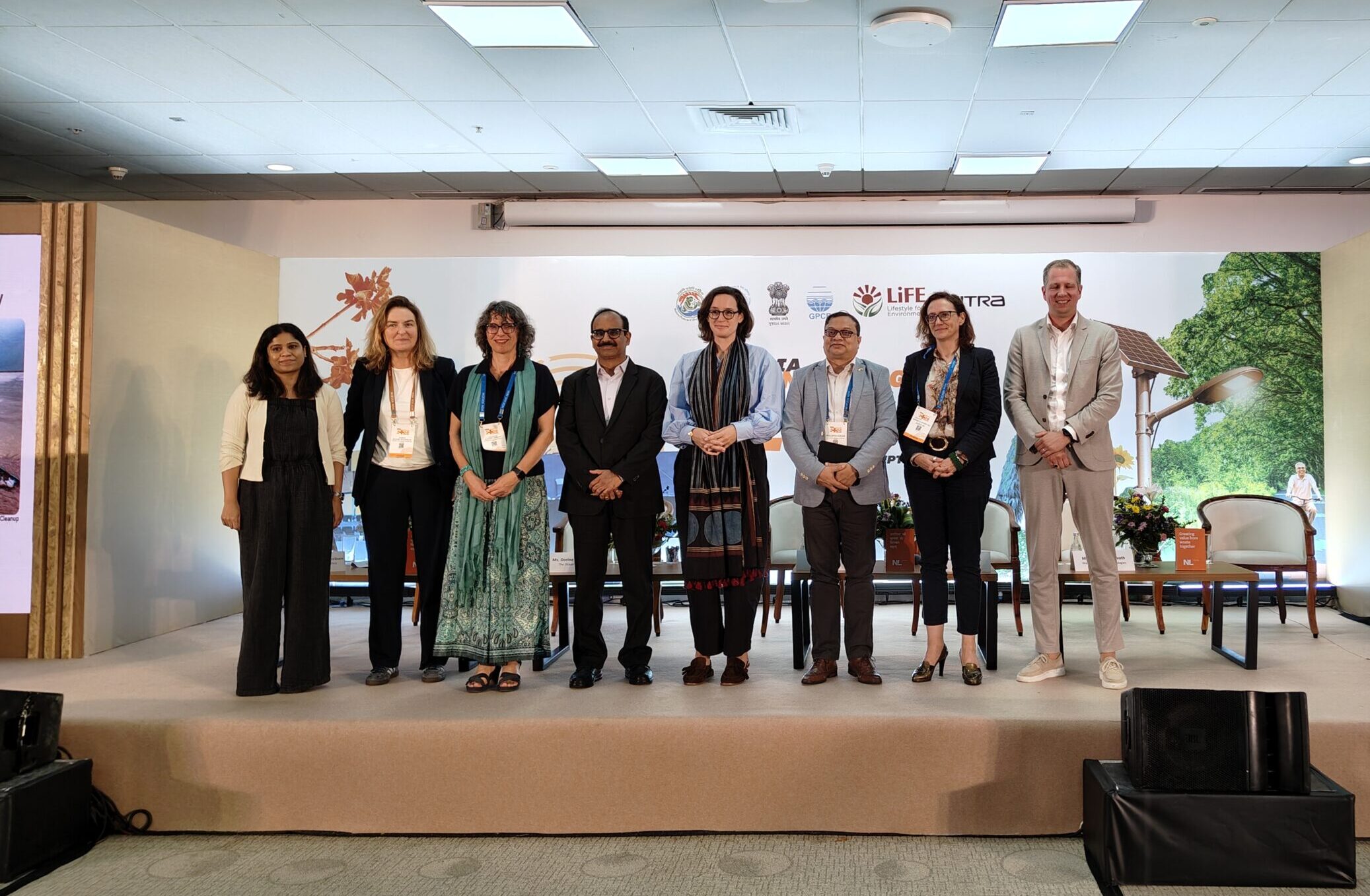
The session was organised in two parts. The first was a panel discussion on “Developing Bankable Projects in the Circular Economy.” The discussion brought together organisations working across circular economy, waste management, local governments, technology and finance.
- Ms Dorine Poelhekke from The Ocean Cleanup, highlighted the importance of collaboration with governments, local partners, funders and NGOs. She also stressed the need to prove solutions through pilots before scaling.
- Mr Pradipta Konar from Solidaridad, focused on improving source segregation, strengthening the informal waste sector, and ensuring that circular solutions have a clear and sustainable business case. He suggested introducing “Extended Consumer Responsibility” alongside the current Extended Producer Responsibility system.
- Mr Alexander Horvath from Waste Treatment Technologies (WTT), highlighted that technologies proven in Europe still need to be revalidated in the Indian market to build local trust. He recommended combining Dutch core technology and expertise with local partners, in-country teams, and flexible implementation approaches suited to Indian conditions.
- Ms Xandra Weinbeck from Invest-NL, highlighted the importance of consortium-based financing, clear project milestones, credible offtake arrangements and a strong organisational structure for first-of-a-kind projects.
- Mr Emani Kumar from ICLEI South Asia, emphasised the local government perspective. He highlighted the need for cities to access proven, scalable and resource-efficient solutions, supported by better information on technology performance, lifecycle costs and maintenance requirements. He said that successful on-ground pilots are critical for securing city-level investment. He also emphasised ICLEI South Asia’s role in connecting cities with businesses and development partners, facilitating pilots and building evidence for scale-up, while strengthening municipal capacity for technology assessment, procurement and implementation. He further spoke of financing opportunities through the Swachh Bharat Mission, the CITIIS 2.0 programme, the Urban Challenge Fund, and bilateral and multilateral development finance, along with the growing role of state-level green and climate financing platforms in aggregating projects and mobilising investment.
The discussion focused on the need for stronger collaboration across stakeholders, locally proven solutions, viable business models, and consortium-based financing to move circular waste solutions from pilots to scalable and investable projects.
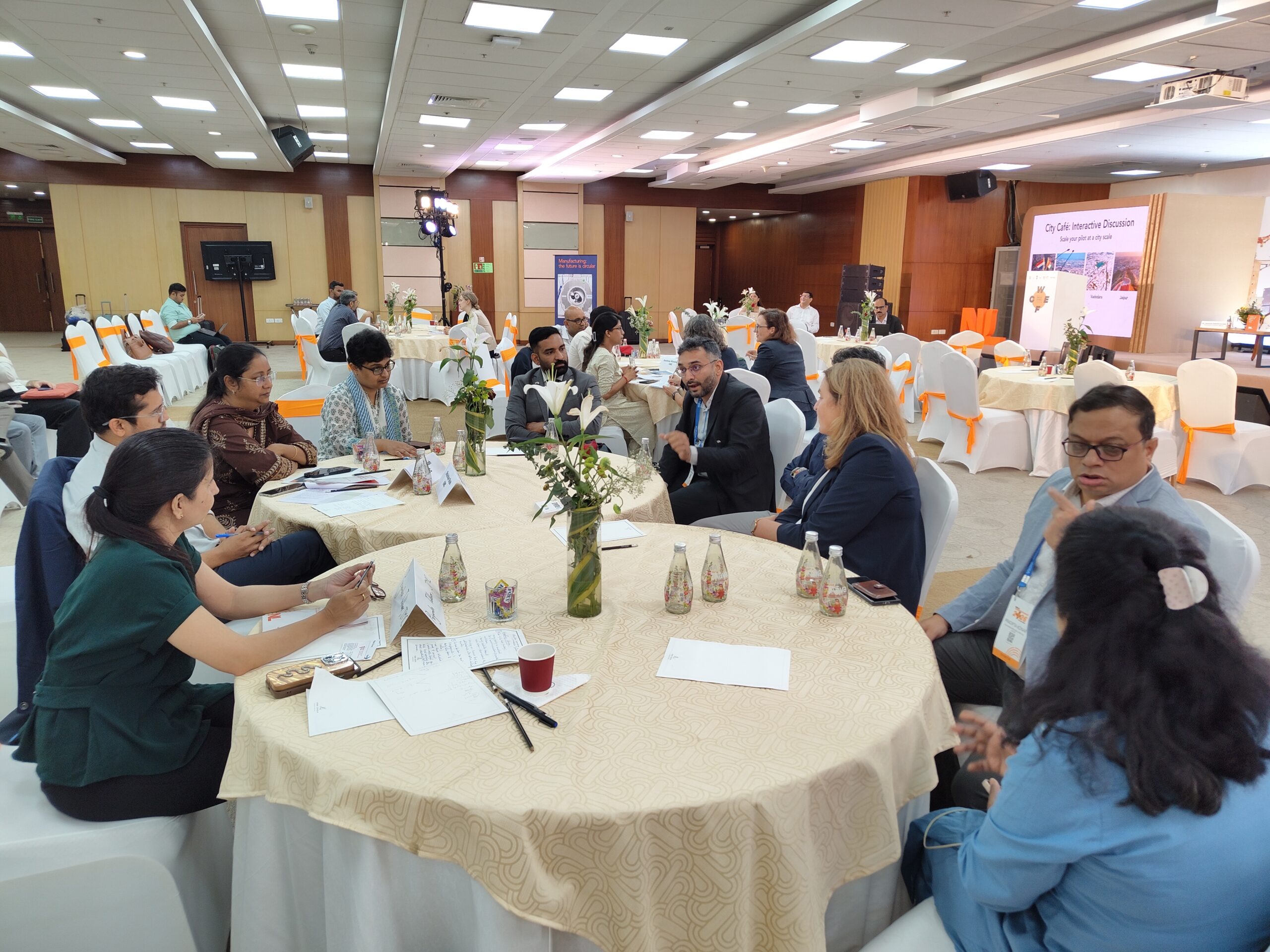
The second part of the session, “City Café: Scale Your Pilot at a City Scale,” brought together representatives from Ahmedabad, Vadodara, Gandhinagar and Jaipur, who presented their current solid waste management context, challenges and priorities. The session was moderated by Ms Soumya Chaturvedula, Director, ICLEI South Asia. The city representatives engaged directly with businesses and organisations from the Netherlands and other participating stakeholders to explore potential technologies, partnerships and financing opportunities.
The city discussions highlighted the need to strengthen the fundamentals of waste management while introducing appropriate circular solutions. Key areas identified were stronger enforcement and improvement of source segregation at the household level, supportive policy at the state level for participation of international solution providers, and the careful assessment and integration of technologies suited to local conditions. The discussions also pointed out that technology adoption needs appropriate business models, institutional capacity, reliable operations and maintenance arrangements, and viable financing pathways. This city-level engagement moved the discussion from generic technology solutions towards understanding the needs of individual cities, what can be implemented within their existing systems, and the partnerships required to take solutions to scale.
The engagement also reinforced the need for continued dialogue between cities and solution providers to assess problem-solution fit, understand investment requirements, and identify opportunities for pilot demonstrations. The consensus was that solutions should be integrated into existing municipal systems, and subsequently replicated at scale, instead of adopting technologies in isolation.
The compressed biogas plant in Nagpur, implemented by Netherlands-based WTT, was highlighted as an example of international collaboration and technology application for resource recovery from waste.
ICLEI South Asia also supported a second WCEF Accelerator Session, “Scaling Bio-based Plastics for a Circular Future,” where research, industry and financing stakeholders explored opportunities for scaling circular and bio-based plastics in India. The discussion highlighted the need to combine recycling with sustainable bio-based feedstocks and other circular carbon pathways, while addressing financing, market development and inclusive value chains. Examples from the Netherlands Organisation for Applied Scientific Research (TNO), FiniLoop, Nature’s Principle, and Invest-NL demonstrated emerging opportunities for India–Netherlands collaboration in technology development, pilots, research, and blended finance.
The discussions at WCEF 2026 helped to identify practical partnership and financing opportunities for circular waste initiatives, while reaffirming the importance of working closely with cities to identify local priorities, strengthen institutional and technical capacities, facilitate partnerships, test appropriate solutions through pilots, and develop pathways for financing and scale-up.