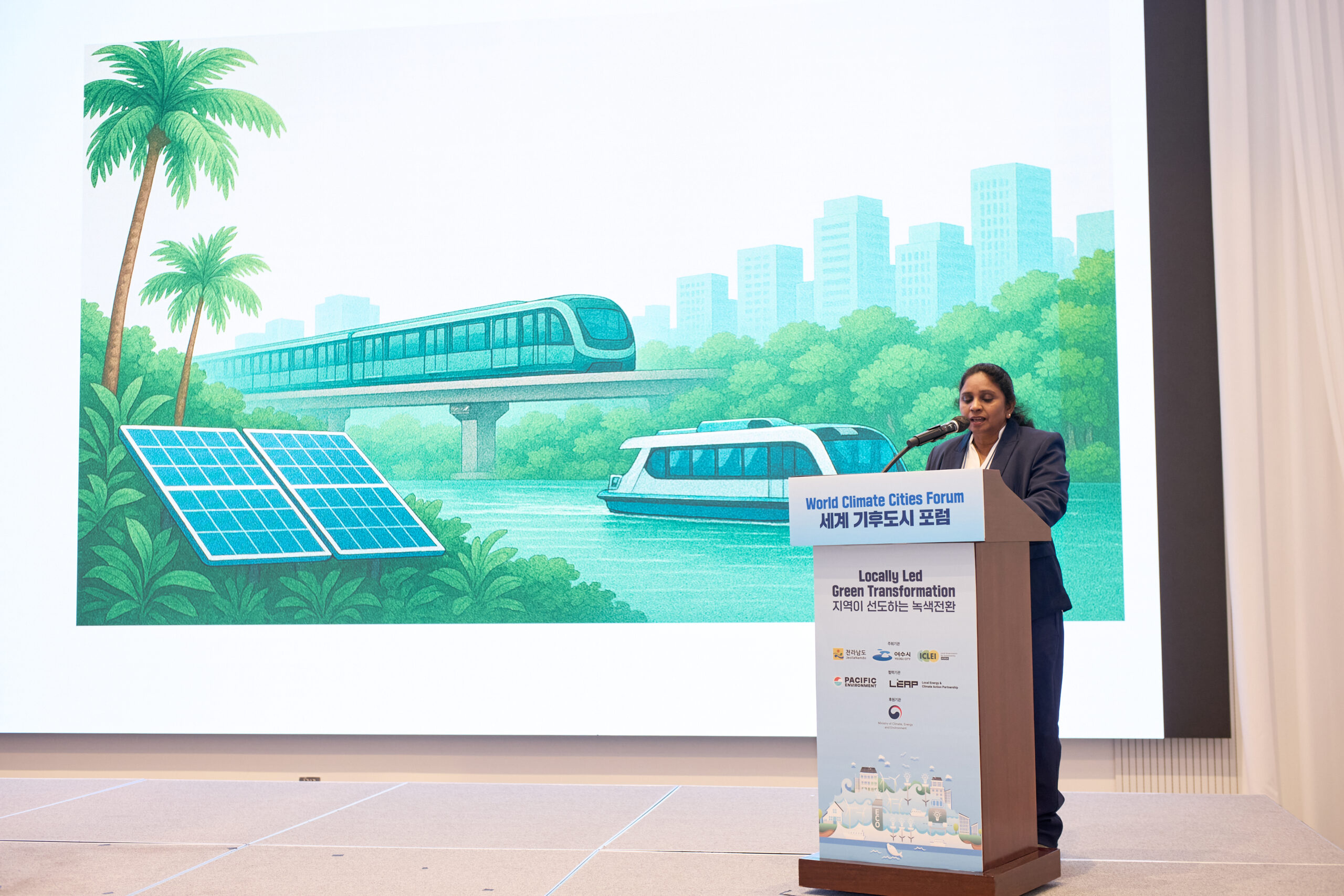
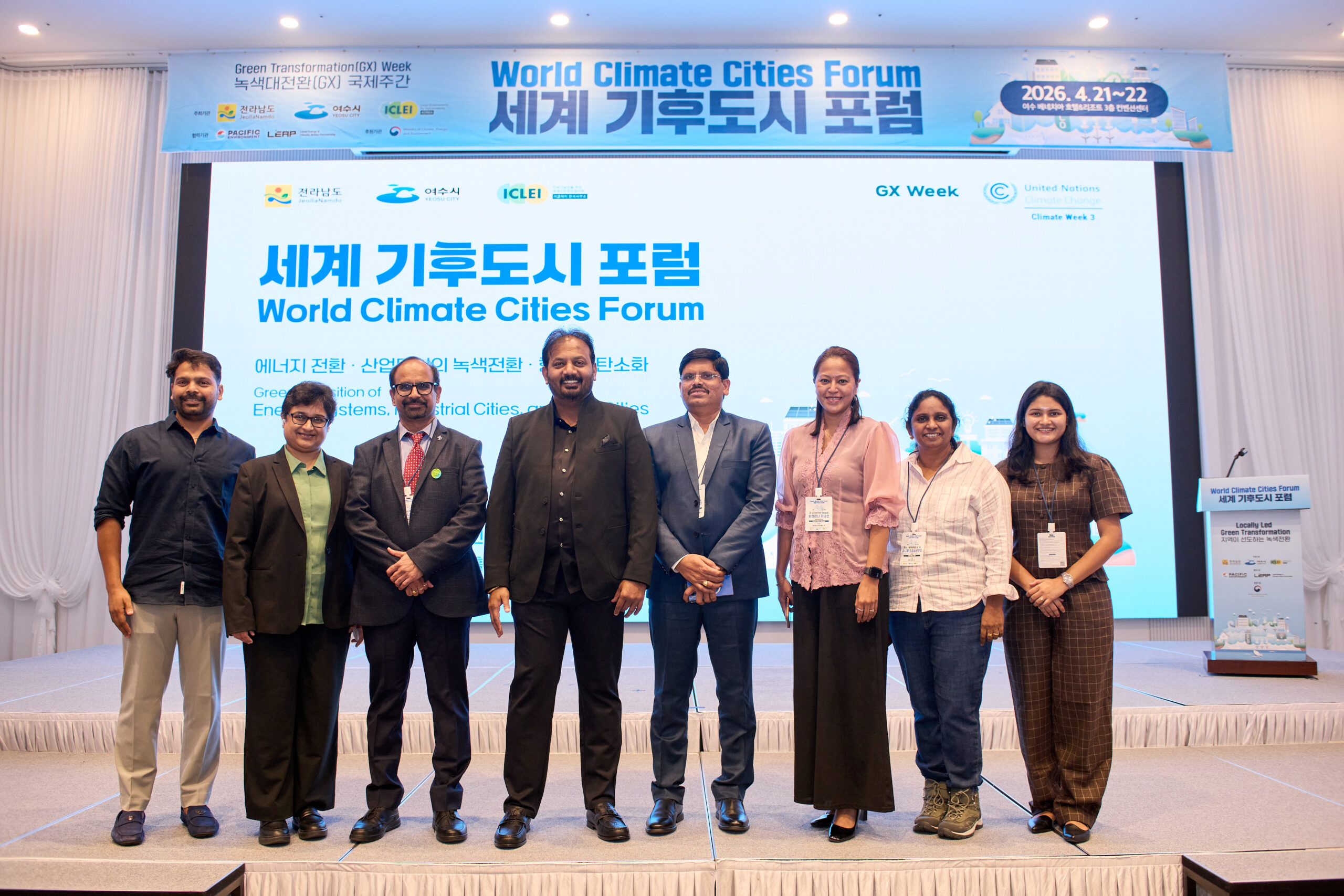
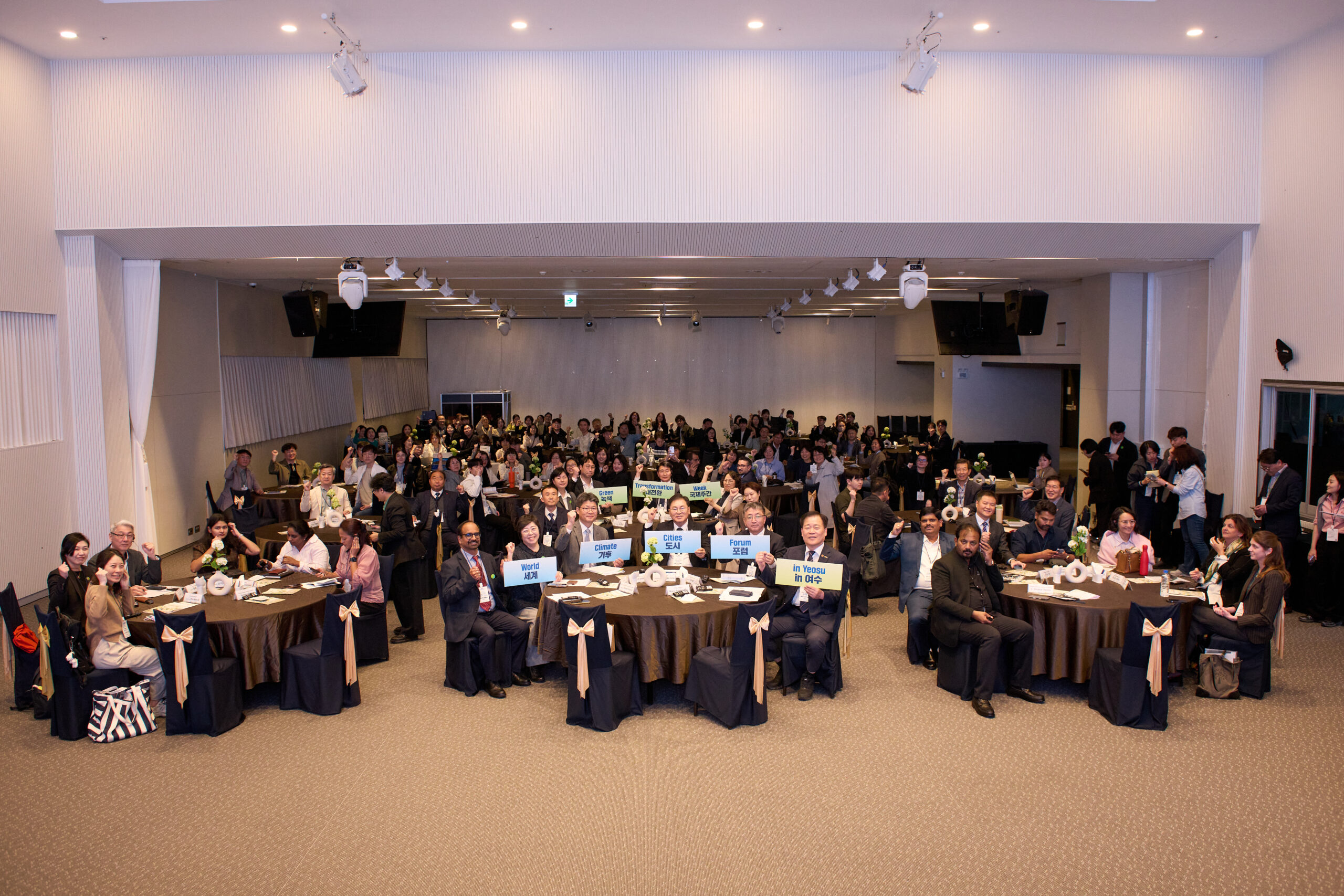
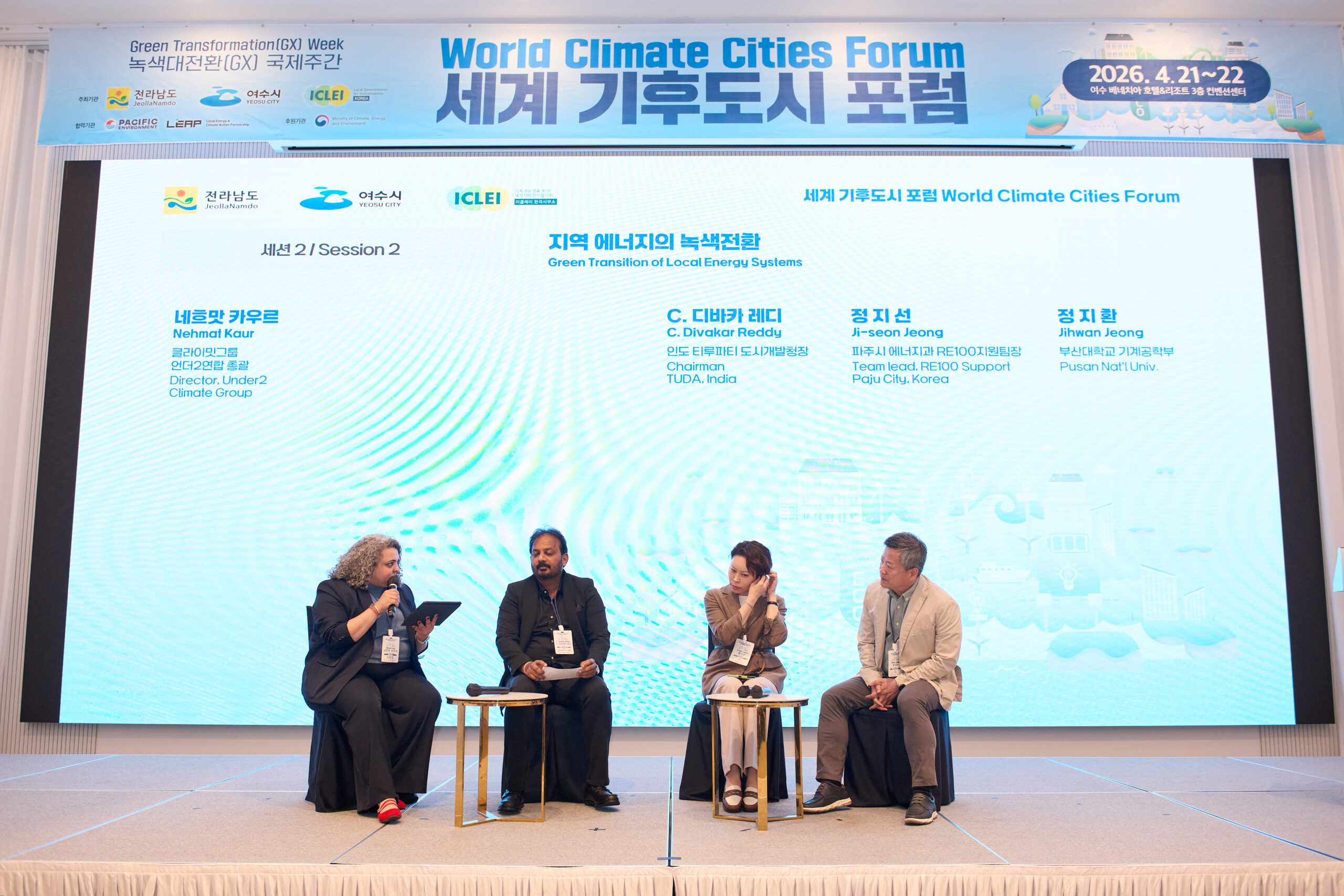
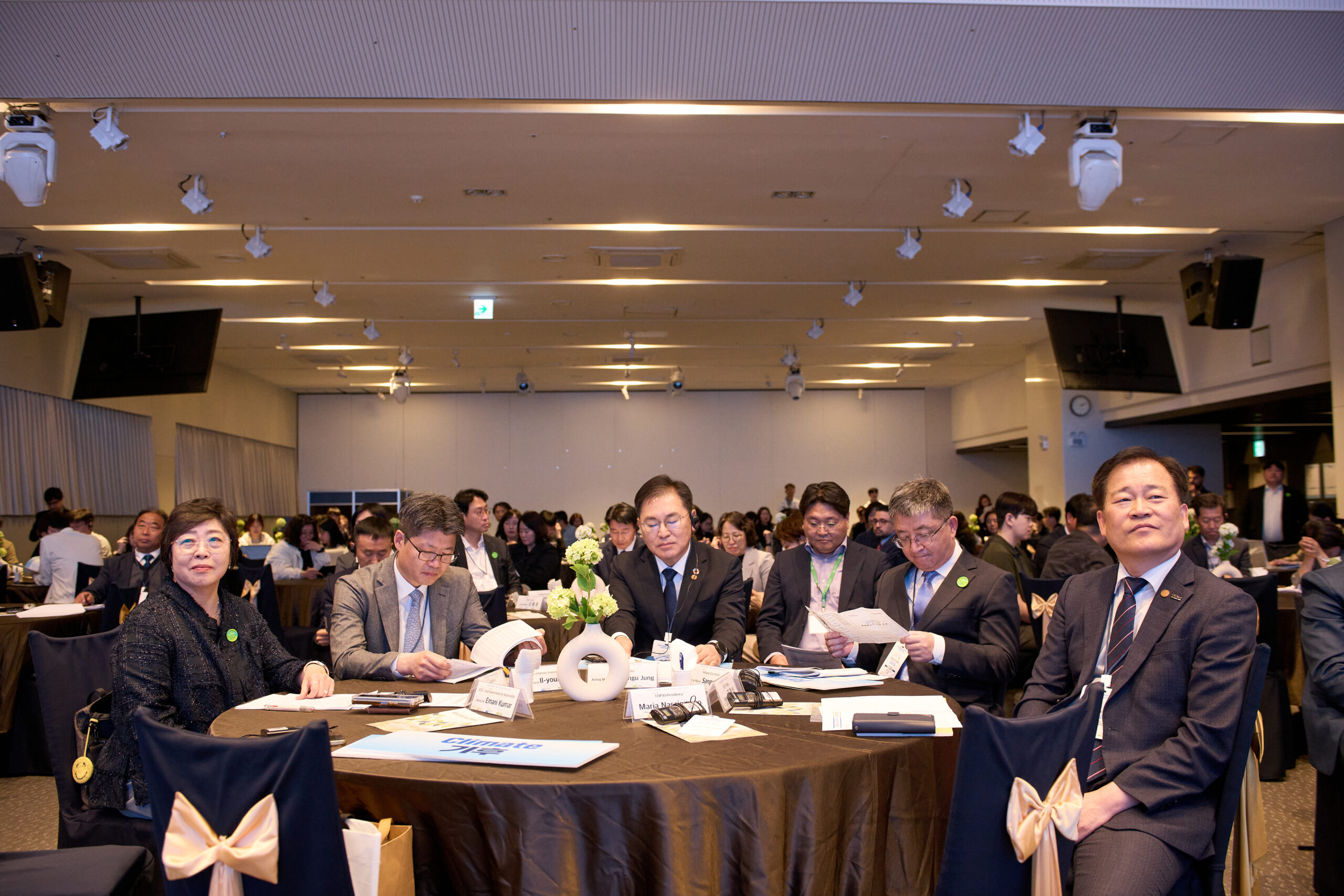
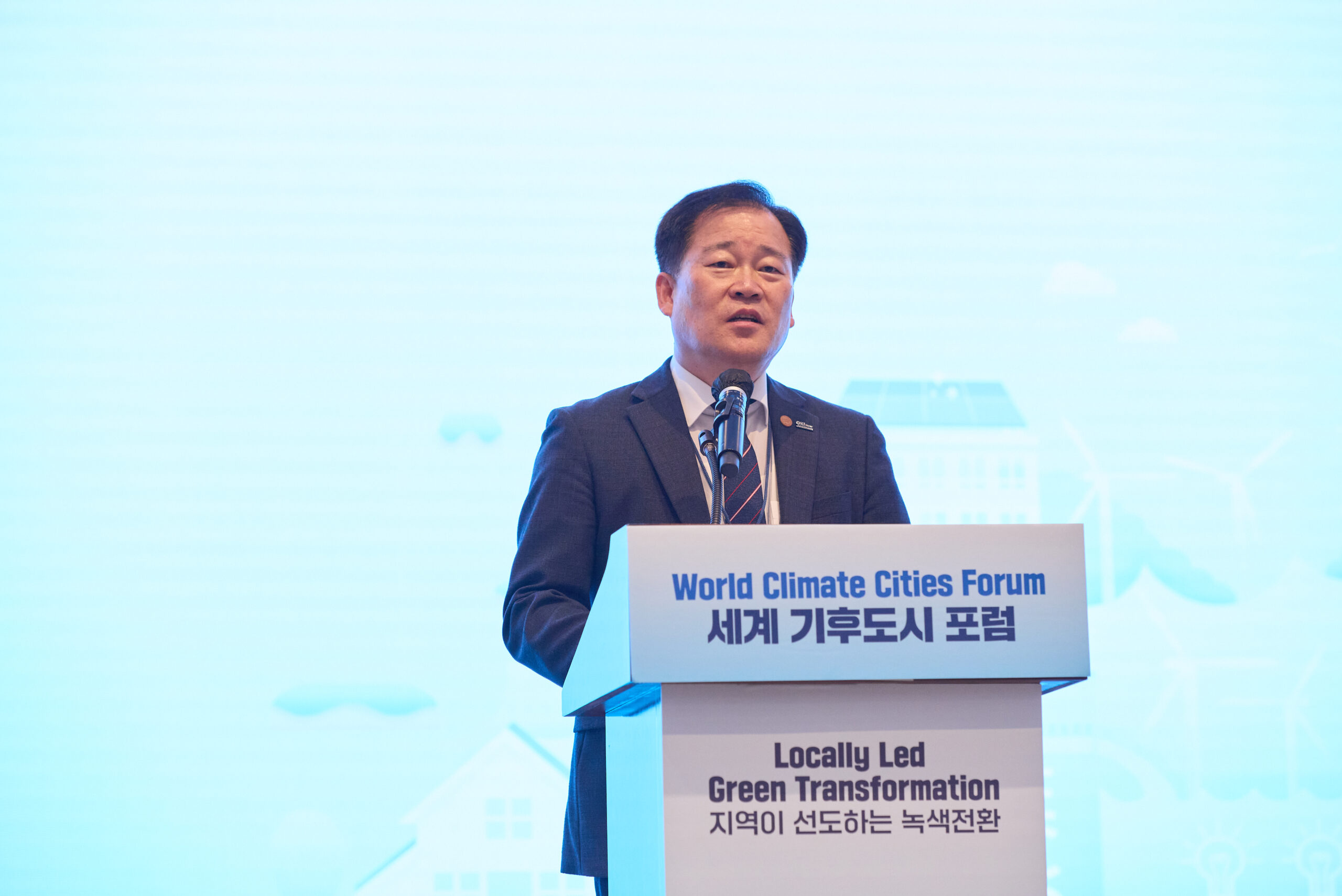
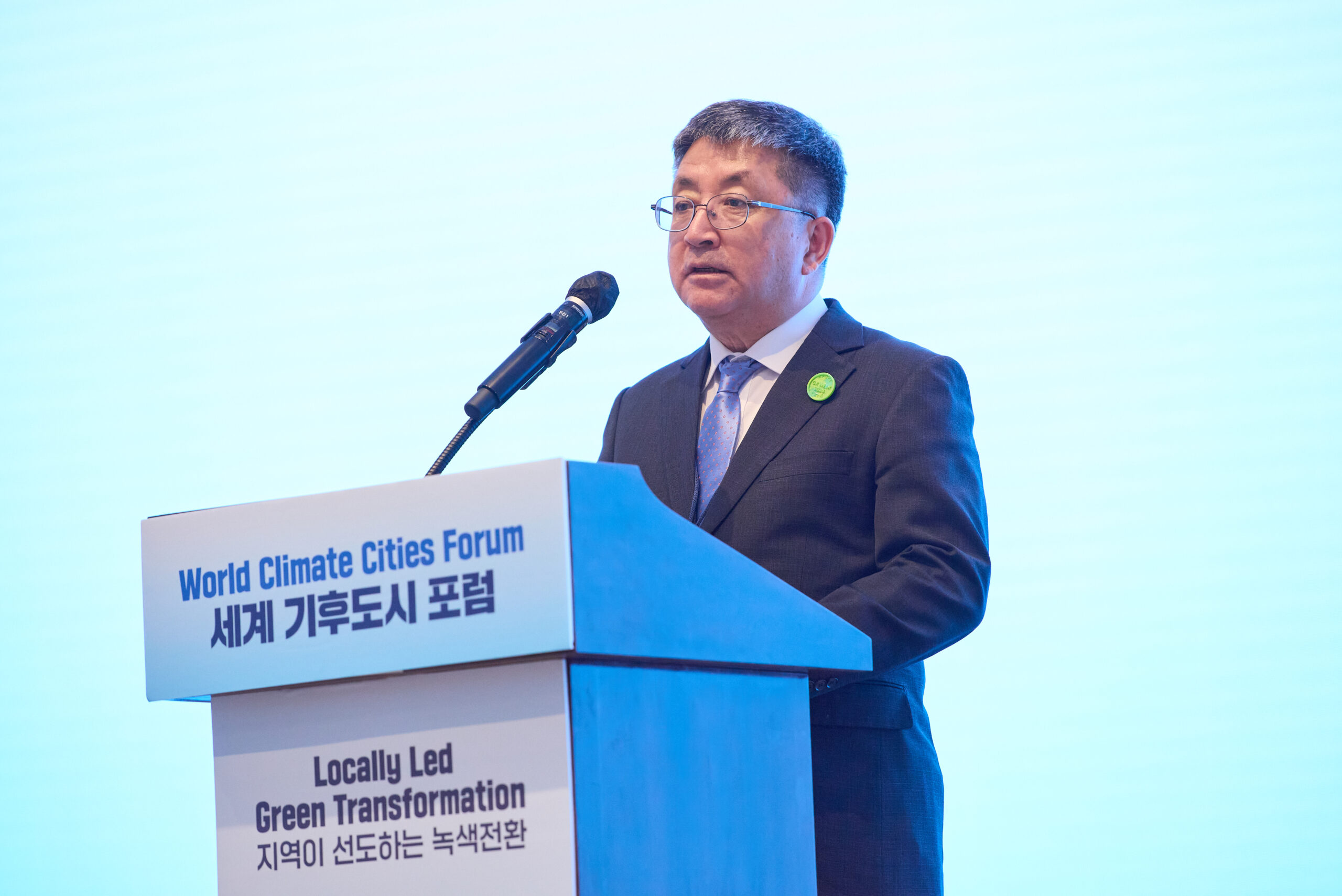
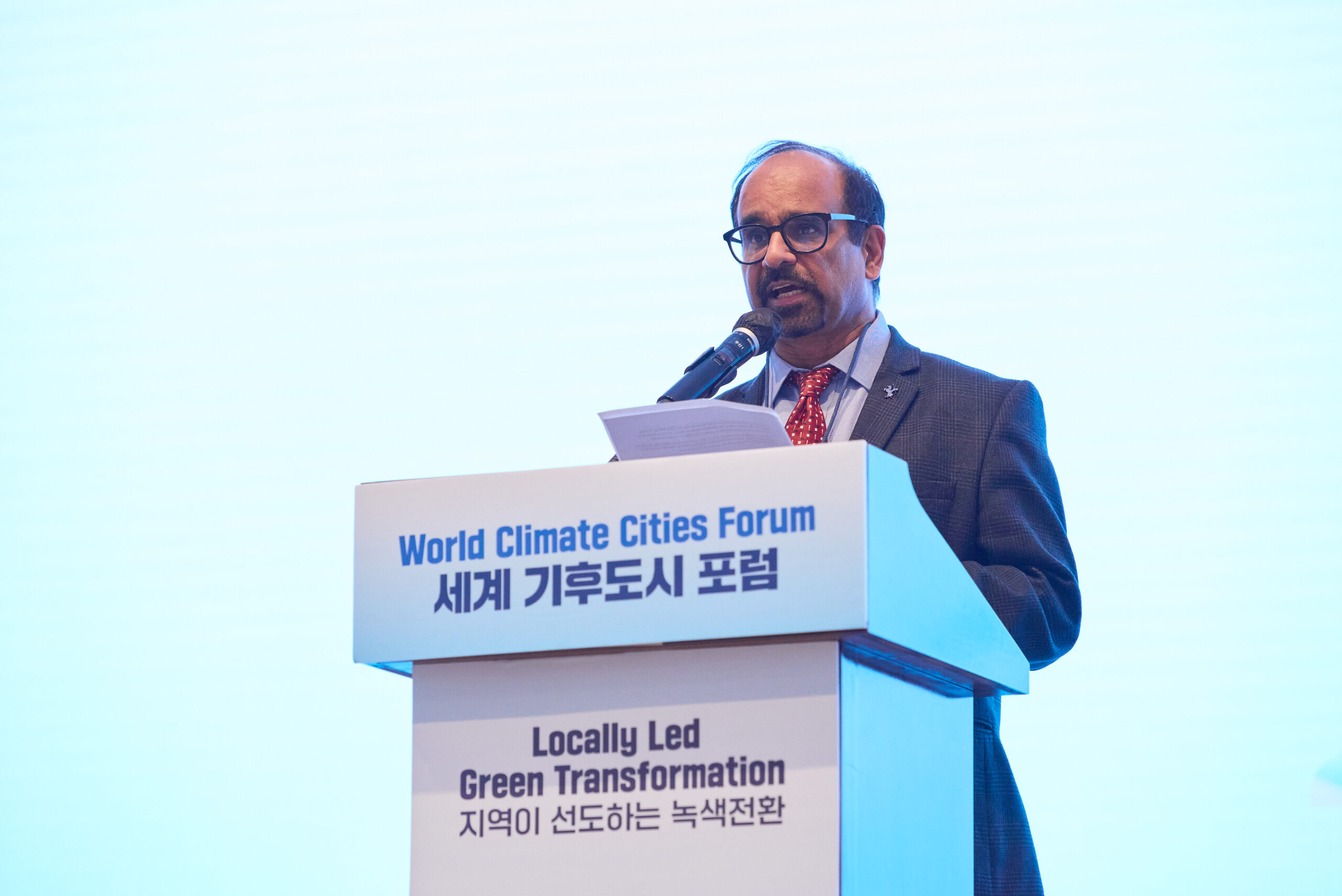
ICLEI South Asia actively participated in the 2026 World Climate Cities Forum, co-hosted by ICLEI Korea and Yeosu City, Jeollanam-do Province, from 21–22 April in Yeosu, South Korea. Convened under the theme “Locally Led Green Transformation,” the forum brought together 170 participants, including representatives from 28 local governments across 13 countries. The event served as a global platform for cities and regions to share their local commitments and achievements for carbon neutrality and green transition on three defining challenges: transition in energy systems, industrial cities, and port cities.
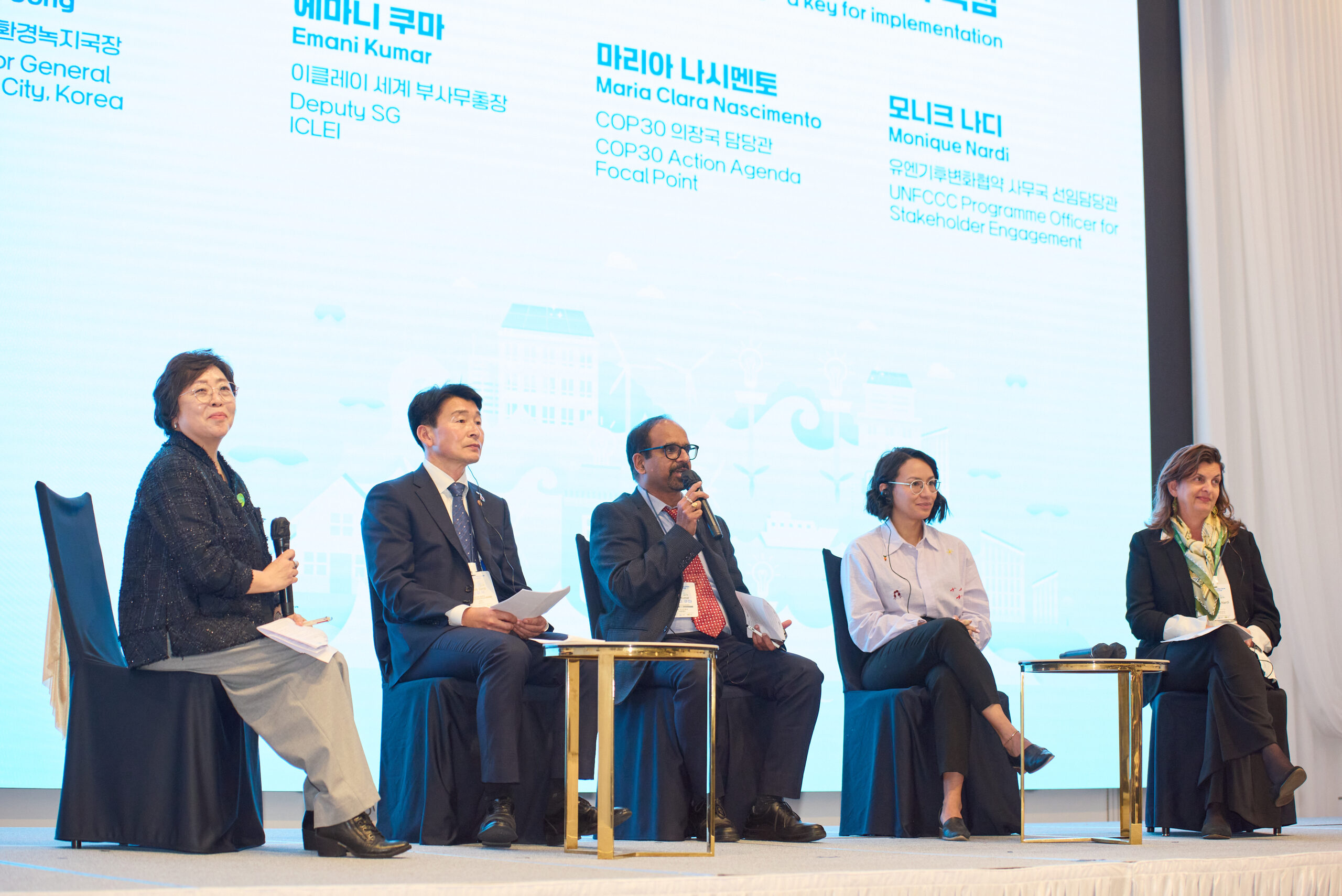
In his opening remarks, Emani Kumar, Deputy Secretary General of ICLEI and Executive Director of ICLEI South Asia, underscored the importance of meaningful engagement of subnational governments in the formulation and implementation of Nationally Determined Contributions (NDCs). He highlighted ICLEI’s role, through its Asia-Pacific network of offices, in supporting local and regional governments to accelerate climate action and embed sustainability into development pathways.
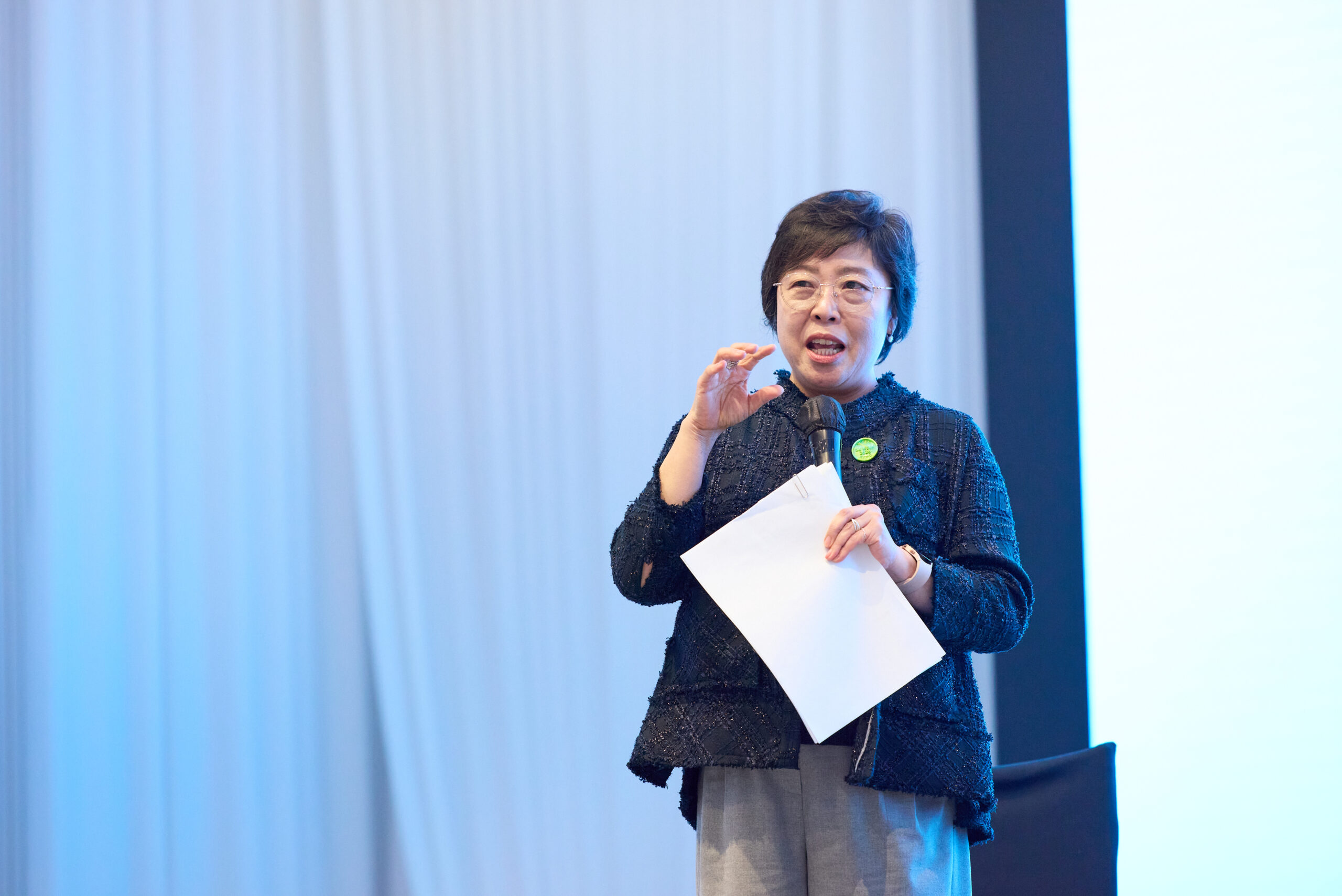
At the high-level dialogue on “Multilevel Governance for a Greener and Climate-neutral Future: A Key for Implementation,” the concept of Town Hall COPs — an ICLEI initiative of community-led climate dialogues that connect local action with national and global climate goals, to ensure grassroots voices shape broader climate decision-making, was emphasised as a practical mechanism to bridge global climate negotiations with national and local action. In 2025, ICLEI convened 16 Town Hall COPs globally, prior to COP30 in Belém. The discussion highlighted the importance of institutionalising such platforms in the lead-up to COP31 in Antalya, enabling stronger integration of subnational perspectives into the UNFCCC process.
ICLEI’s member cities played a prominent role in the forum, showcasing impactful climate initiatives and locally driven solutions.
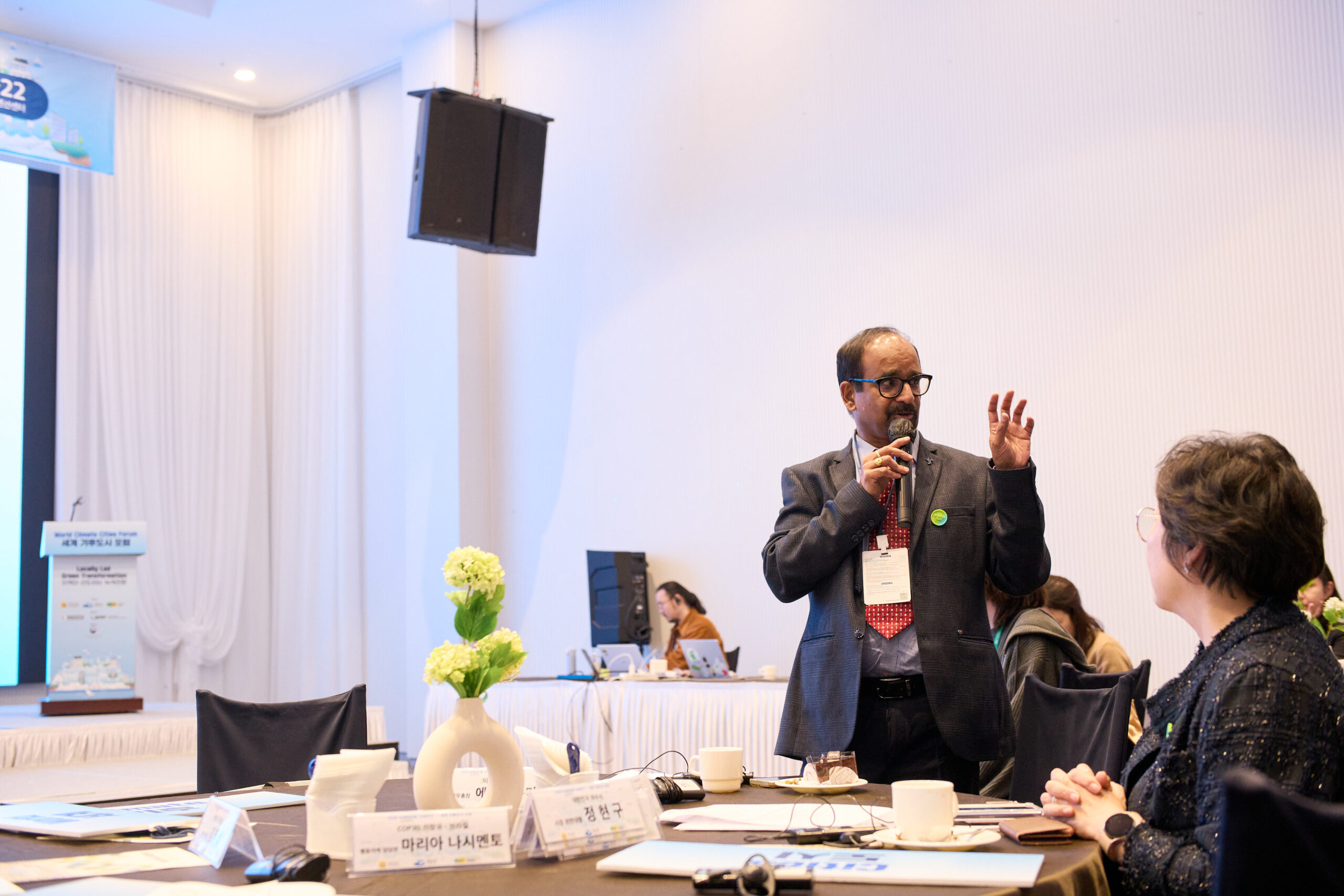
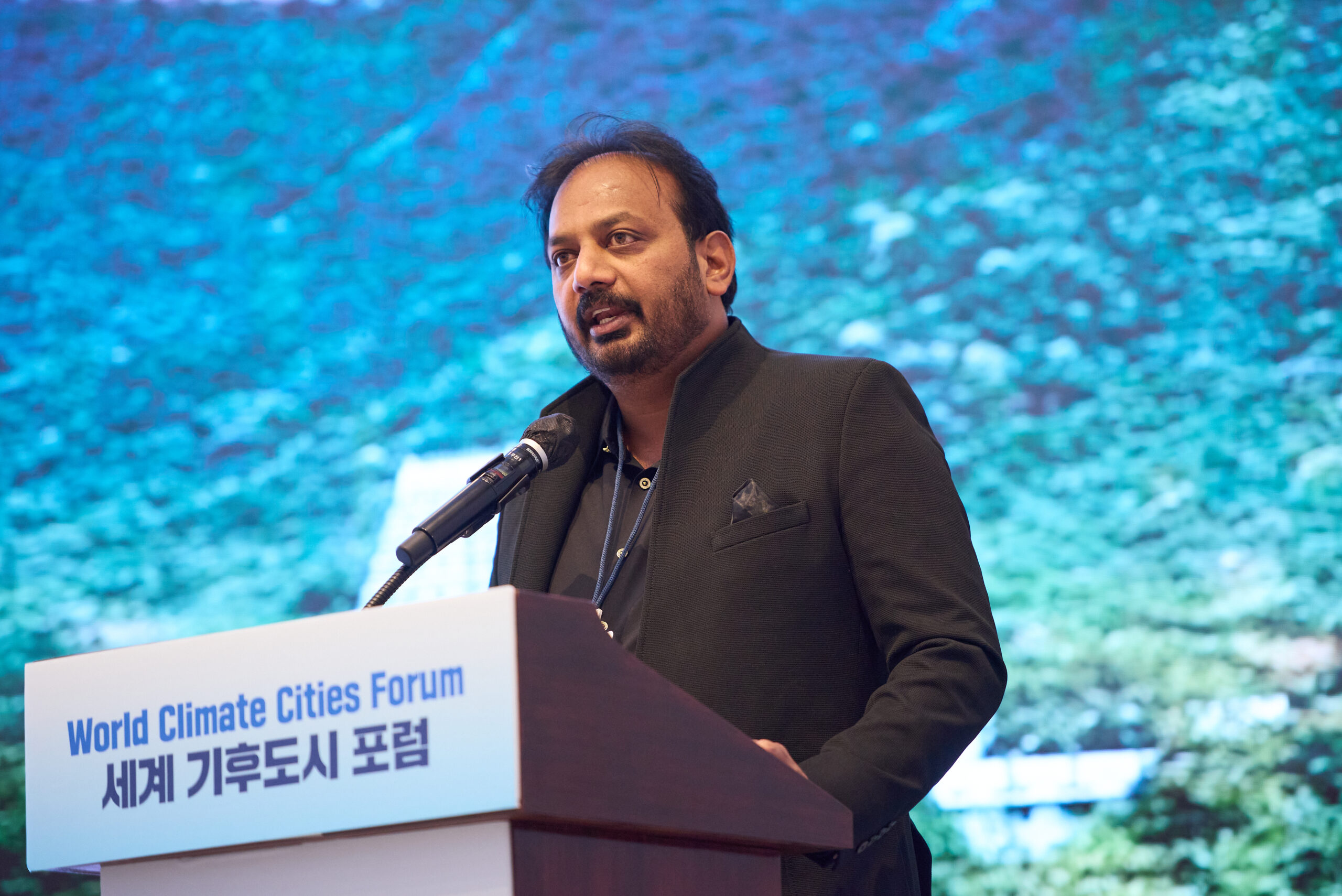
Representing Tirupati, C. Divakar Reddy, Chairman of the Tirupati Urban Development Authority, presented the city’s roadmap toward a sustainable future. He outlined a comprehensive approach combining large-scale clean energy investments such as solar, wind, battery storage, and green hydrogen—with grassroots initiatives including fully solar-powered households, e-mobility adoption, waste-to-manure systems, and municipal decarbonisation strategies. He particularly highlighted the importance of strong financial planning and investment frameworks, as project execution depends heavily on viable funding. At the same time, the state is targeting 100% renewable energy with parallel climate action plans to ensure emissions are reduced not just in outcomes, but also during project implementation. These efforts align with Andhra Pradesh’s broader Net Zero 2047 vision and demonstrate how integrated planning can deliver resilient infrastructure and cleaner public services.
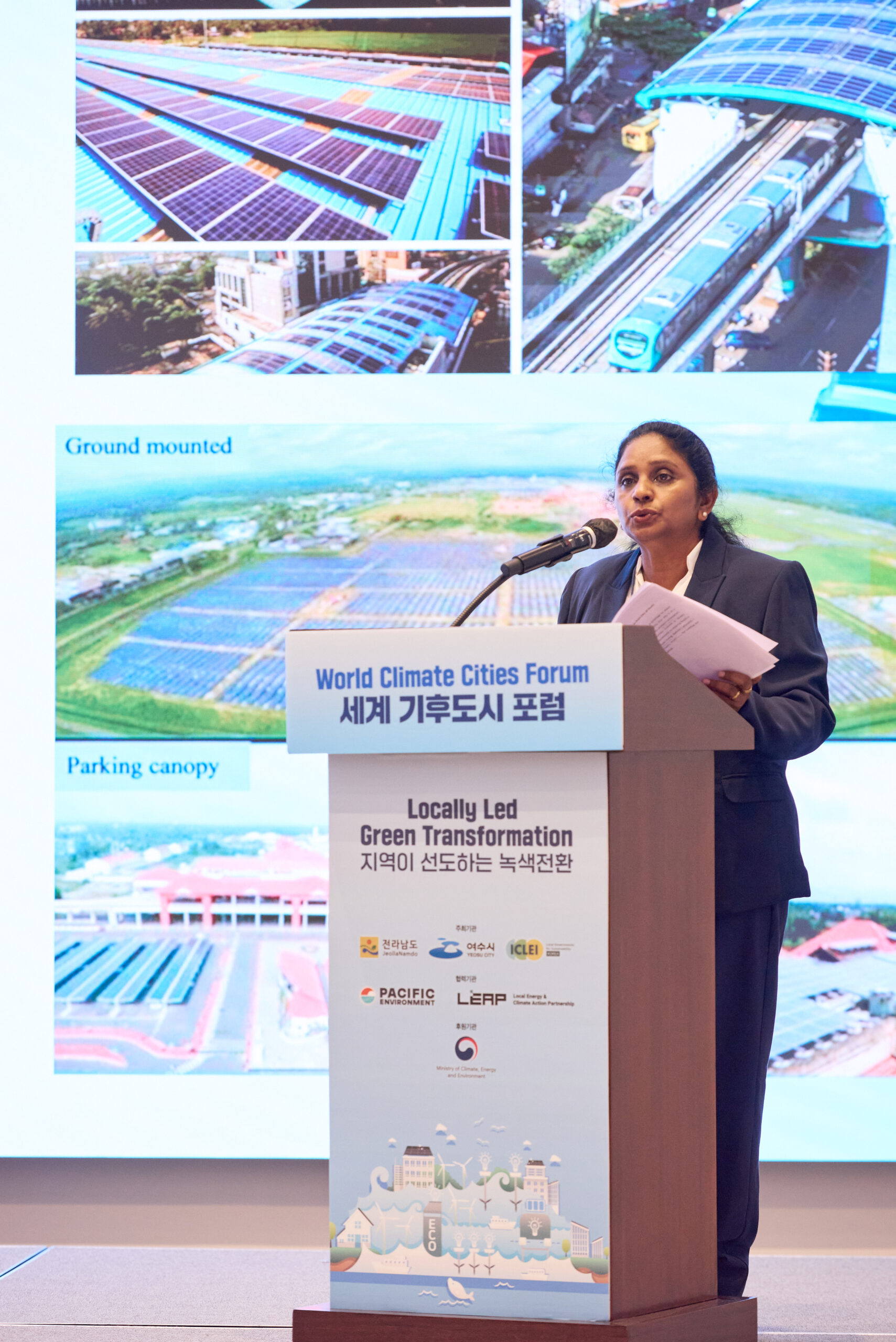
From Kochi, Mayor Adv. Minimol V. K highlighted the city’s transformation into a sustainable green port city. Kochi’s approach focuses on expanding electric mobility, scaling up renewable energy—particularly solar—and strengthening sustainable transport systems such as the metro and water metro. The city is also advancing forward-looking initiatives including green hydrogen production, waste-to-energy systems, and sustainable neighbourhood programmes, and ensures cross-sectoral coordination through city-wide initiatives like the Sustainable Neighbourhood Project and Integrated Urban Regeneration & Water Transport System, supported by partnerships with national and international agencies to align energy, mobility, waste, and ecosystem interventions. Underscoring the importance of ecosystem-based planning, the mayor also emphasised the integration of canal rejuvenation using nature-based solutions with water-based public transport, creating synergies between mobility, flood management, and urban resilience.
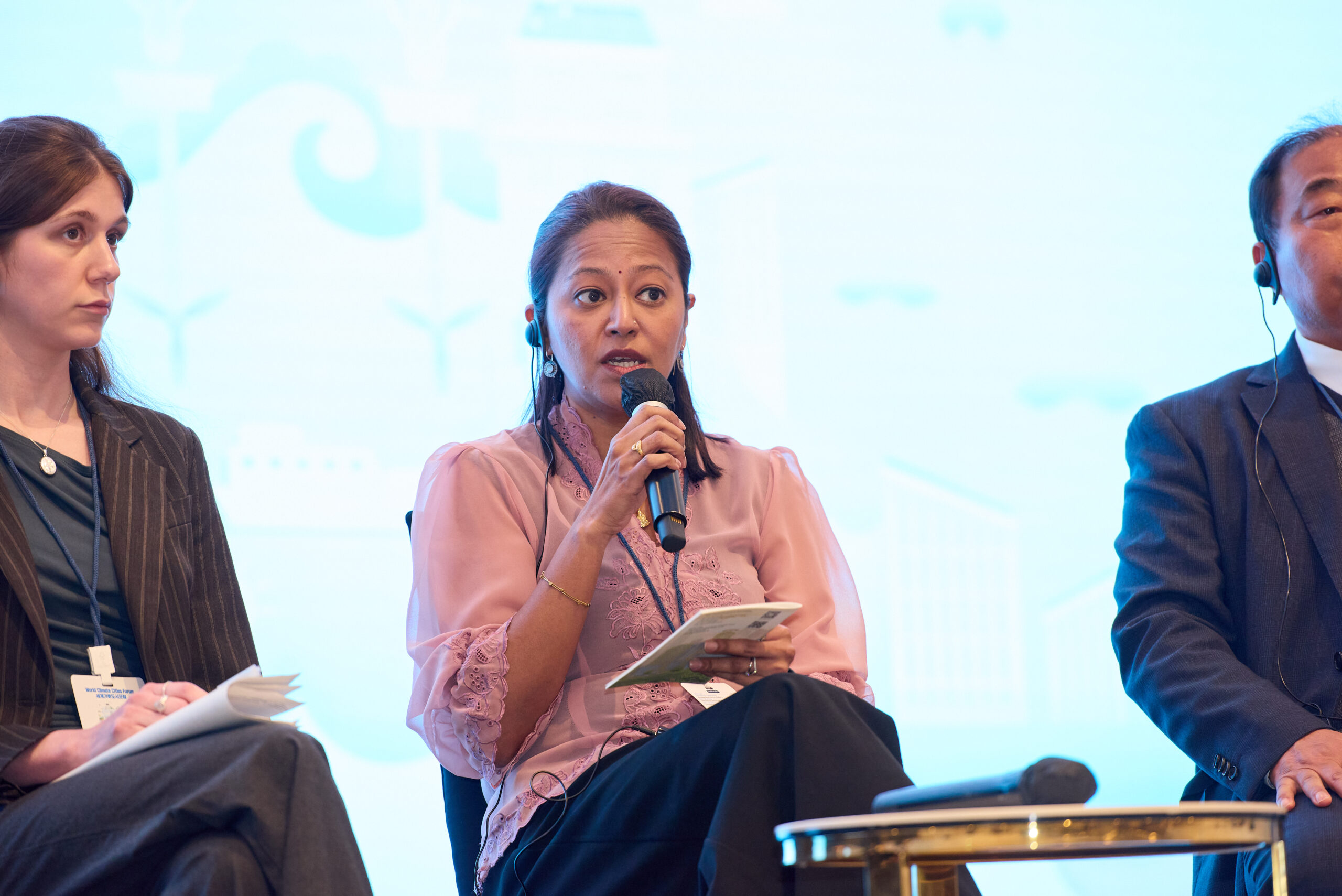
Dr. Vishanthini Kanasan, Advisor and Undersecretary at the Penang Chief Minister and State Secretary Office, presented the experience of Penang. She highlighted Penang’s evolution into a high-tech industrial hub that balances economic growth with environmental sustainability under the Penang2030 vision. She focused the city’s evolution through the “Penang Green Industry Programme,” that translates Penang2030’s vision into practical industry action such as energy efficiency improvements, renewable energy adoption, smart manufacturing powered by Industry 4.0 technologies, and circular economy practices. These measures are helping the reduce emissions, supporting skilled workforce growth, innovation, and knowledge-based economy, while enhancing global competitiveness and positioning Penang as a resilient and future-ready industrial ecosystem.
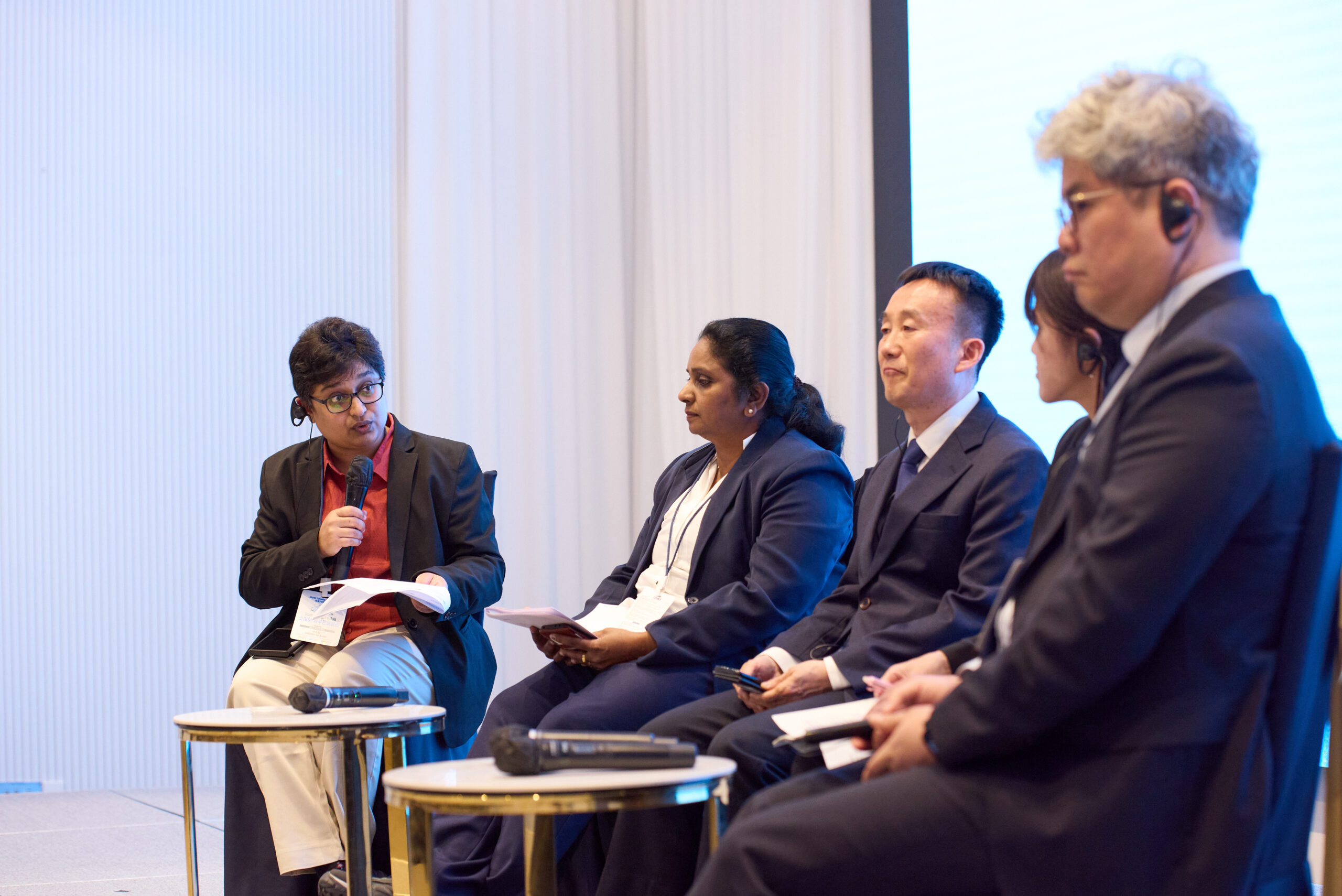
At the session “Green Transition of Port Cities,” moderated by Soumya Chaturvedula, Director of ICLEI South Asia, representatives from global port cities and institution shared strategies and experiences for building low-carbon, climate-resilient port ecosystems through renewable energy integration, green shipping corridors, electric mobility, sustainable logistics, circular economy approaches, and pathways toward carbon neutrality. Kitakyushu showcased its transformation from a heavily polluted industrial centre into a globally recognised green-tech hub driven by offshore wind power and environmental innovation, while the Korea Maritime Institute emphasised the critical role of renewable energy-powered microgrids, solar, wind, and energy storage systems in decarbonising ports and achieving net-zero maritime operations by 2050. Incheon highlighted its roadmap to become a world-class carbon-neutral maritime city by 2045 through renewable energy expansion, blue carbon restoration, sustainable transport, and active citizen-led climate action.
ICLEI South Asia’s participation at the forum reinforced the critical role of cities and regions in driving climate action. By highlighting the work of ICLEI’s member cities, the delegation demonstrated how locally led initiatives are delivering tangible progress on the ground while contributing to national and global climate goals.
Mr. Ronanki Govindarao, Joint Collector and Vice Chairman of the Tirupati Urban Development Authority, also attended the event, further strengthening the representation from ICLEI South Asia’s network.
The forum provided an important opportunity to strengthen collaboration, exchange knowledge, and amplify the voice of local governments in shaping a sustainable and climate-resilient future. ICLEI South Asia remains firmly committed to empowering cities and regions to lead the global climate agenda through locally driven, inclusive, and scalable solutions.