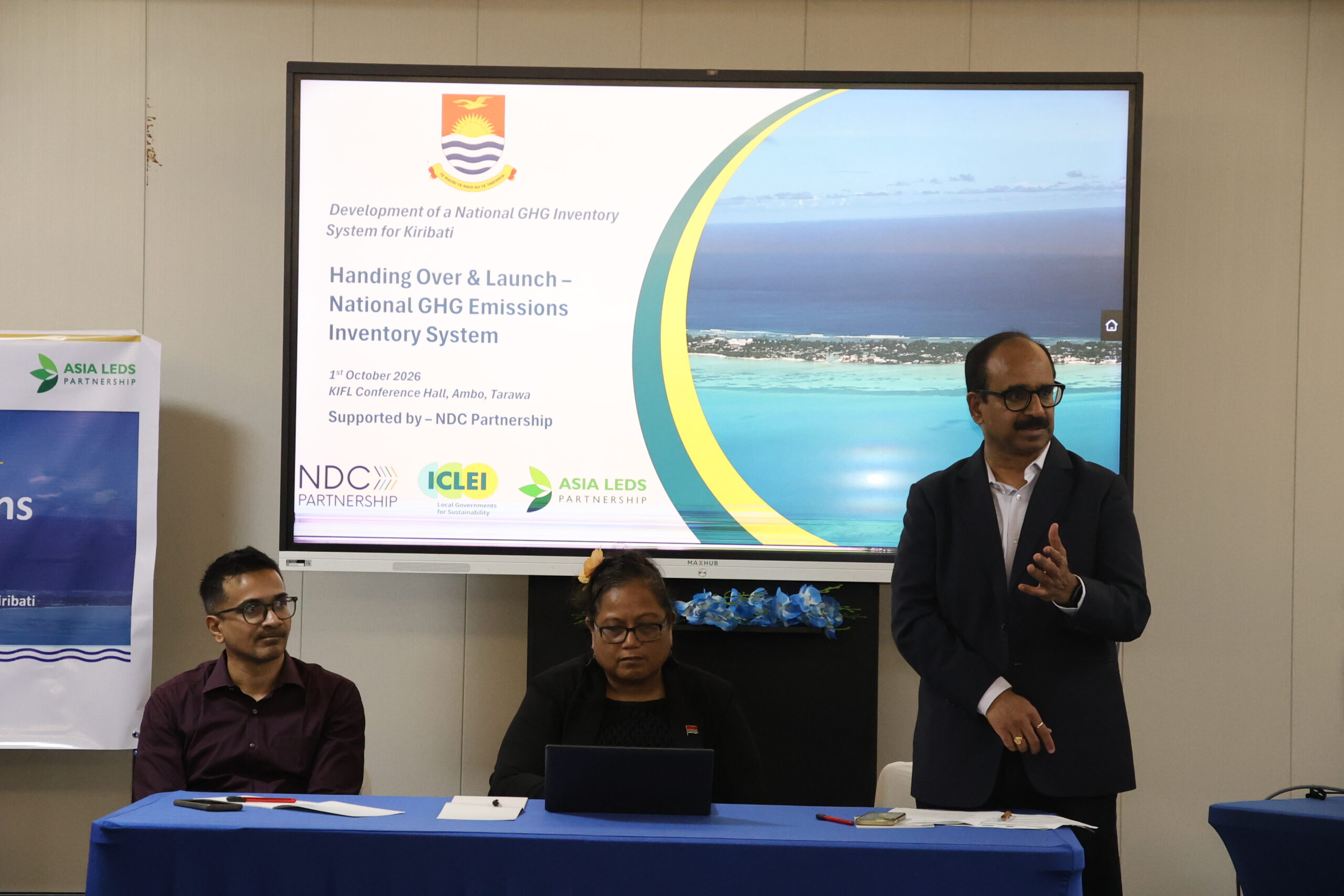
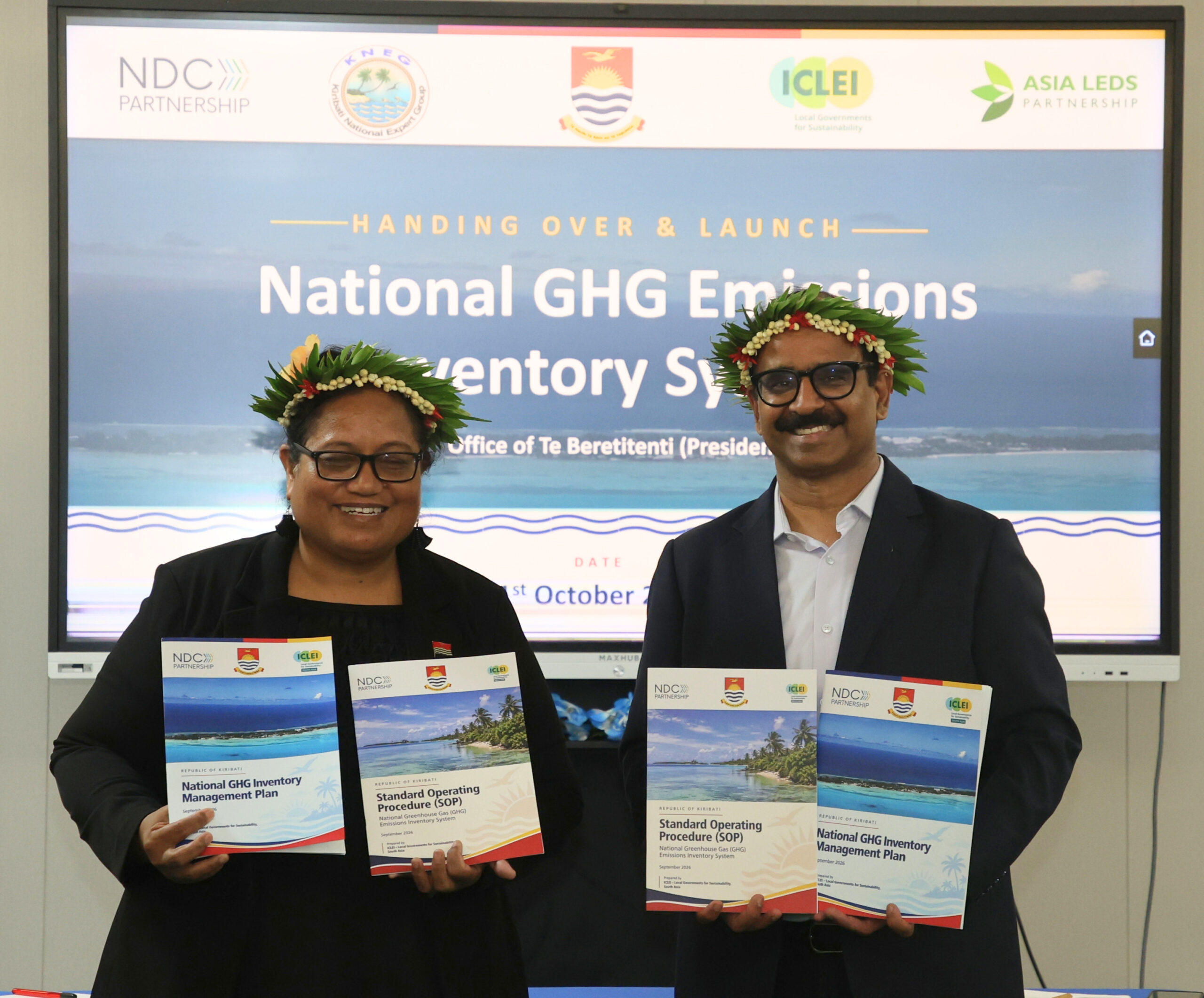
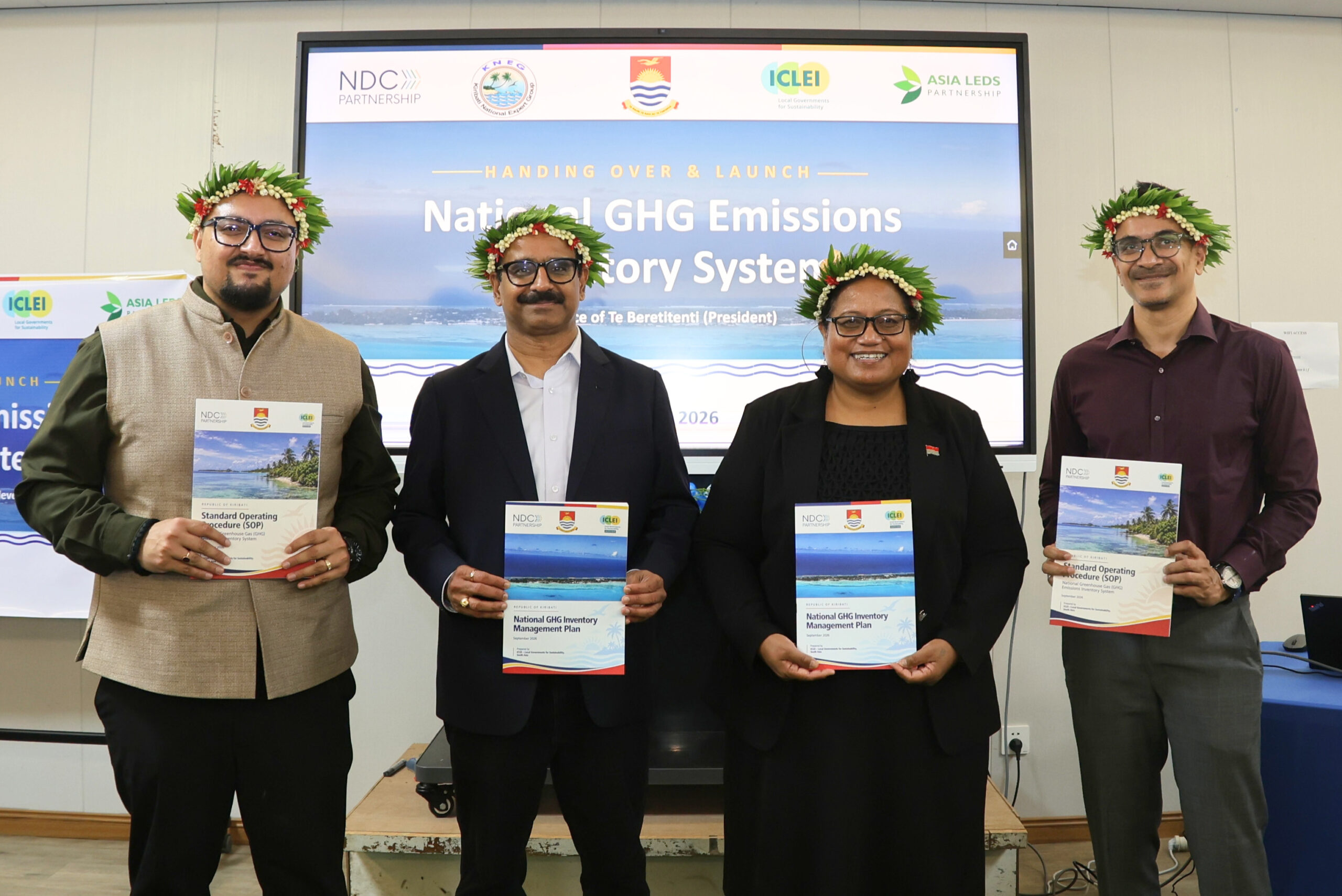
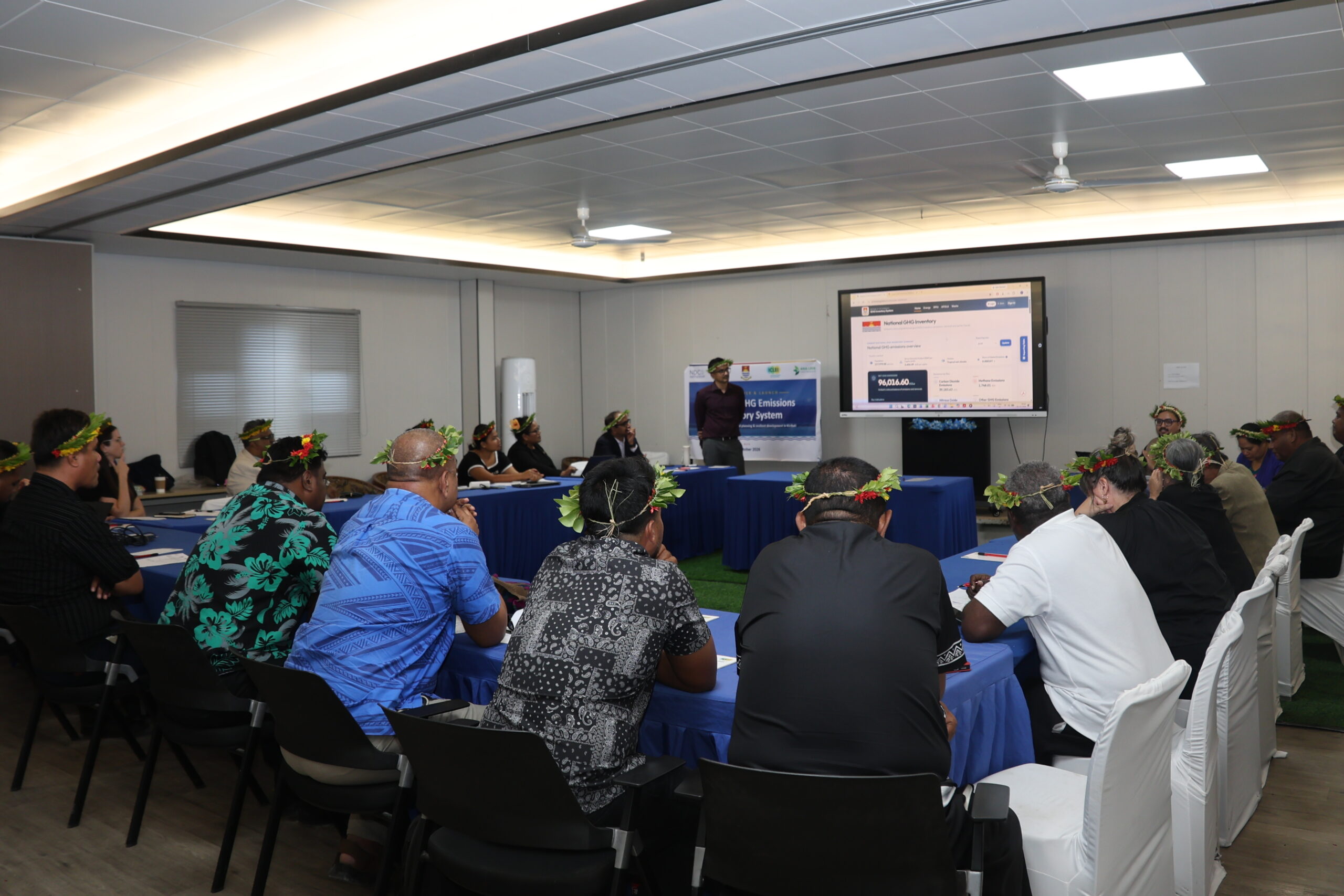
The Government of Kiribati launched its national digital Greenhouse Gas (GHG) Emissions Inventory System on 1 October 2026 at a national workshop in Tarawa. The country is now among the first in the Pacific to operate a dedicated, nationally hosted digital tool for tracking, calculating, managing, and reporting its GHG emissions.
The system has been developed with technical support from ICLEI South Asia as the Secretariat of the Asia LEDS Partnership (ALP), under the “Development of a National GHG Inventory for Kiribati” project supported by the NDC Partnership, working with the Climate Change and Disaster Risk Management (CCDRM) Division of the Office of Te Beretitenti (OB).
Over the course of the project, ICLEI South Asia delivered dedicated technical training on the national GHG emissions inventory and the digital GHG inventory tool, involving members of the Kiribati National Experts Group (KNEG), as well as officials from several government ministries, institutions, and other national stakeholders. Practical training covered GHG emissions calculation, emission factor selection and application, data entry and management, output review, quality assurance and quality control, and inventory documentation procedures. The capacity building was targeted at strengthening the wider institutional network involved in the collection, management and reporting of national emissions data.
The project also developed supporting templates, guidance documents and institutional arrangements to improve coordination among ministries and agencies contributing to the national inventory process.
A major focus of the project was to ensure that the digital tool, technical knowledge, and systems developed are embedded within national institutions and can continue to be operated, maintained, and updated beyond the project period.
The formal handover of the project outputs at the national workshop on 1 October 2026 marked a key milestone. The handover included the transfer of the project’s digital tools, templates, technical guidance documents, and other key deliverables to relevant national institutions, supporting continued national ownership and use of the system.
The launch of the tool at the workshop was also an important step in enhancing local technical capacity and supporting the long-term institutionalisation of climate data management in Kiribati.
The handover and launch workshop brought together representatives from the High Commissions and Embassies of Australia, New Zealand and Japan, along with development partners including JICA, ADB, the World Bank and UNICEF. Representatives from the OB, line ministries, government institutions and state-owned enterprises also participated to review the project’s achievements, discuss the national GHG inventory system, and agree on next steps for its continued development, updating and reporting. This handover and institutionalisation process is aligned with the project’s intended closure and transition of responsibility to national stakeholders.
Mr Emani Kumar, Deputy Secretary General, ICLEI Global, and Executive Director, ICLEI South Asia, opened the handover and launch workshop, noting the significance of Kiribati becoming the first nation in the Pacific region to develop a GHG Inventory Tool like this. Representing the technical delivery partnership, he commended Kiribati’s leadership in taking full ownership of its national GHG tracking framework. His remarks were followed by Mr Nikhil Kolsepatil, Senior Programme Coordinator – Energy & Climate, ICLEI South Asia, introducing the project and its objectives.
Delivering the special address, Ms Roreti Eritai, Secretary, Office of Te Beretitenti (President), noted that the occasion marked a shift towards long-term institutionalisation, inter-ministerial coordination and public sector capacity building. She affirmed that the platform would enhance Kiribati’s global voice in advocating for the 1.5°C limit and fulfilling its Paris Agreement obligations, while ensuring domestic policies are anchored in solid data.
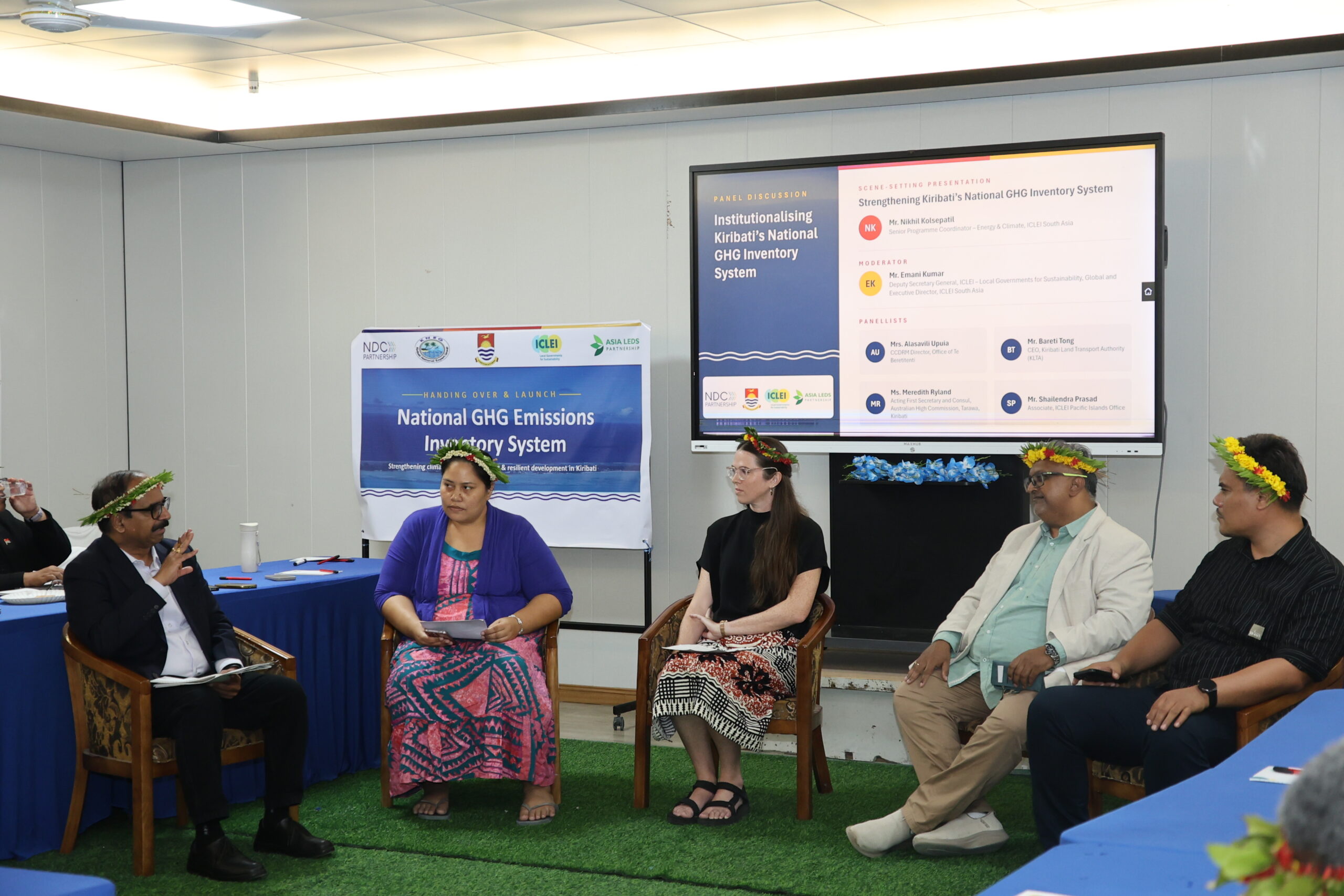
The launch was followed by a panel discussion with representatives from the Kiribati Land Transport Authority (KLTA), the OB, ICLEI Pacific Islands, and the Australian High Commission in Kiribati.
Speaking on the panel, Ms Meredith Ryland, Acting First Secretary of the Australian High Commission in Kiribati, highlighted that strong data is required for telling the story of the Pacific’s climate challenges. She added that Kiribati has demonstrated regional leadership in bringing together this data and strengthening the basis for attracting international climate finance.
Kiribati has taken an important step towards strengthening its national capacity to maintain a reliable, nationally owned and sustainable GHG inventory system. By combining institutional arrangements, technical capacity building, and a digital inventory platform, the project has helped establish stronger foundations for regular emissions data management, national climate reporting and informed climate action.
The next steps for the Government of Kiribati will focus on continued national ownership, regular updating of inventory data using the GHG inventory tool, and effective coordination across sectoral government institutions for data collection and system operationalisation.