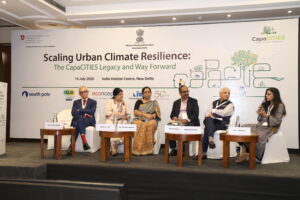
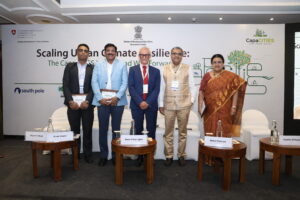
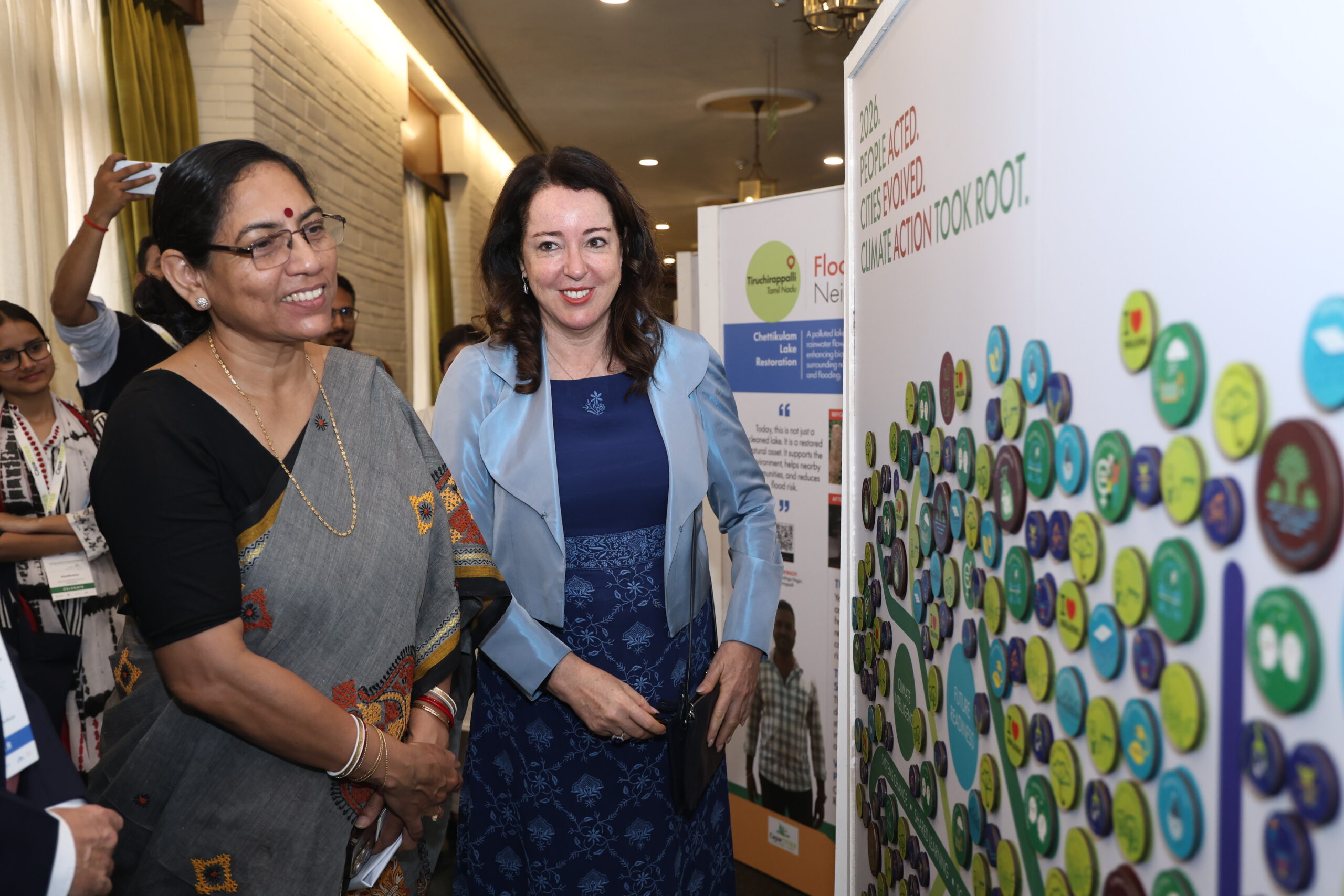
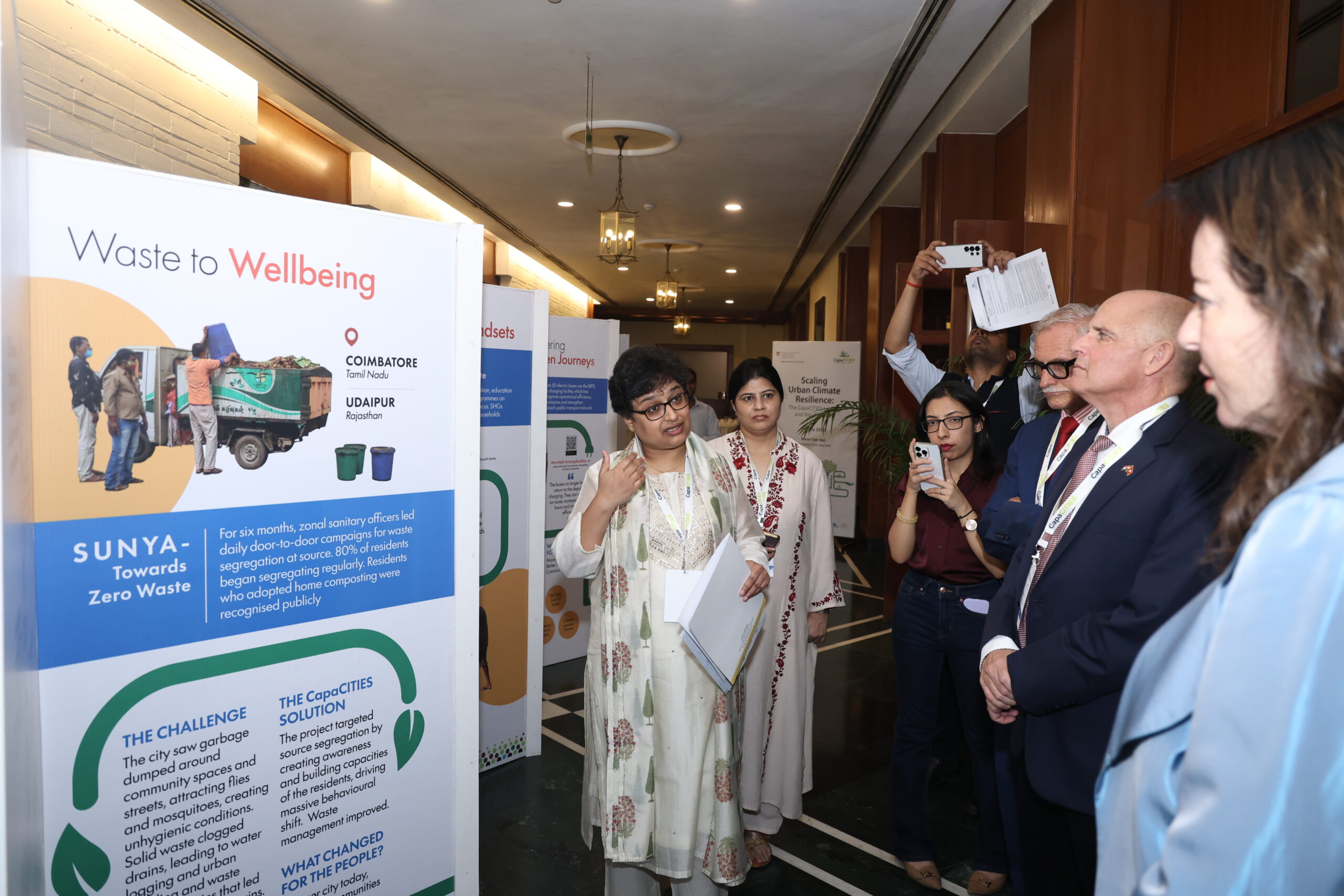
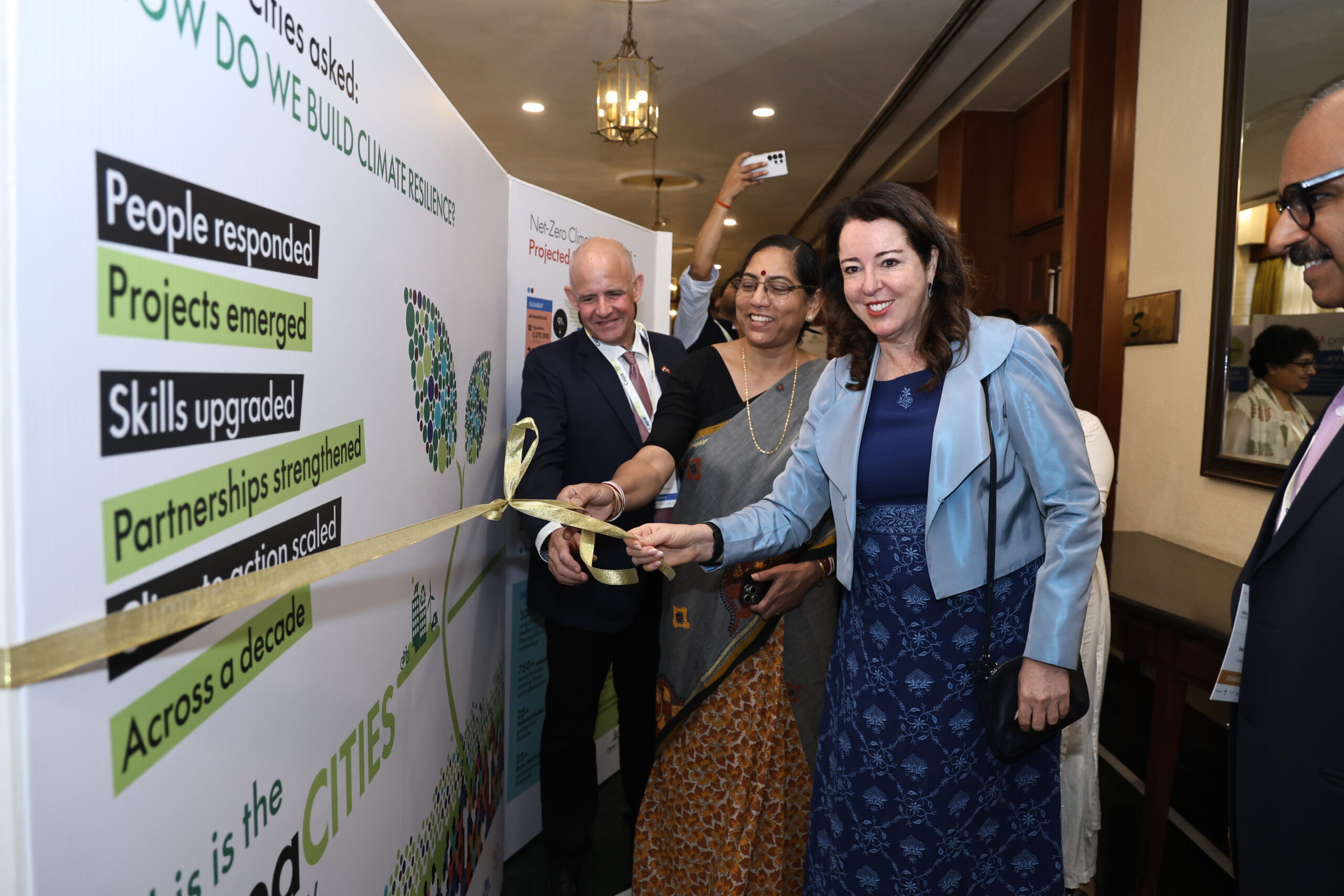
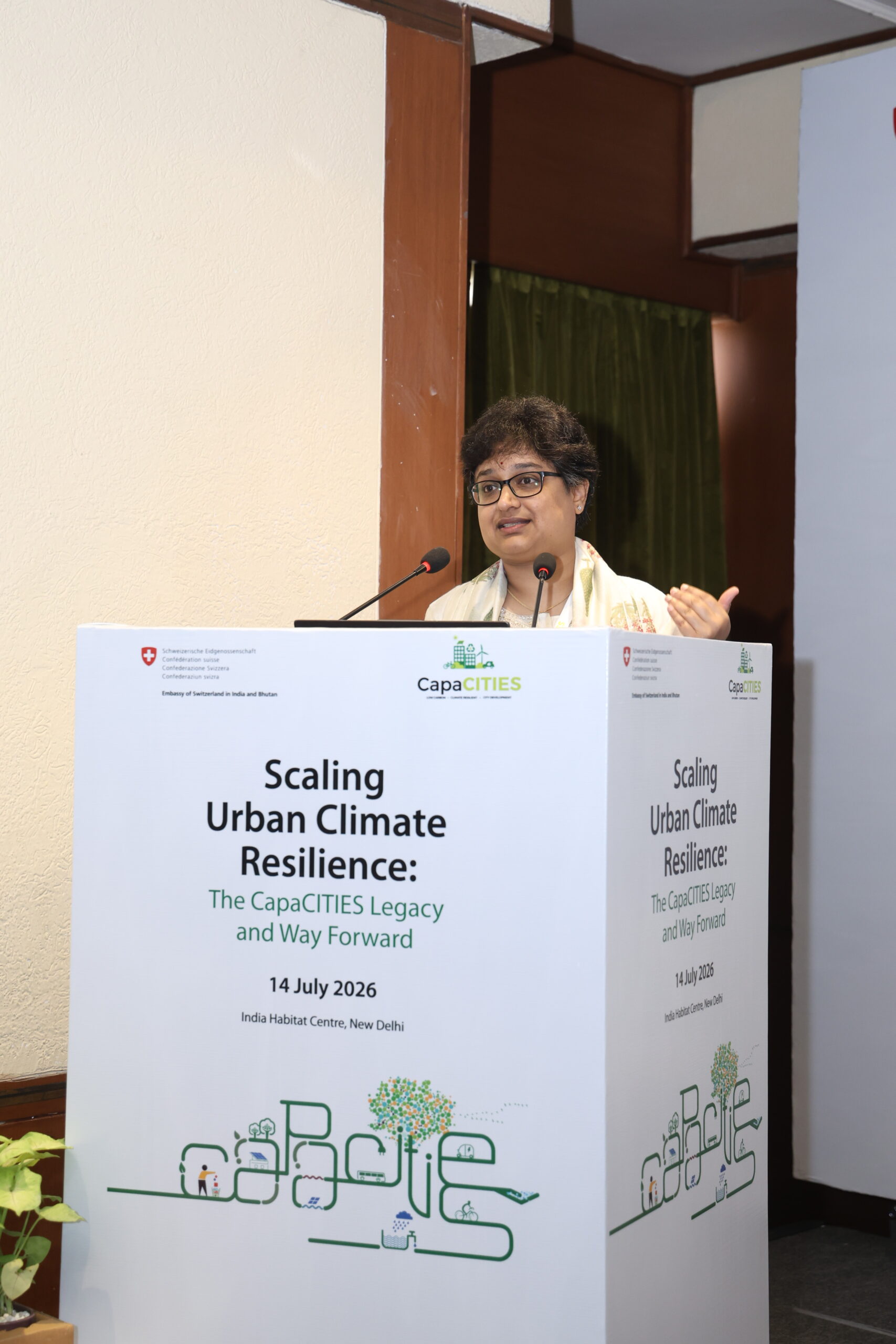
Marking a decade of transformative urban climate action, the national-level workshop, “Scaling Urban Climate Resilience: The CapaCITIES Legacy and Way Forward,” was organised under the Capacity Building for Low-carbon and Climate Resilient City Development in India (CapaCITIES) programme on 14 July 2026 in New Delhi. The convening gathered senior government officials, mayors, commissioners and engineers from 30+ cities, representatives from 6 state governments, high-level representatives from financial institutions, and technical experts to review a decade of building local climate capabilities and chart the future of urban sustainability.
The discussions underscored the need to embed climate action within urban planning systems, strengthen local capacities, scale successful city- led models, and deepen partnerships to accelerate climate-resilient urban development.
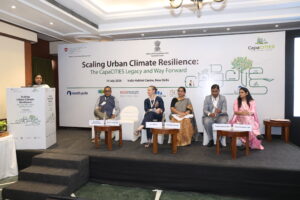
The event was attended by Mr Gopal Prasad, Economic Adviser, Ministry of Housing and Urban Affairs, Government of India, H.E. Ms Maya Tissafi, Ambassador, Embassy of Switzerland to India and Bhutan, Ms Geetaben Makwana, Mayor, Vadodara Municipal Corporation, Ms Daxaben Vasani, Deputy Mayor, Rajkot Municipal Corporation, Dr Debolina Kundu, Director, National Institute of Urban Affairs, Mr Emani Kumar, Deputy Secretary General, ICLEI and Executive Director, ICLEI South Asia.
A call for institutionalising Climate Action
Emani Kumar, Deputy Secretary General, ICLEI and Executive Director, ICLEI South Asia, highlighted the transformative role of the CapaCITIES project, from evolving fragmented local climate initiatives into integrated urban climate planning frameworks, that combine adaptation and mitigation. He emphasised that the programme’s enduring legacy lies in the institutional capacities, planning tools and governance systems it has established. Throughout the last decade, ICLEI South Asia demonstrated how sustained technical assistance, institutional strengthening and knowledge generation can enable cities to move beyond pilot projects towards long-term climate governance.
Setting the context, Dr Debolina Kundu, Director, NIUA, underscored that India’s net-zero ambitions can only be realised by empowering cities with sustained technical capacity, institutional mechanisms and scientific planning tools. H.E. Ms Maya Tissafi, Ambassador of Switzerland to India and Bhutan, highlighted the decade-long partnership between India and Switzerland, noting that the programme had created strong institutions, enduring partnerships and practical knowledge that now provide the foundation for scaling urban climate action. In his keynote address, Gopal Prasad, Economic Adviser, Ministry of Housing and Urban Affairs, Government of India, called for the institutionalisation of dedicated Climate Action Cells within Urban Local Bodies, describing the CapaCITIES model as one that can be replicated across the country.
Strengthening Cities for Climate Action at Scale
The workshop also marked the launch of three flagship knowledge products developed under the programme: the Net-Zero ClimateResilientCities Methodology Toolkit, the Energy Transition for Urban Local Bodies (ULBs) in India: A Practitioner’s Guidebook, and a White Paper on Facilitating the Transition of Cities in India Along a Low-Carbon Pathway. Together, these resources provide local governments with practical methodologies for planning, financing and implementing climate action at scale.
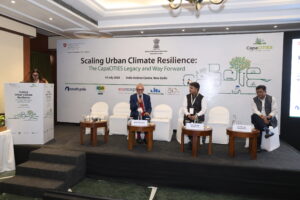
At the high-level session on Climate Integrated City Planning, Amrutesh Kalidas Aurangabadkar, IAS, Deputy Commissioner Ahmedabad; Veer Pratap Singh, IAS, Municipal Commissioner, Tiruchirappalli; and Tushar Shrihari Shinde, IFS, Assistant Mission Director, Tamil Nadu Climate Change Mission, highlighted how CapaCITIES has successfully embedded climate considerations within municipal governance, budgeting and service delivery. ICLEI South Asia Director Soumya Chaturvedula presented the evolution of the CapaCITIES programme across its three phases, from 2016 to 2026, demonstrating how scientific planning, climate budgeting, City Climate Action Cells and multi-level governance have become central pillars of resilient urban development. The discussions reinforced that climate action must be integrated into everyday municipal planning rather than as standalone projects.
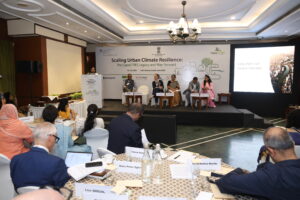
Across the technical sessions, the emphasis remained on strengthening urban climate action enable the capacities of cities themselves. Cities require integrated planning approaches that connect climate resilience with public health, housing, infrastructure, governance and local development priorities, enabling municipal administrations to move beyond isolated projects towards coordinated, city-wide action. Building institutional capacity through dedicated Climate Action Cells, cross-departmental collaboration and sustained technical assistance came forth as critical for translating climate plans into implementation. Additionally, enhancing municipal capacity to prepare bankable projects, develop robust project pipelines and access diversified financing through public-private partnerships, and innovative financial instruments can enable cities to attract investment and scale climate interventions. India’s rapidly urbanising Tier II and Tier III cities require sustained technical assistance to convert climate plans into implementable programmes capable of delivering social, economic and environmental benefits simultaneously. The sessions highlighted the need to institutionalise climate action by embedding climate considerations within municipal bylaws, master plans and budgeting processes, and strengthen disaster preparedness, community engagement and youth participation to build long-term urban resilience.
They collectively reinforced that climate action must equip cities with the governance systems, build technical expertise and financial capabilities, and enhance institutional governance mechanisms that can sustain continuous action over time.
Scaling the Next Decade of Urban Climate Action
With support from the Embassy of Switzerland to India and Bhutan, the CapaCITIES programme was implemented over three phases between 2016 and 2026 by ICLEI South Asia, in partnership with South Pole and econcept, and knowledge partnership from the National Institute of Urban Affairs (NIUA). The programme evolved from supporting four cities to influencing over 35 cities across 18+ states through several programmes and national initiatives.
Throughout the CapaCITIES programme, ICLEI South Asia worked closely with partner cities to build these capacities through technical assistance, climate action planning, demonstration projects, climate budgeting, institutional strengthening and knowledge exchange. By adopting its Plan–Pilot–Scale approach, ICLEI South Asia enabled cities to transform innovative ideas into scalable, investment-ready solutions and continues to support urban local bodies in mainstreaming climate resilience into planning, financing and governance, ensuring that the programme’s legacy extends well beyond its formal completion. The systems, methodologies and institutional capacities created under CapaCITIES now offer a scalable model for cities across India and the Global South.
The workshop reaffirmed ICLEI South Asia’s role as a trusted technical partner in advancing climate-resilient urban development. As India accelerates its transition towards net-zero and climate-resilient development, the CapaCITIES legacy provides a robust foundation for the next generation of city-led climate action. ICLEI South Asia will continue to support local governments in planning, financing and implementing their resilient and low-carbon urban futures.